Customers' perceptions of your business-to-business (B2B) interactions might shift if you choose the correct design agency. In a competitive market, having a strong brand and user-friendly design is key to success. The best agencies create designs that fit your business goals, attract your audience, and deliver real results.
B2B design agencies turn business ideas into clear brand stories and visuals that build connections with customers. By combining innovative design with marketing strategies, they boost brand recognition and help drive engagement and sales.
Here are the top 15 B2B design agencies for 2026, offering services like web design and complete brand makeovers to help your business stand out.
A B2B design agency turns complex products and long sales cycles into clear interfaces, websites, and brand systems that decision committees can trust. The work spans four layers:
Generalist agencies often cover one of these well. B2B specialists cover all four, with research and proof points tied to revenue.
Buyers now expect consumer-grade interfaces in enterprise tools. AI search engines now cite sites the same way humans skim them, which means information architecture is both a UX and a discoverability problem. According to multiple 2026 design publications, including Design Studio UI/UX and Flowtrix, conversion-first design has shifted from advanced practice to baseline expectation, and AI-driven personalization is being embedded across most new B2B sites.
We assessed every agency below on six factors. The same framework works well if you run your own shortlist.
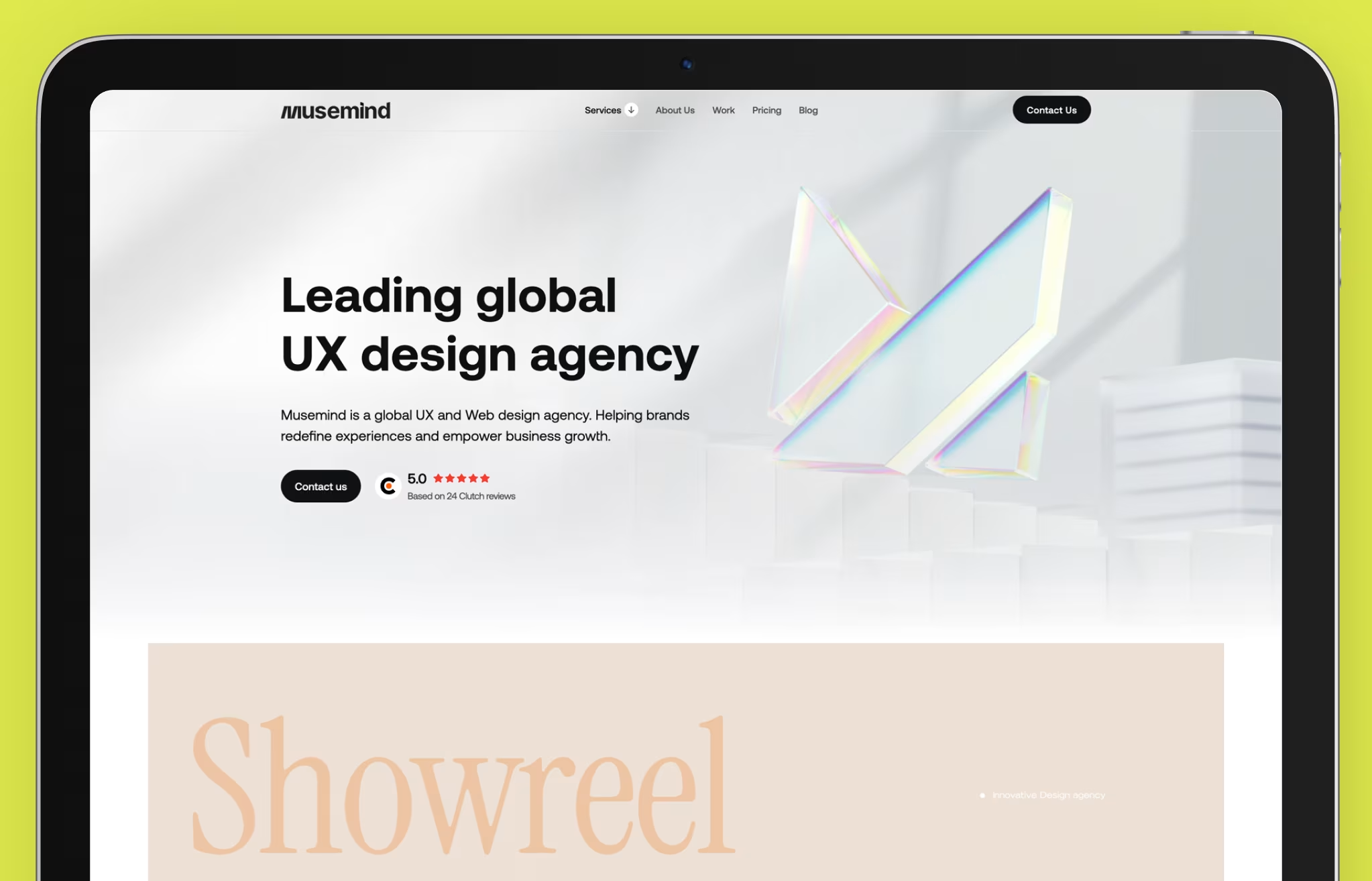
Musemind is more than a design agency. We specialize in B2B solutions that drive growth and build meaningful user connections. With over 80+ experts across Six global offices, we've partnered with 350+ clients worldwide to deliver outstanding results.
Our process is built for agility and impact. Need something fast? We thrive under pressure, delivering high-quality designs with our highly dedicated R&D team. Have a complex idea? We turn it into clear, effective solutions without wasting your time.
We don't take over your team, we add to it. Whether you need a trusted advisor, a creative backup, or a full design partner, we fit right into your workflow. There are no disruptions, just results.
Let's start if you're ready for designs that speak to your audience and grow your business. Explore our complete services or connect for a personalized solution today.
Why Choose Musemind for B2B Design?
Here are some significant benefits of working with Musemind:
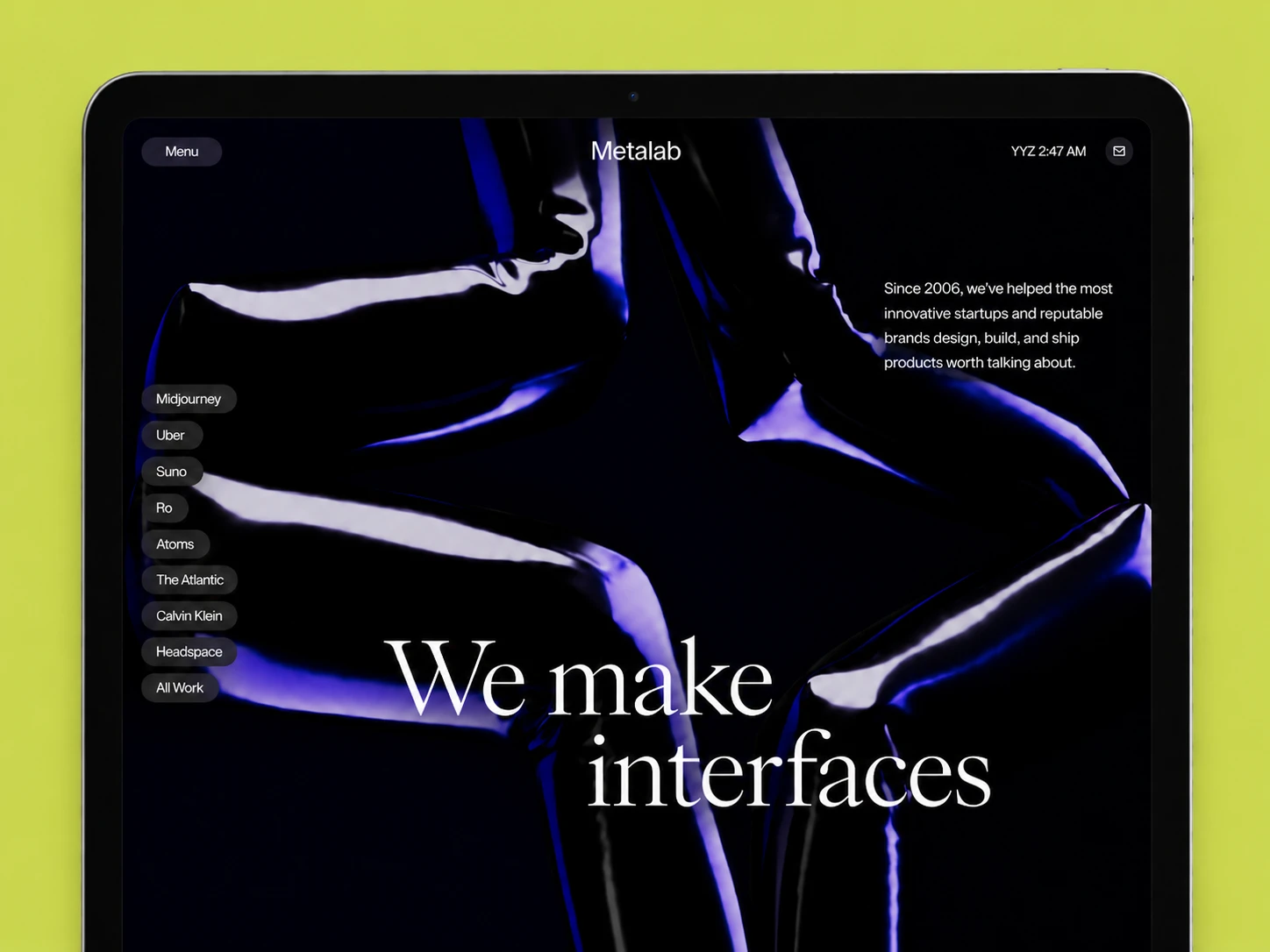
MetaLab is a product design firm founded in 2006 whose current homepage tagline is "We make interfaces". Clutch lists the headquarters in Vancouver, Canada, with a secondary office in Victoria. The agency built its reputation on interface-first work for technology brands, and it remains a strong pick when product interface quality is the primary buying criterion. Public positioning describes work with "the most innovative startups and reputable brands."
Best for: well-funded SaaS, AI, and developer tools companies prioritizing product polish; venture-backed startups that want senior product designers leading from kickoff; and product teams that need an external partner shipping at the quality bar of internal design leadership.
Trade-off: minimum engagement is $100K+, hourly rate is not publicly disclosed, and the focus is strongly on product. Pair with a separate brand or demand partner when both layers must move at the same intensity.
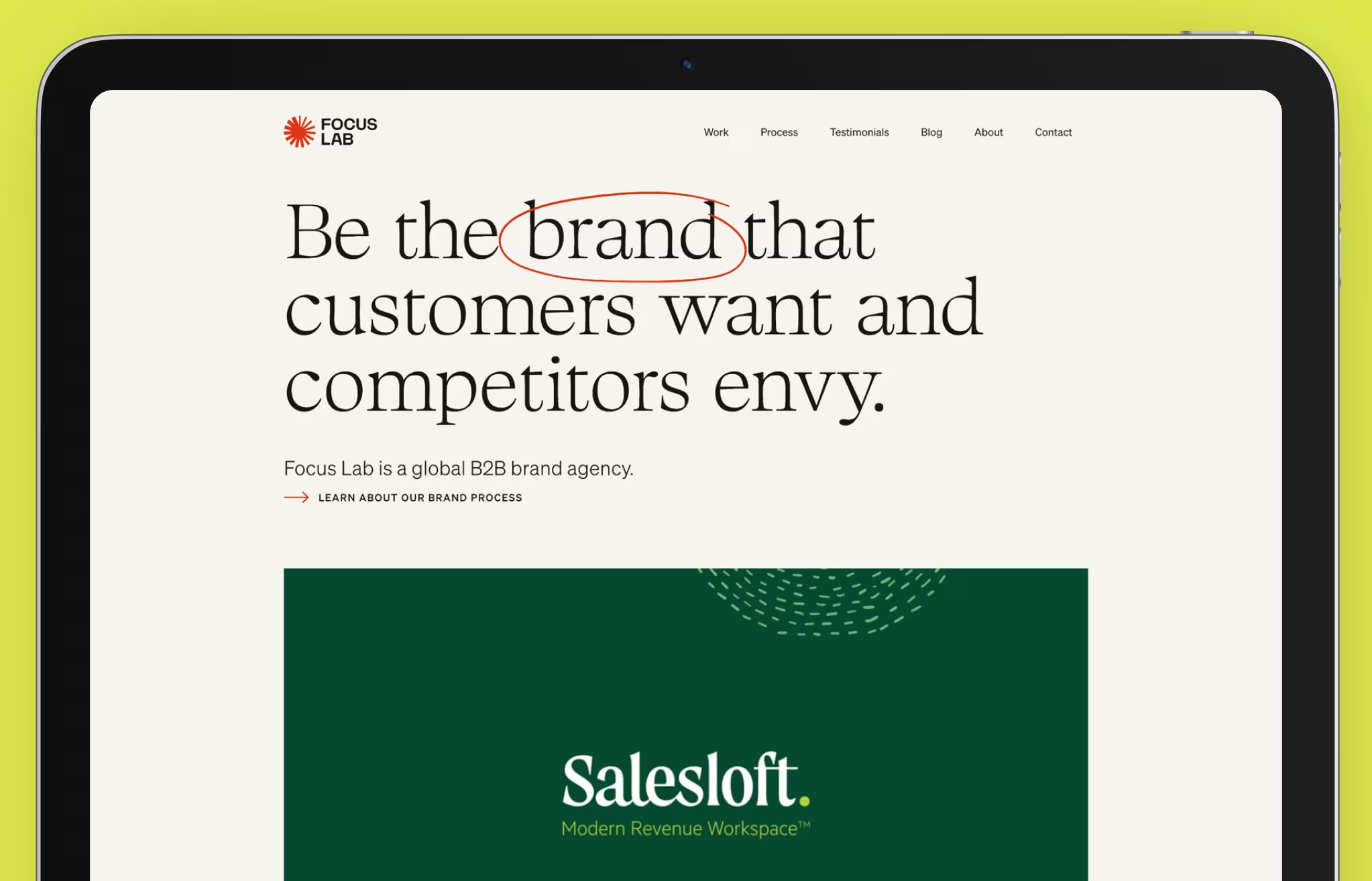
Focus Lab positions itself as a "global B2B brand agency" on focuslab agency website, serving early-stage startups through IPO-ready enterprises. Clutch lists the headquarters in Richmond Hill, Georgia, while DesignRush lists it as remote-first with a Savannah, Georgia base. Services include brand strategy, verbal identity, visual identity, web design, and structural rebrand engagements for M&A. Public pricing on the agency's site lists startup engagements at $15,000 to $50,000 and complex rebrands at $75,000 to $350,000.
Best for: B2B brands preparing for a funding round, IPO, or category repositioning; companies that need a verbal identity overhaul alongside visuals; and post-acquisition teams that need a new brand to unify legacy entities. Public client logos include Amazon, Netflix, Adobe, Udacity, Braze, BambooHR, Frame.io, Salesloft, and Outreach.
Trade-off: brand-led, not product-led. Pair Focus Lab with a product design specialist if you also need dashboard or app-level UX work.
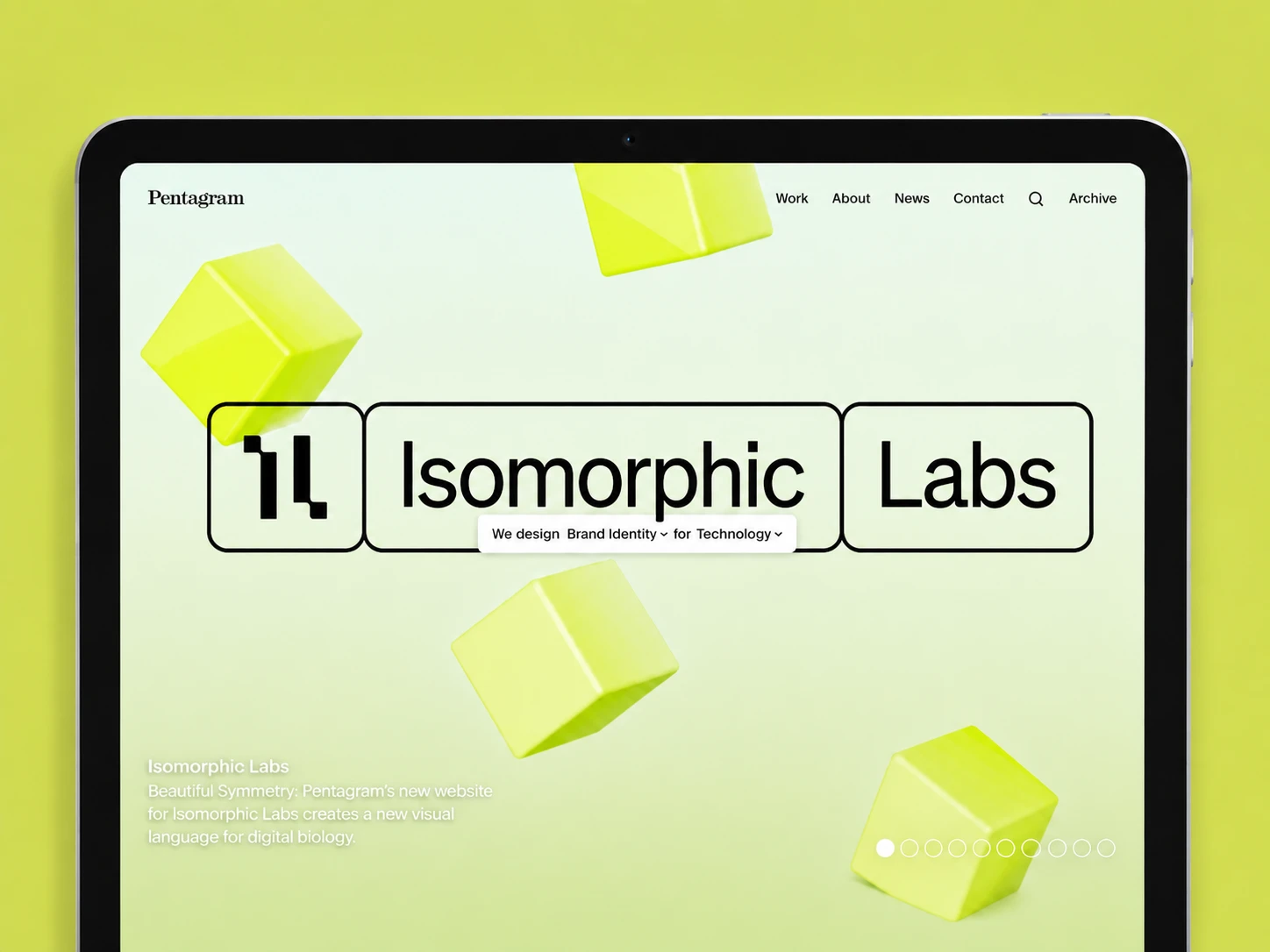
Pentagram positions itself as "the world's largest independent design consultancy," founded in 1972 and structured as a partnership of 23 independent partners operating across offices in London, New York, Austin, and Berlin. Clutch lists the Austin office as the primary US base. The firm has remained independent throughout its 50-plus year history, with each partner running their own practice while contributing to collective work.
Best for: identity, wayfinding, and brand systems at the highest level, where brand is a board-level priority; cultural institutions; and companies whose category position depends on visual gravitas. Public client work spans Mastercard, Reddit, Cohere, Isomorphic Labs, General Catalyst, the Guggenheim, and the Gates Foundation.
Trade-off: principal-led engagements with partnership-level pricing, neither of which Pentagram publishes openly. Not a fit for fast-iteration product work or marketing site builds.
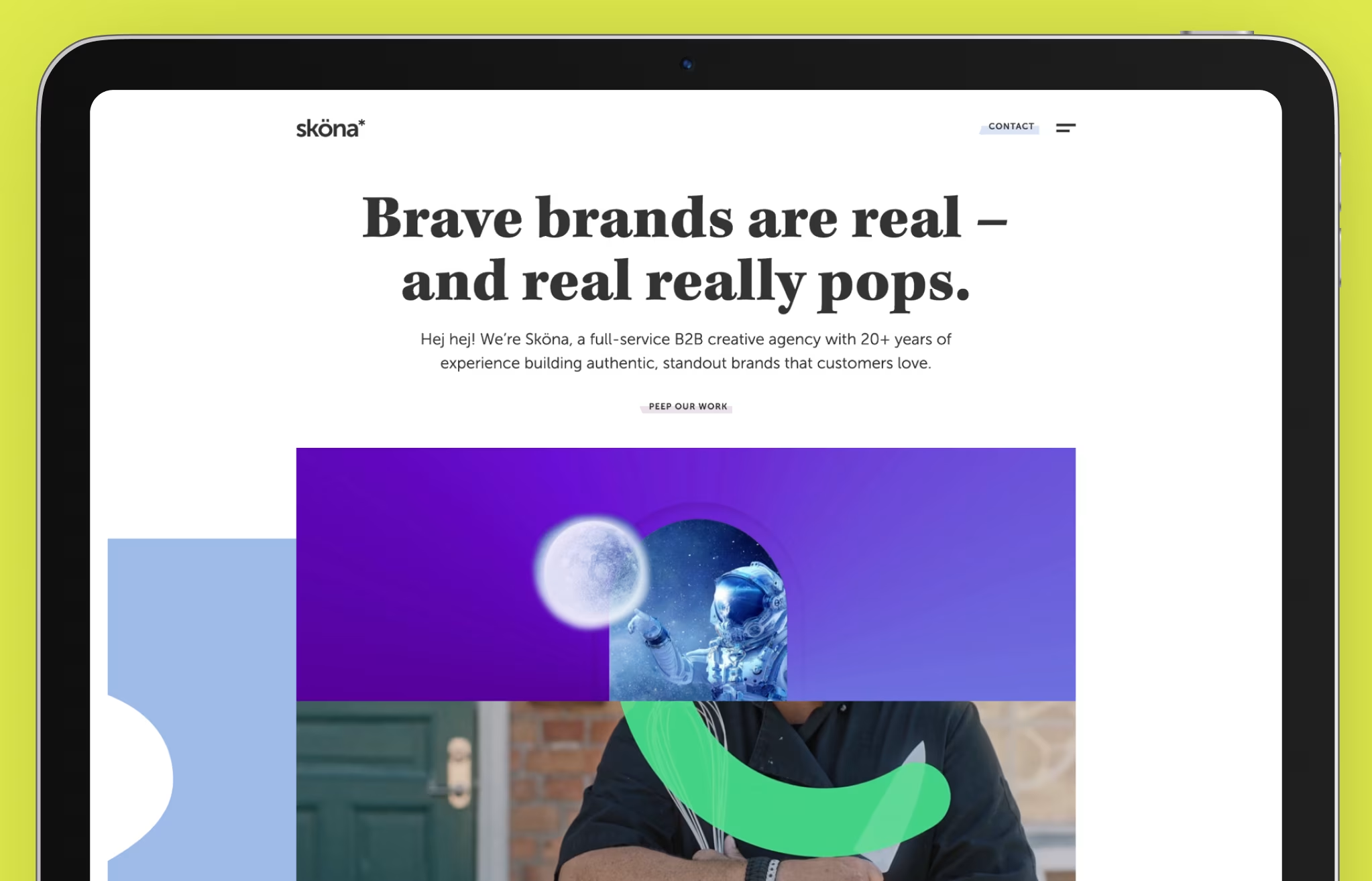
Sköna is a B2B-only creative agency with more than 20 years in market, operating from offices in San Francisco and Stockholm. Clutch lists the San Francisco office as the headquarters. Public client logos include Snowflake, Alteryx, WitnessAI, Sema4.ai, Sigma Computing, Extreme Networks, Omada, and Mercuri International. Services span brand strategy, visual identity, demand generation, advertising, and naming.
Best for: B2B tech and data-platform companies that want brand and demand programs designed to move together; AI and analytics brands that need positioning capable of cutting through a crowded category; and marketing leaders who want one creative partner across brand and campaign work.
Trade-off: less depth in detailed product UX and dashboard work compared with dedicated product specialists like MetaLab or Blink UX. Sköna is best understood as a brand-led B2B creative agency, with demand-side execution layered on top rather than complex product UX engagements.
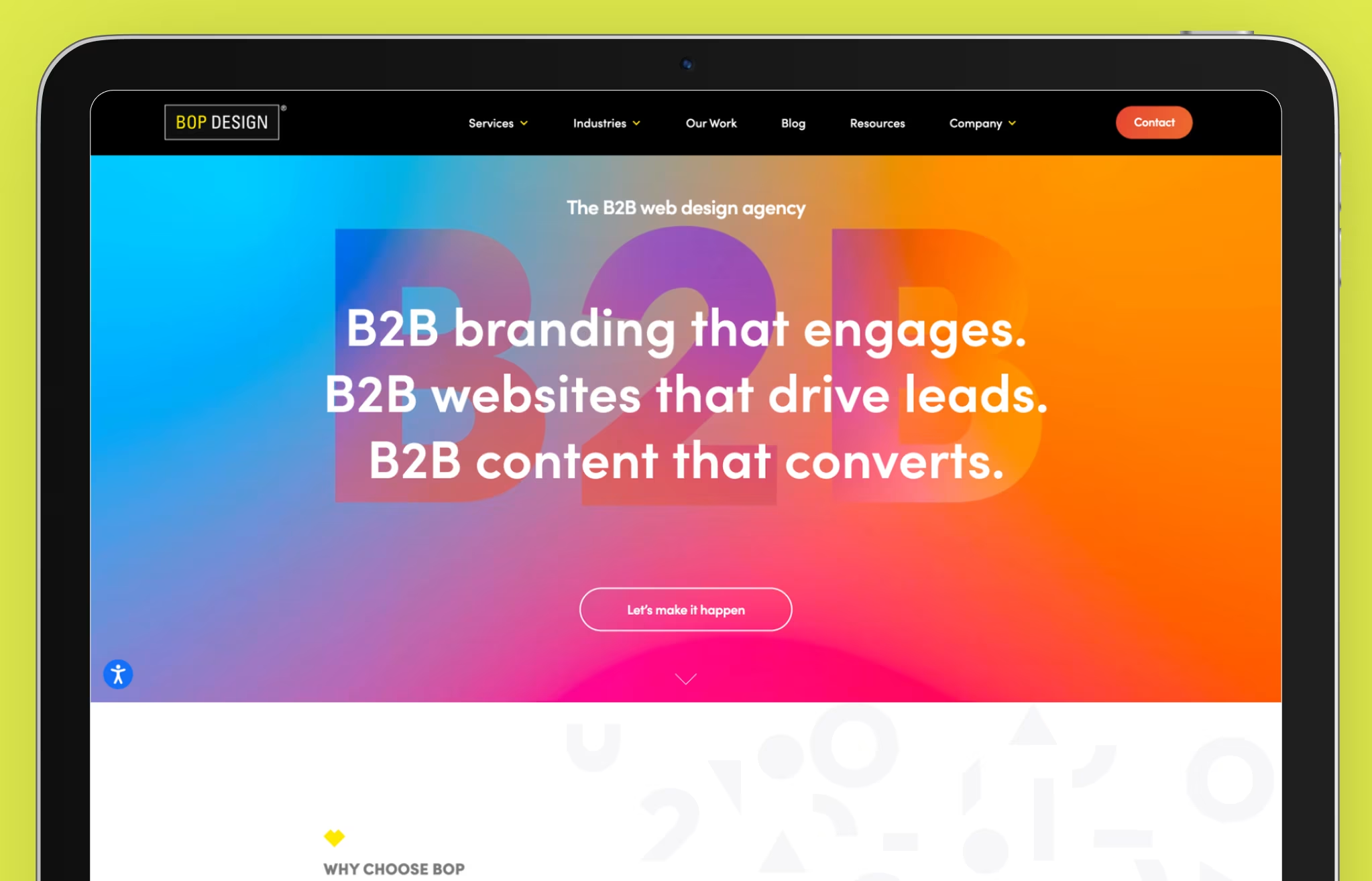
Bop Design's positioning is direct: "B2B. It's all we do". The agency runs an integrated model across website design, content marketing, branding, and lead generation. Clutch ranks it #1 in its "B2B Website Design & Marketing" category, with 122 verified reviews and a perfect 5.0/5 rating across "Timely," "Communicative," and "High-quality work" mentions.
Best for: small and mid-sized B2B companies that want one partner managing website, brand, and inbound marketing in a single program; technical and service-sector firms that need lead generation tied to their site; and operators who would rather not coordinate multiple agencies on overlapping workstreams.
Trade-off: marketing-first, not product-design-first. Bop Design is best paired with separate engineering or product design partners when the engagement requires deep app UX, complex SaaS workflows, or interfaces beyond what a marketing site or WordPress build typically handles.
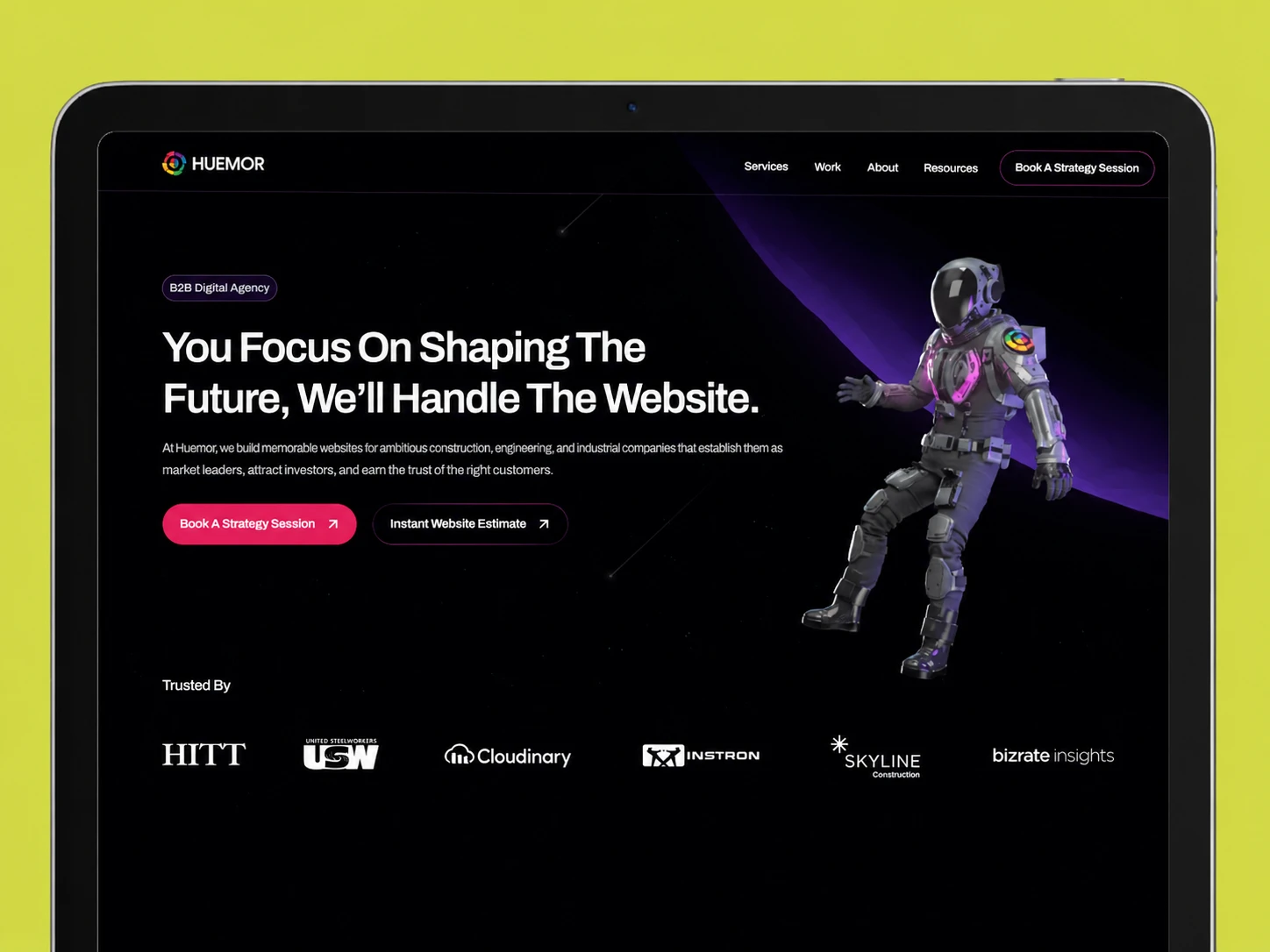
Huemor is a Pittsburgh-based digital agency that builds websites for ambitious construction, engineering, industrial, and technical B2B companies. The agency's own site reports average outcomes of 83 percent more organic traffic, 94 percent more conversions, and 91 percent more qualified leads across its engagements. Public clients include Boston Dynamics, Cloudinary, Instron, Seegrid, HITT Contracting, Baltimore Aircoil, United Nations, Revlon, Special Olympics, and Live Nation.
Best for: industrial, engineering, manufacturing, and technical B2B brands that need a website with personality and conversion thinking; companies whose competitors all look identical and bland; and teams that want a partner combining creative ambition with B2B information architecture.
Trade-off: vertical specialization concentrated in physical industries and technical product brands.
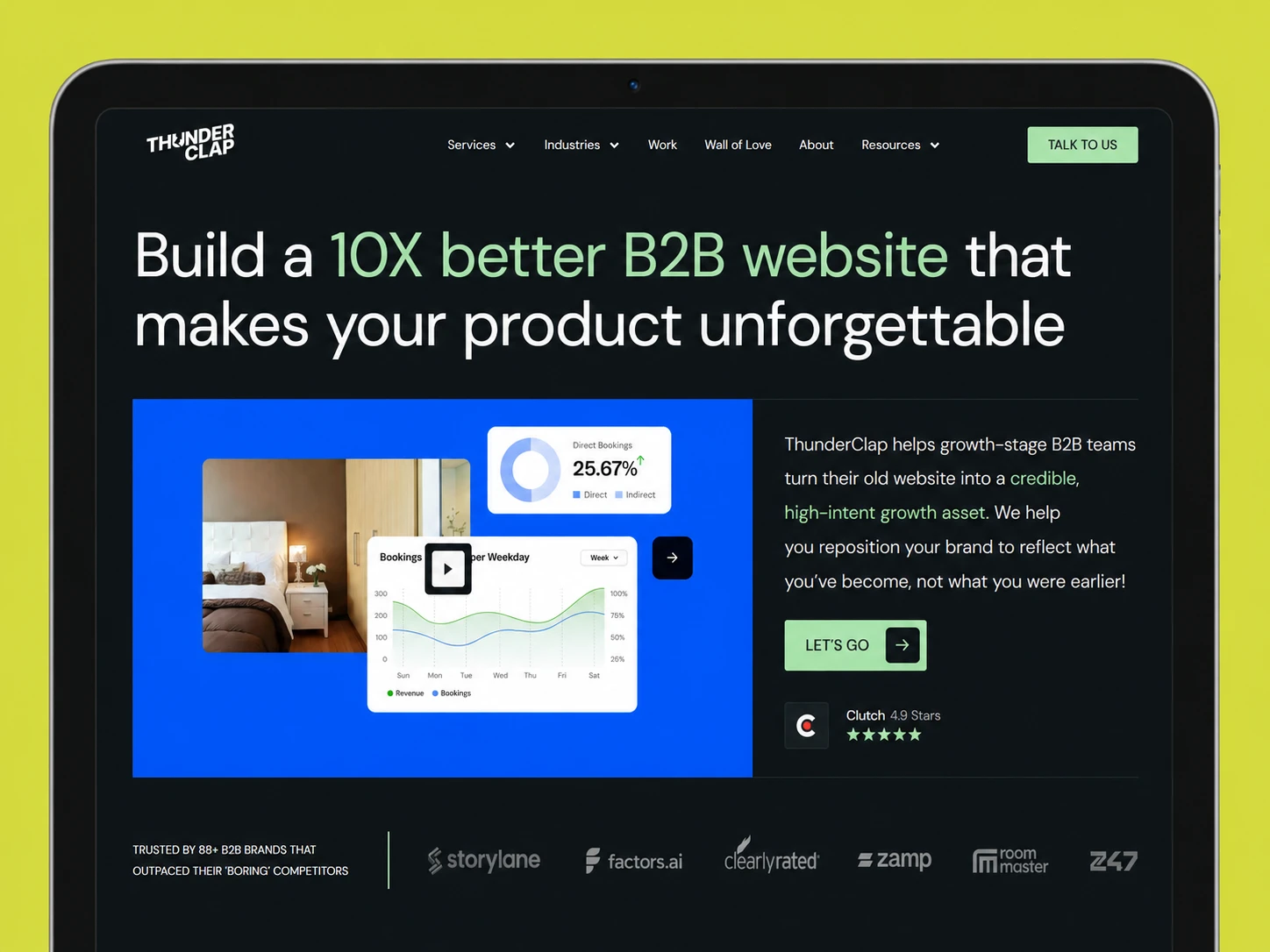
ThunderClap is a B2B web design and Webflow development agency. Public claims on their website include 144-plus B2B websites launched, a 50 percent average increase in demo requests, and clients including Amazon, Razorpay, Storylane, Factors AI, Roommaster, Shopline, ClearilyRated, and Zamp. Clutch lists the headquarters in Bengaluru, India. The agency runs a structured 10-week delivery process with an in-house product marketing function involved upstream of design.
Best for: mid-market and growth-stage SaaS companies that want a Webflow build led by positioning and messaging strategy, not just visuals; teams that need a site marketing can update without engineering.
Trade-off: focused on web and brand, not full product design. The right partner for the marketing site, not for designing an enterprise dashboard or admin tool.
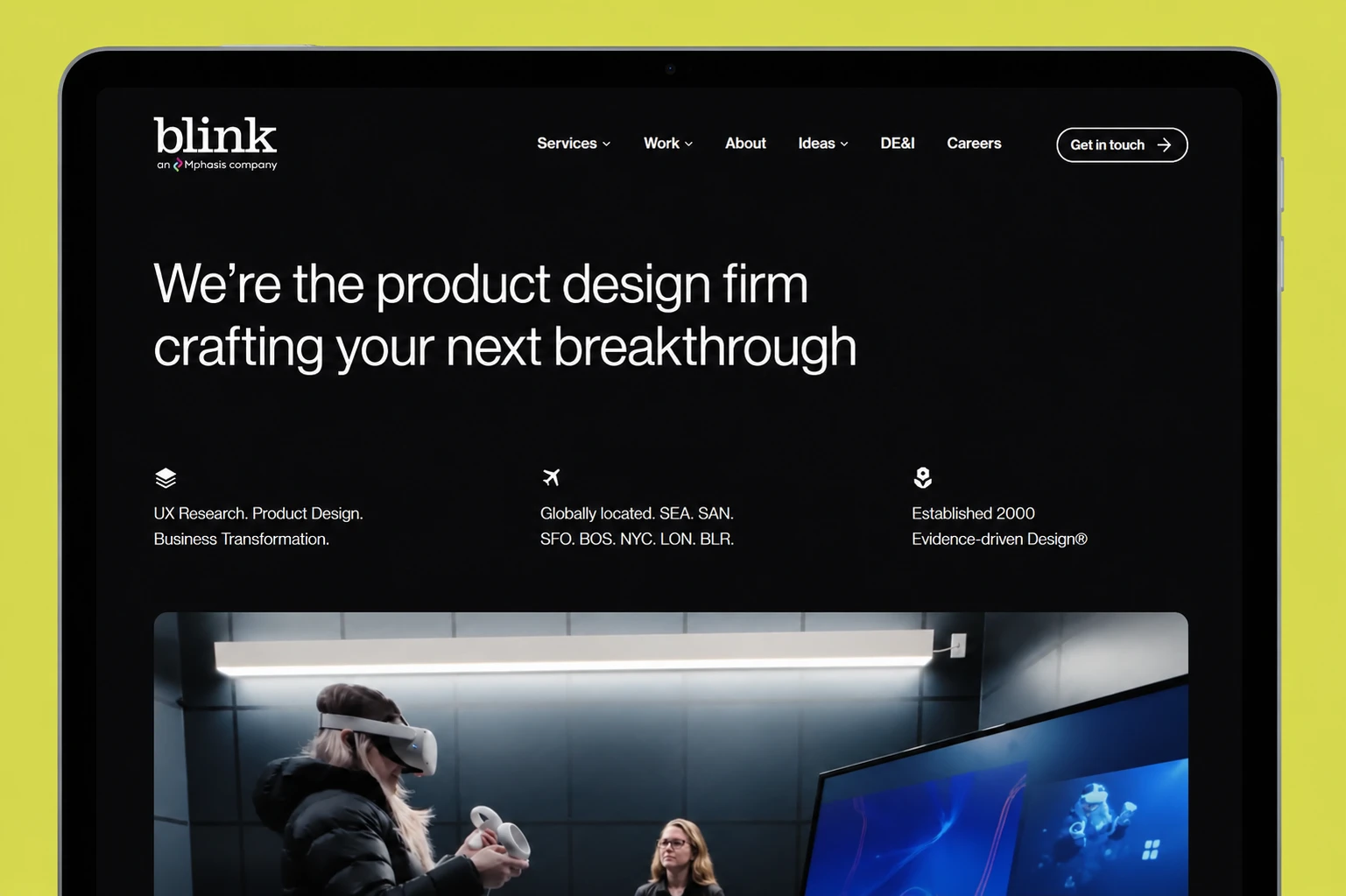
Blink UX has practiced "Evidence-driven Design" since 2000, using qualitative and quantitative research to remove guesswork from product decisions and to defend design choices to executive stakeholders. Clutch lists the headquarters in Seattle, WA. Public client logos include Amazon, Google, NASA, Meta, Microsoft, Chase, Wells Fargo, Apple, Nike, Kaiser Permanente, and Pfizer.
Best for: enterprise product teams that need defensible research behind every design decision; regulated industries where usability evidence is required for compliance or executive sign-off; and AI and emerging-technology launches that need rigorous user testing before scale.
Trade-off: research-heavy engagements take longer and cost more than execution-focused boutique projects. Blink UX is the right partner when usability research and accessibility evidence matter as much as the final design itself, and is overkill for fast-moving marketing-site work or pure brand-identity engagements.
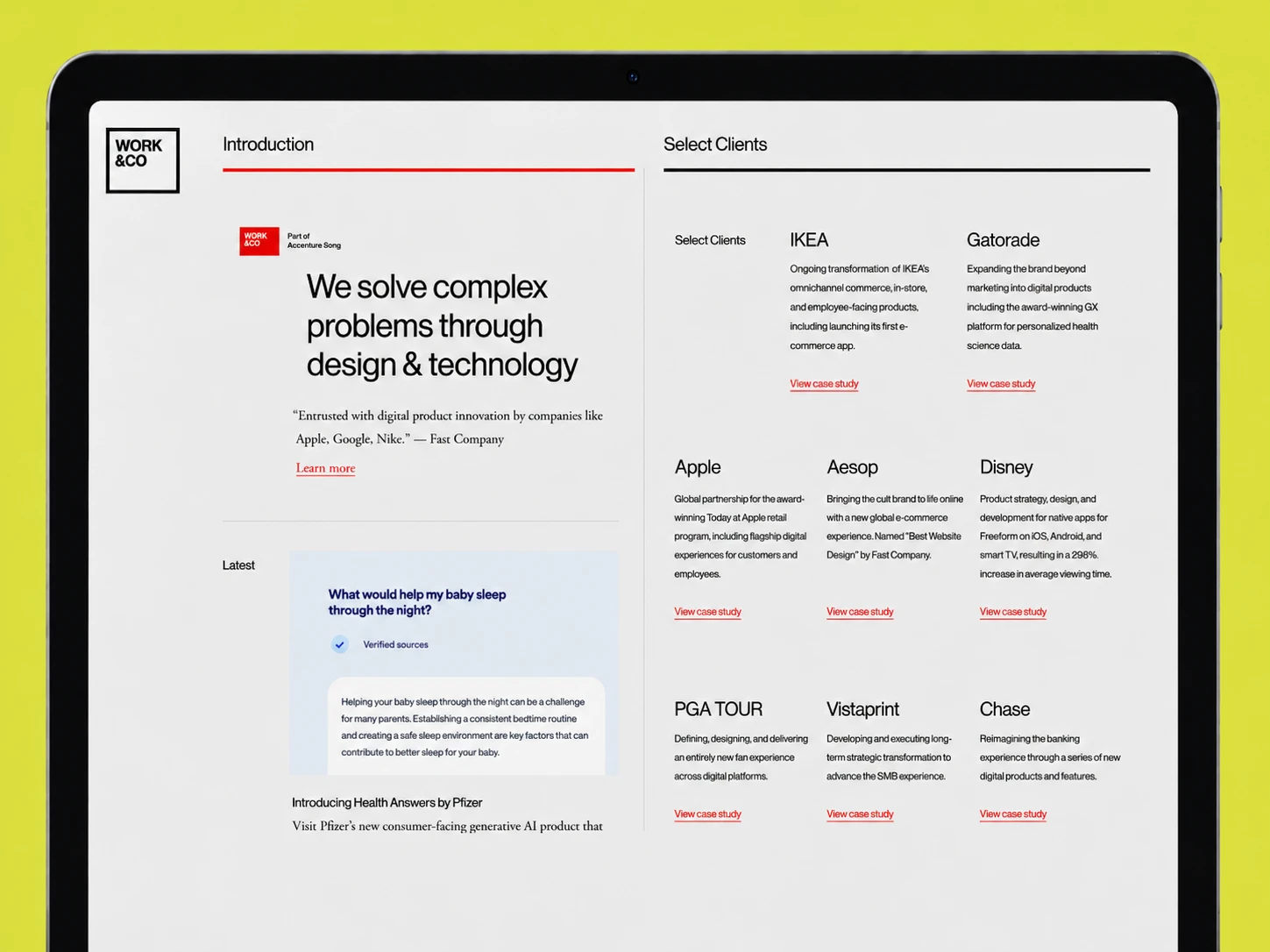
Work & Co is widely cited across 2026 rankings as one of the strongest enterprise picks for end-to-end product and digital ecosystem work, including by ANML's 2026 ranking. Clutch lists the agency as headquartered in Brooklyn, NY, founded in 2013, with additional offices in Portland and São Paulo. Multiple industry sources report that Work & Co is now part of Accenture but continues to operate independently.
Best for: enterprises rethinking their entire digital ecosystem; companies merging product and brand transformations into a single program; and consumer-facing or B2B leaders launching flagship digital experiences that have to perform at scale from day one.
Trade-off: enterprise scope and pricing in practice, despite Clutch's placeholder minimum. Overkill for early-stage startups, mid-market SaaS, and most marketing-site refreshes.
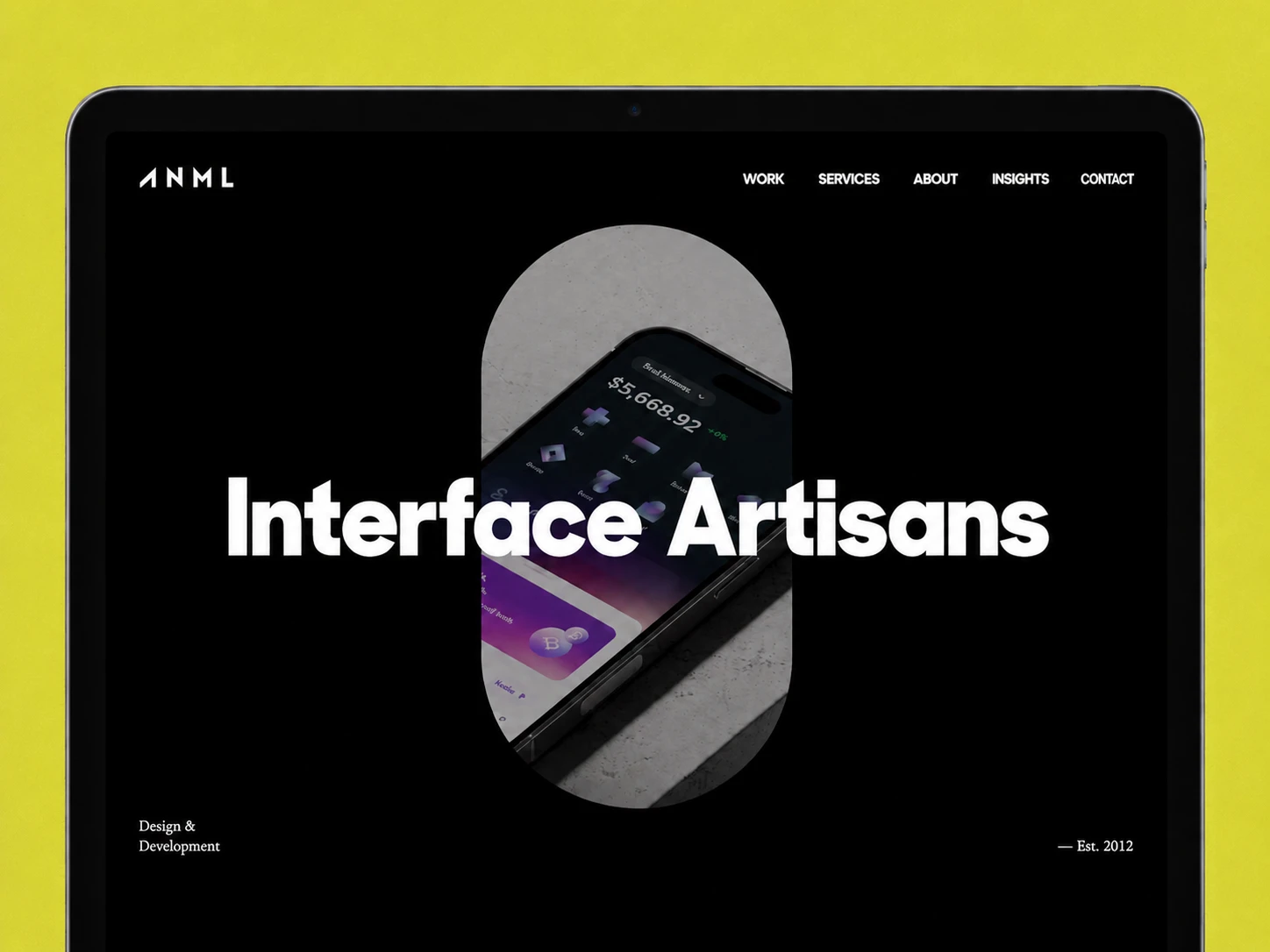
ANML positions itself as "Interface Artisans" building "result-driven apps, websites, and brands" since 2012. Clutch lists the headquarters in San Jose, California, with DesignRush noting additional offices in New York, Los Angeles, Chicago, Seattle, Austin, and Portland. Services span design, branding, and development. Notable client mentions across platforms include Ford, CNN, Whirlpool, KitchenAid, ServiceNow, Zoom, Logitech, Autodesk, and NetApp.
Best for: funded startups and mid-market B2B companies that want top-tier design and engineering craft without enterprise-tier pricing or overhead; product teams that need both interface and brand systems shipped together; and operators who value senior involvement throughout the project.
Trade-off: smaller team than enterprise-tier firms. Not the natural choice for thousand-stakeholder global rollouts or multi-region launches.
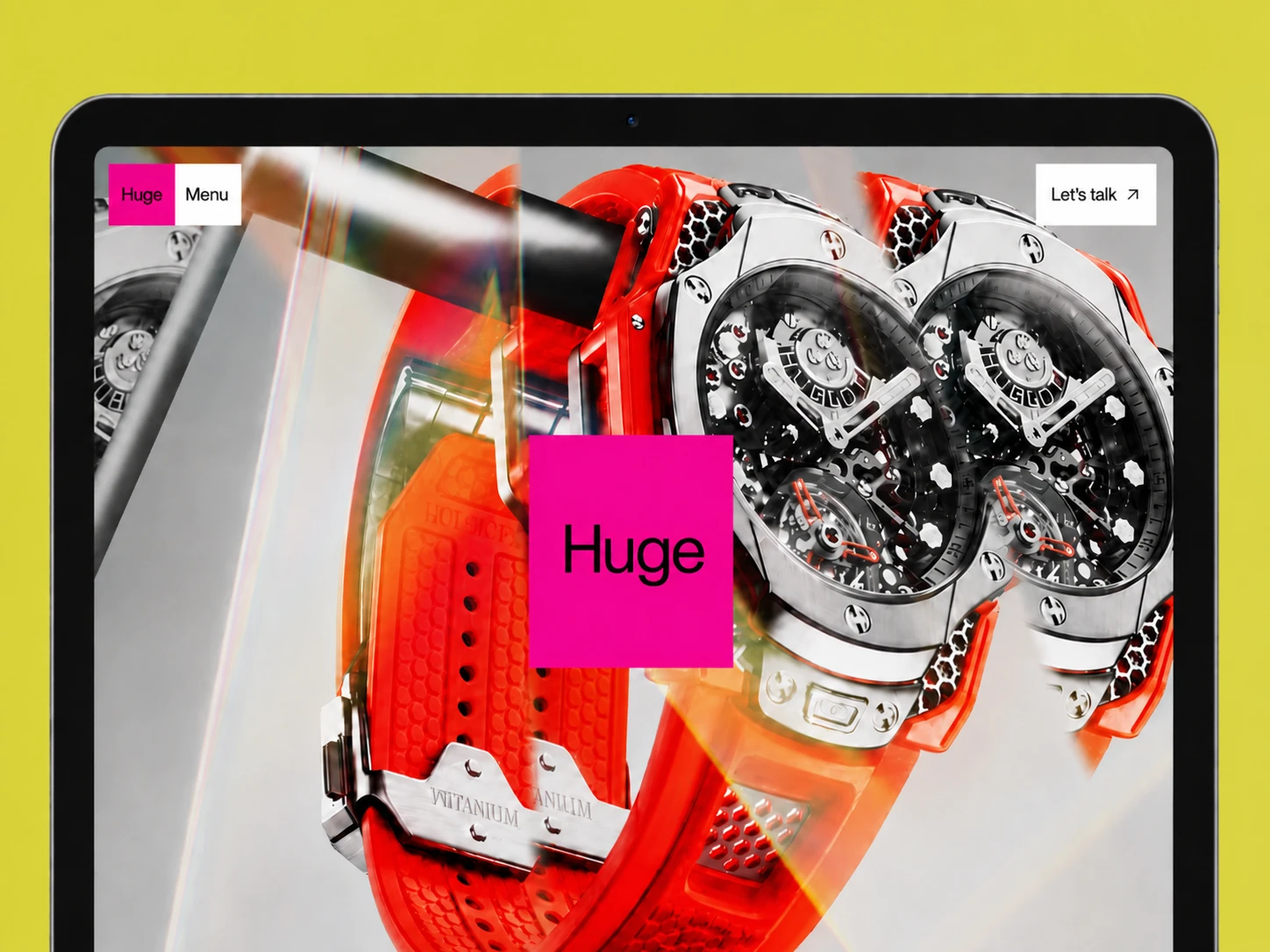
Huge positions itself with the tagline "Delivering firsts" and "Defining the future," offering a full-stack model across products and platforms, data and AI, marketing and content, brand strategy, and customer experience. The agency operates from offices in New York, Chicago, and London, with a proprietary platform called LIVE (Living Intelligence Value Engine) that uses AI to surface growth insights. Public client logos include Google, McDonald's, NBCU, Android, UNC Health, LPGA, and Planet Fitness.
Best for: large enterprise B2B and consumer brands undertaking digital transformation across product, content, and experience layers; organizations that need design, engineering, marketing, and data capability integrated under one strategic roof.
Trade-off: enterprise pricing, scope, and timelines in practice. The wrong partner for early-stage startups or single-page conversion projects.
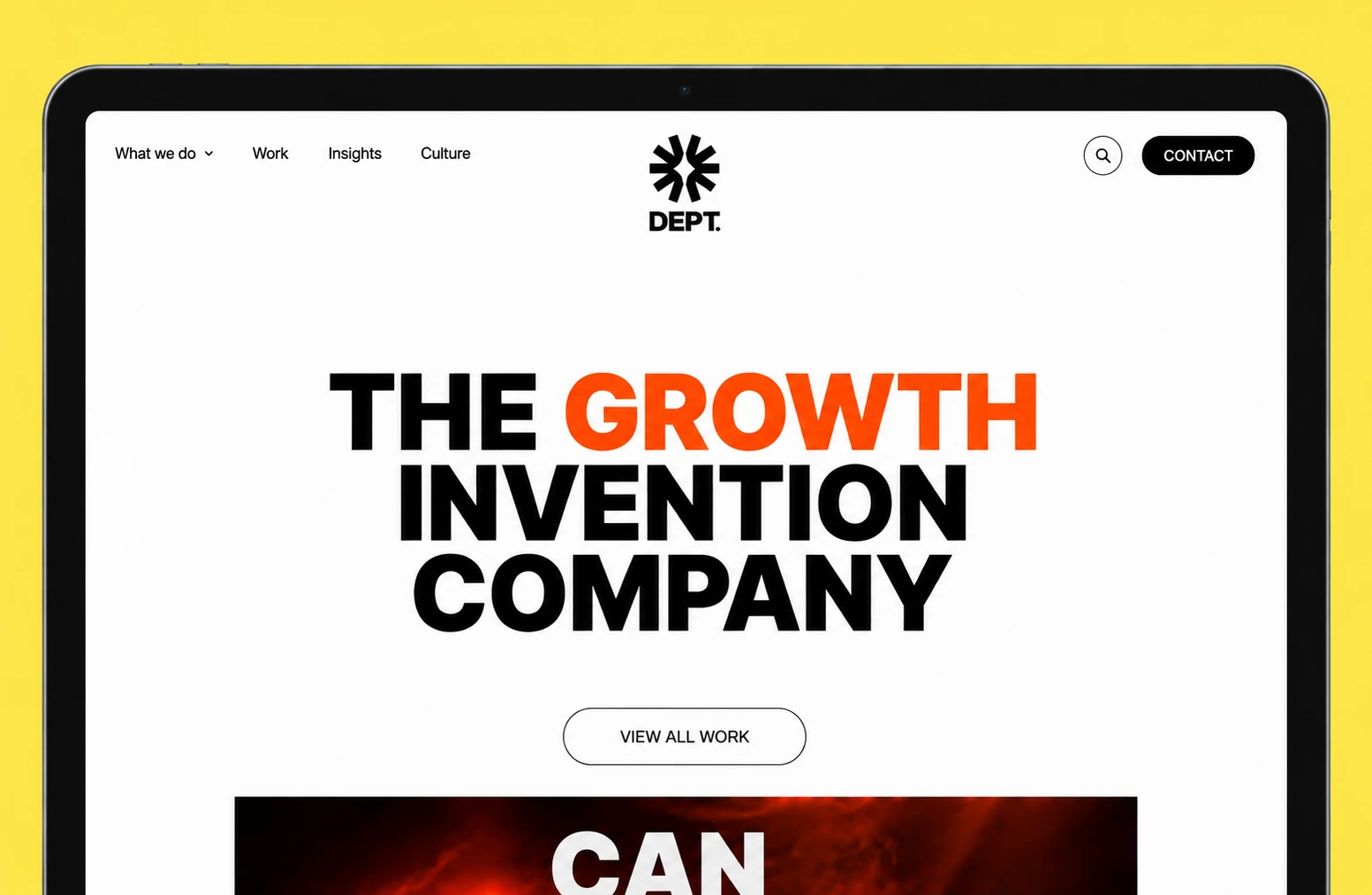
DEPT positions itself as "The Growth Invention Company," operating with 4,000 employees across five continents through a network model that includes Basic, Dogstudio, Hello Monday, and Studio Dumbar. Clutch lists the US headquarters in Boston, MA. The agency reports 50 percent AI-enabled revenue, 15-plus years of AI experience, status as an NVIDIA partner agency, and B Corp certification. Public clients include NVIDIA, Meta, eBay, Arm, Adobe, Shopify, Salesforce, Google, and Optimizely.
Best for: global enterprise B2B brands undertaking AI-driven transformation; technology companies needing creative, engineering, and data capability at scale; and category leaders that prefer one strategic partner over a portfolio of point vendors.
Trade-off: enterprise scope and a $100K+ minimum. Overkill for startups and tactical website projects.
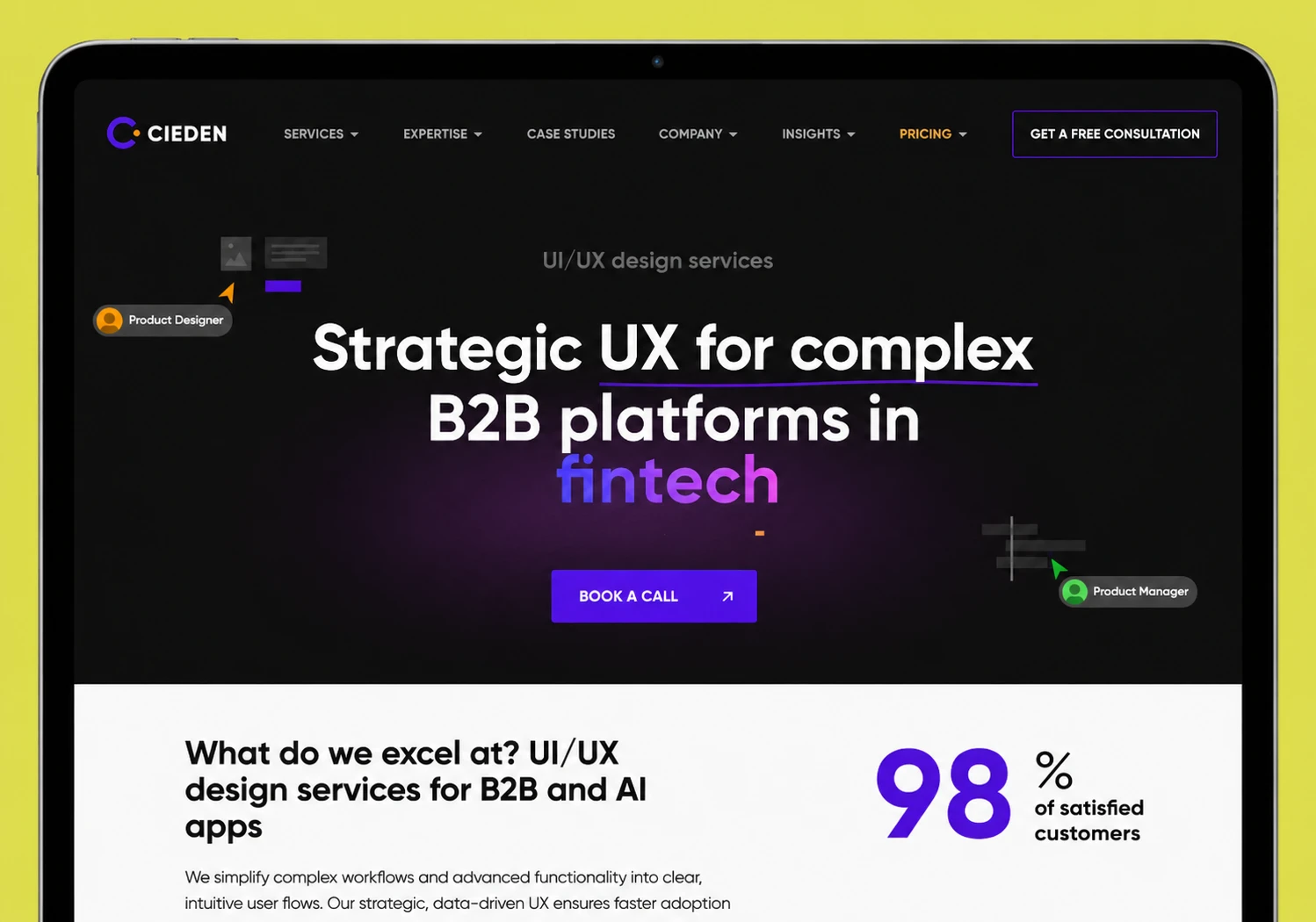
Cieden positions itself with "Strategic UI UX design services for B2B SaaS and beyond" and reports 9 years of complex B2B work, 200-plus projects, and a 4.9/5 Clutch rating across 45 reviews. Clutch lists the headquarters in Toronto, Canada, with founding date 2016. Services span product design, UX consulting, UX audits, AI prototyping, dedicated design teams, and design management. Public clients include Apollo.io, Blizzard Entertainment, Sitenna, Lykon, and Foqal.
Best for: B2B SaaS teams with complex workflows, dashboards, and enterprise data products that need simplification without losing depth; AI product teams that need rigorous UX patterns; and companies looking for embedded or fractional design leadership rather than a one-shot project.
Trade-off: product-led rather than brand-led. The right partner for deep SaaS UX work, less so for brand identity or demand generation.
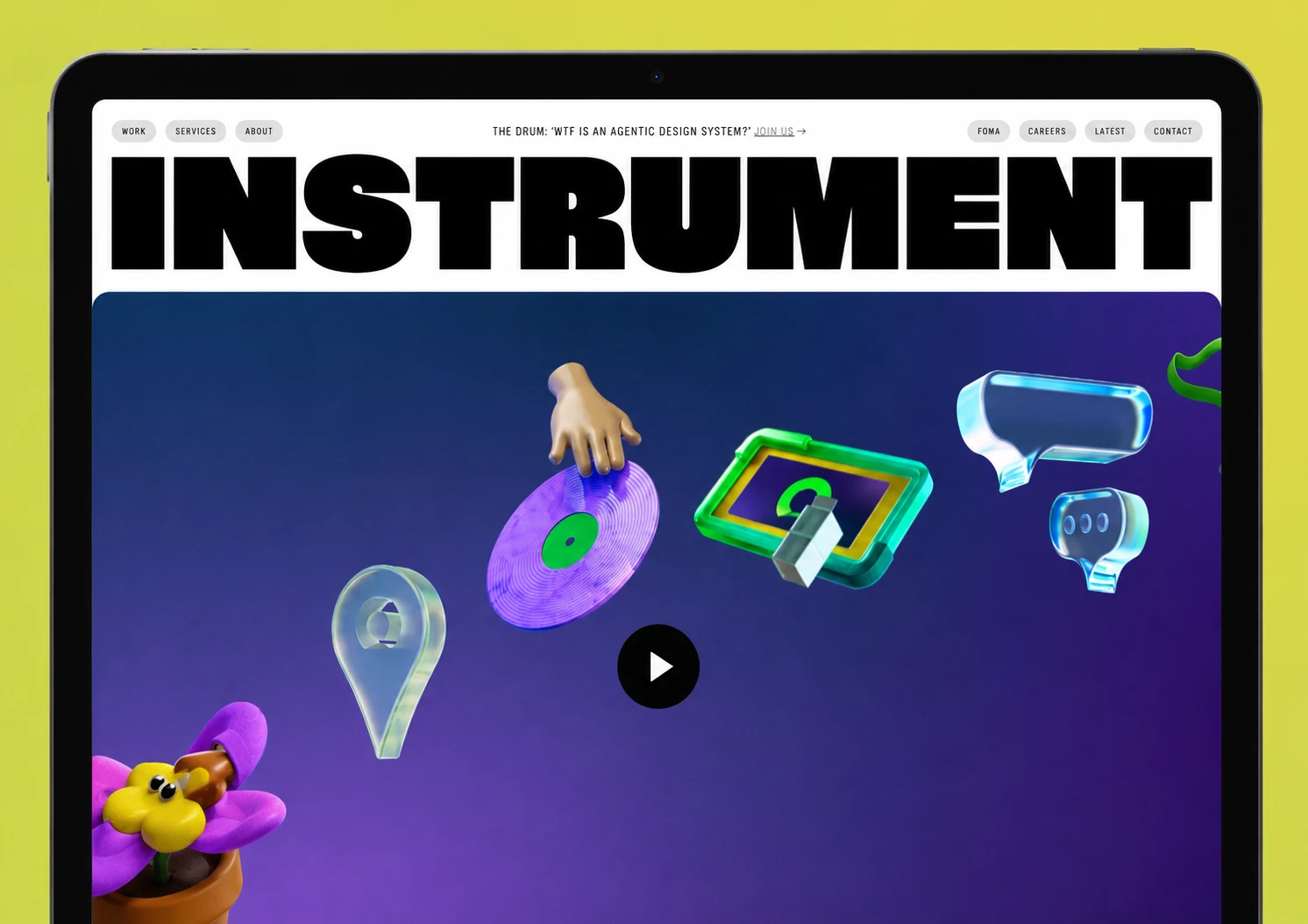
Instrument describes itself as "a technology-led brand, product, and marketing agency" with a digital-first design model that integrates strategy, creative, and technology. Clutch lists the headquarters in Portland, Oregon, founded in 2002. Public client logos include Nike, Google, ServiceNow, Netflix, Spotify, Microsoft, Uber, Instagram, Stripe, Salesforce, PayPal, Patagonia, Sephora, and Sonos.
Best for: B2B and B2C tech brands that need brand, product, and marketing work moving together at category-leader scale; SaaS and enterprise SaaS companies undertaking simultaneous brand and product evolution; and teams that want a senior multi-disciplinary partner rather than a stack of specialized vendors.

Three shifts now define competitive B2B work this year.
Conversion-first as the new baseline: "Pretty" websites that do not move pipeline are no longer treated as success. According to Flowtrix and Design Studio UI/UX, B2B design is moving from aesthetics to outcome-led decisions where every section ties to a funnel step.
AI personalization at the page level: Industry reporting in 2026 indicates that a large share of B2B sites are now embedding AI-driven personalization that adapts CTAs, case studies, and copy by industry, role, and funnel stage. We have not seen a single authoritative number we can verify across primary sources, so treat percentages from secondary blogs with caution.
AI-citation readiness: Generative engines pull and cite content for buyers researching vendors. Clean information architecture, semantic structure, and direct answers in the first paragraph now influence whether AI assistants surface your brand at all.
Interactive product visualization: For technical products, 3D models, interactive demos, and product configurators are becoming the default way to explain value before the first sales call.
Use this short framework instead of a long checklist.
Hiring an agency is rarely about who is "best." It is about who is best for your stage, vertical, and buyer.
AI now touches almost every step of B2B design, from research synthesis and persona work to copy generation, image production, prototyping, and even front-end scaffolding. The leading agencies treat AI as a co-pilot for senior designers, not a replacement. Used well, it compresses research timelines, accelerates A/B variant generation, and removes hours of manual production from the front end of a project.
AI tools help B2B agencies in four practical ways. They synthesize user interview transcripts into themes faster than manual coding. They generate first-pass copy that strategists then sharpen with proof and positioning. They produce image options and motion concepts that designers refine into final assets. They let small teams ship more variants for testing on landing pages, hero sections, and dashboards.
The most credible 2026 trend coverage points to AI shifting B2B design from static pages to dynamic experiences that adapt by industry, account, and intent in real time. Generative engines will likely become a primary research channel for B2B buyers. Agencies that build AI-citation-ready content and personalization-ready design systems will pull ahead. Agencies that treat AI as a logo-generation novelty will fall behind.
Inside your own team, pair AI with your existing process rather than replacing it. Use AI to draft user research summaries that researchers refine, to brainstorm landing page hypotheses your strategist scores, and to prototype microcopy variants your designer evaluates with real users. Treat AI output as input to a senior reviewer, never as a finished deliverable.
A B2B design agency builds the product interfaces, websites, brand systems, and conversion funnels that help business-to-business companies sell to other businesses. The work typically combines UX research, visual design, web development, and brand strategy.
B2B buyers move through longer sales cycles, involve more decision-makers, and require deeper proof. A B2B agency designs for committees, procurement reviews, and security questionnaires, not impulse purchases.
Based on verified Clutch profiles in this guide, hourly rates for actively rated B2B design agencies range from roughly $50 to $300 per hour, and minimum project sizes range from $10,000 (Musemind, Cieden, ThunderClap) to $250,000-plus (Instrument) and beyond. Enterprise partners like DEPT publish $100,000+ minimums on Clutch.
Most B2B website redesigns run 3 to 6 months from kickoff to launch, depending on scope, content readiness, and the number of integrations involved. Webflow-focused builds at agencies like ThunderClap follow a 10-week structured process.
Specialists usually win for B2B because of the depth of research, messaging, and conversion knowledge required. Generalists can work for early-stage brand work or simple marketing sites. They tend to underperform on complex product UX or enterprise-grade conversion design.
Verify recent case studies with documented outcomes, confirm who leads the engagement day to day, review the design system and handoff approach, and check at least three references in your stage and vertical. Also confirm the agency's published Clutch or DesignRush profile is claimed and current.
Yes, when the agency understands generative engine optimization. The best B2B agencies in 2026 build content and design systems with semantic structure, clear hierarchy, and direct answers that AI assistants can cite cleanly.
A pitch that leads with awards and aesthetics, without a clear answer to "what business outcome did we move?" If the agency cannot connect design choices to pipeline, retention, or conversion, treat it as a creative shop, not a B2B partner.
Yes for most marketing sites. Webflow gives marketing teams ownership of updates without engineering tickets. For product apps and dashboards, custom development is still the right path.
Track demo requests, qualified pipeline sourced from the site, time-to-publish for marketing, and AI assistant citations. Vanity traffic numbers alone are not a B2B success signal.




A digital transformation agency bringing strategy, design, and development together to build useful digital products for ambitious businesses.