A good mobile design not only improves user experience but also increases sales and purchase rates. Good mobile design is not about cool looking user interface only. It's also about a combination of UI & UX. In this regard, most of the agency failed to do it.
This is where many agencies fail.
Some founders make the wrong hiring decision by choosing a team that can make an app look visually impressive but cannot make it easy to use from the user’s perspective. The result is an app that looks polished but feels confusing, slow, or frustrating in real use.
To make the selection easier, we have made a list of the top mobile app design agencies based on their mobile app design experience, UX process, case studies, public reviews, team size, and service depth. This guide will help you compare the best options and choose the right agency for your next app launch.
Here is a quick comparison of the top mobile app design agencies based on their best-fit clients, founding year, and other aspects. Use this table to shortlist agencies faster before reading the detailed breakdown.
You need a partner that understands users, product goals, app flows, and business impact. The agencies below were selected based on their mobile app design proof, service depth, client fit, public reviews, and case study quality.
Quick facts
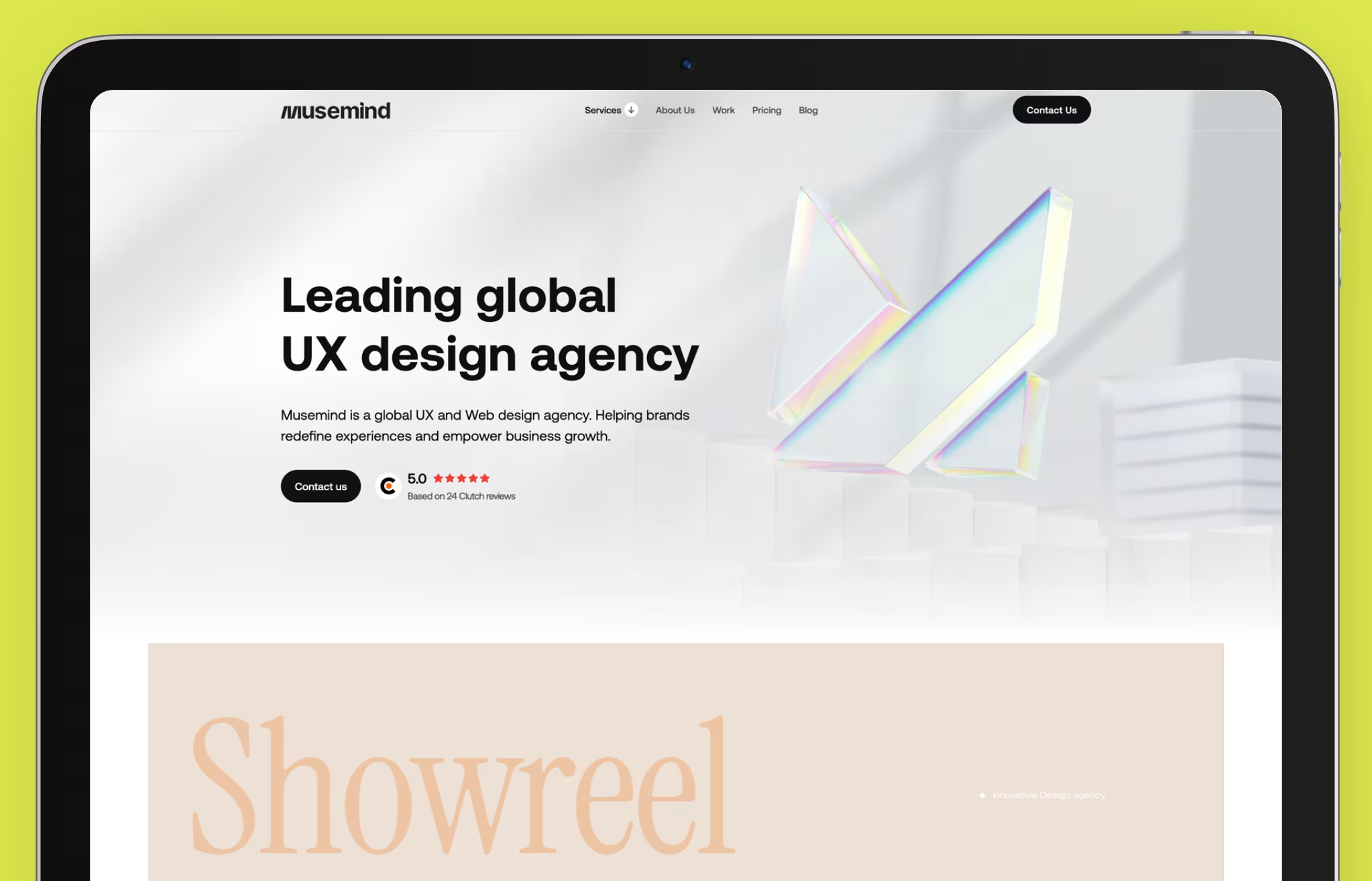
Musemind is a global UX and digital product design agency that works with startups, SaaS teams, fintech companies, and growth-stage product teams. The agency is a strong fit when a business needs mobile app design backed by research, product thinking, and clean visual execution.
For mobile app projects, Musemind covers the main design stages from user research to final handoff. Their work includes app flows, wireframes, UI design, prototypes, usability testing, and accessibility testing. This makes them useful for teams that want more than attractive app screens.
Musemind’s mobile app portfolio includes projects like Prime Iraq or Trainmate. Prime Iraq shows the agency’s fintech app design capability, while Trainmate shows its experience with AI-powered fitness app UX. These examples make Musemind a practical choice for startups and product teams that want app design with stronger user experience foundations.
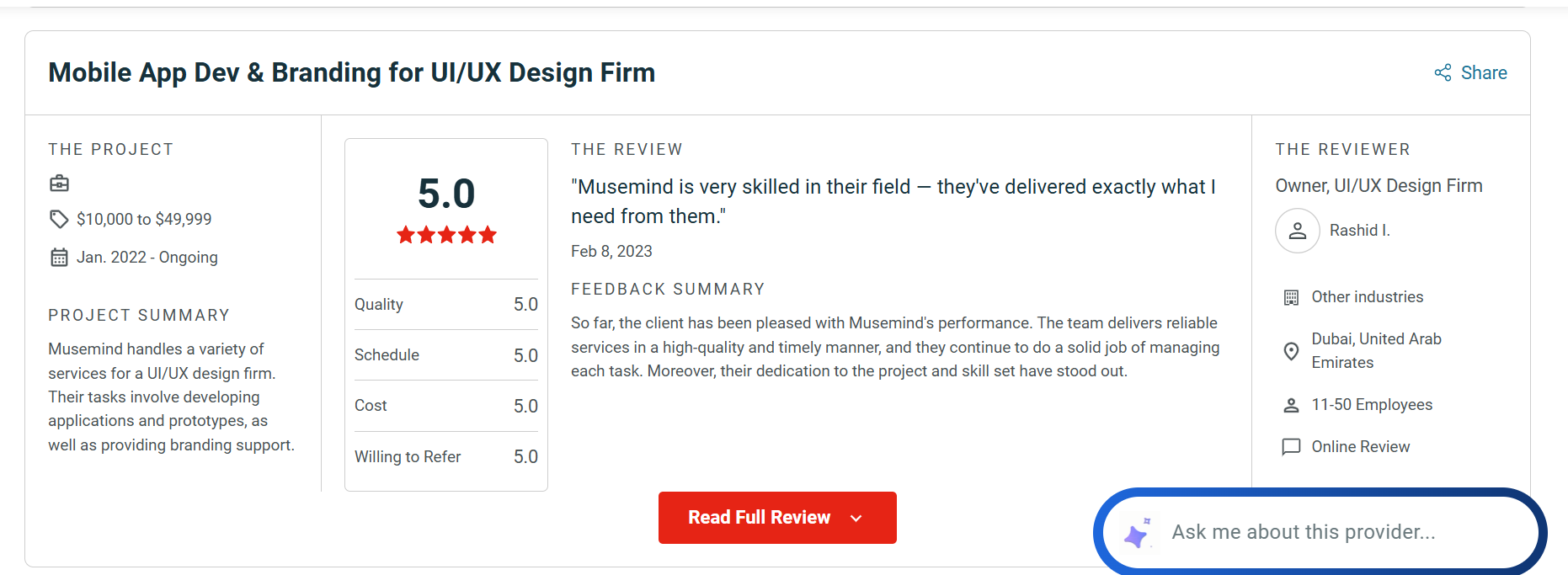
Musemind has a 4.9 rating on Clutch. Clients often highlight the team’s communication, design quality, responsiveness, and ability to understand product goals. The review profile supports Musemind’s position as a reliable UI/UX partner for companies that need structured design support.
Quick facts
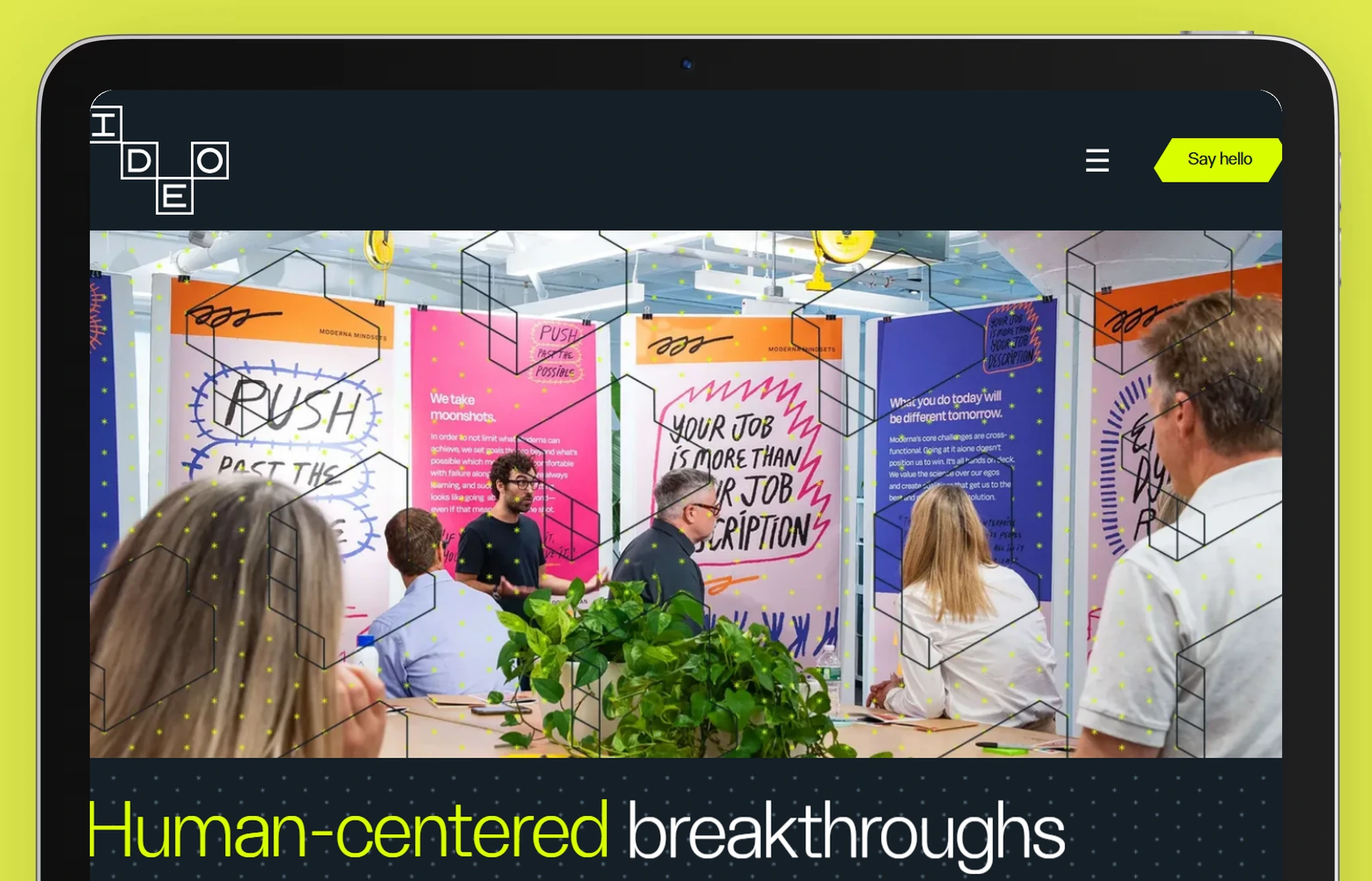
IDEO is one of the most recognized design and innovation companies in the world. It is not a typical mobile app design agency that only creates app screens. The company works on complex product, service, and digital experience problems for large organizations.
For mobile app design, IDEO is a strong fit when the project needs deep research and human-centered thinking. Their work often goes beyond the app itself. They look at the full user journey, business model, service flow, and real-world behavior around the product.
IDEO is best suited for enterprises, healthcare organizations, public-sector teams, and large brands that need app design connected with broader product strategy. It may not be the right choice for startups that need a fast or low-budget MVP.
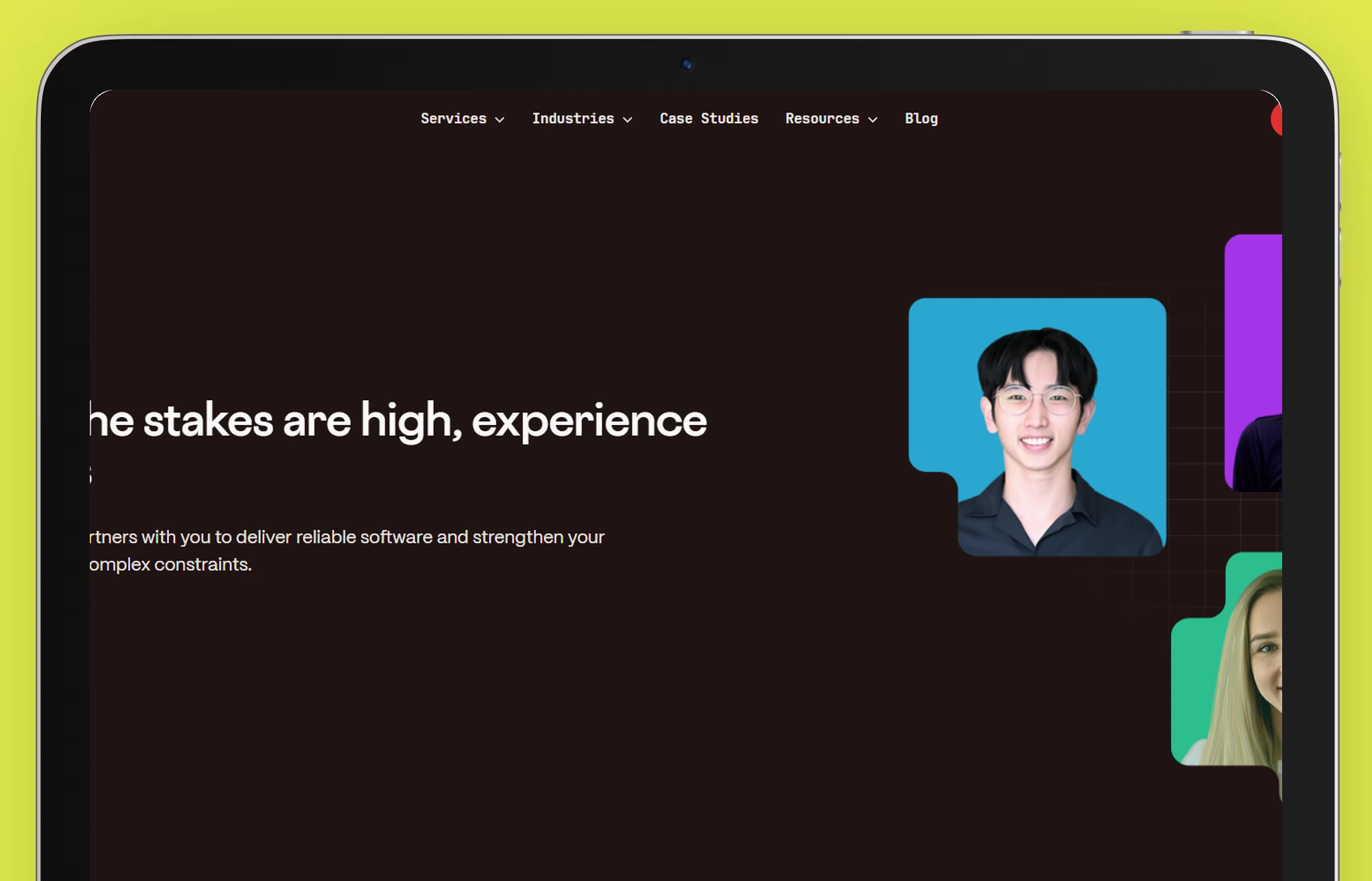
Quick facts
thoughtbot is a product design and development consultancy. It is a strong option for teams that need both mobile app UX and engineering support. The agency works with startups, healthcare teams, fintech products, and companies that need reliable software.
Its mobile app work is especially useful for React Native projects. thoughtbot can help with product strategy, user flows, interface design, technical planning, development, and long-term product improvement. This makes it different from design-only agencies.
thoughtbot is also strong in accessibility and design systems. That matters for apps in healthcare, finance, or other serious product categories where usability and reliability are not optional.
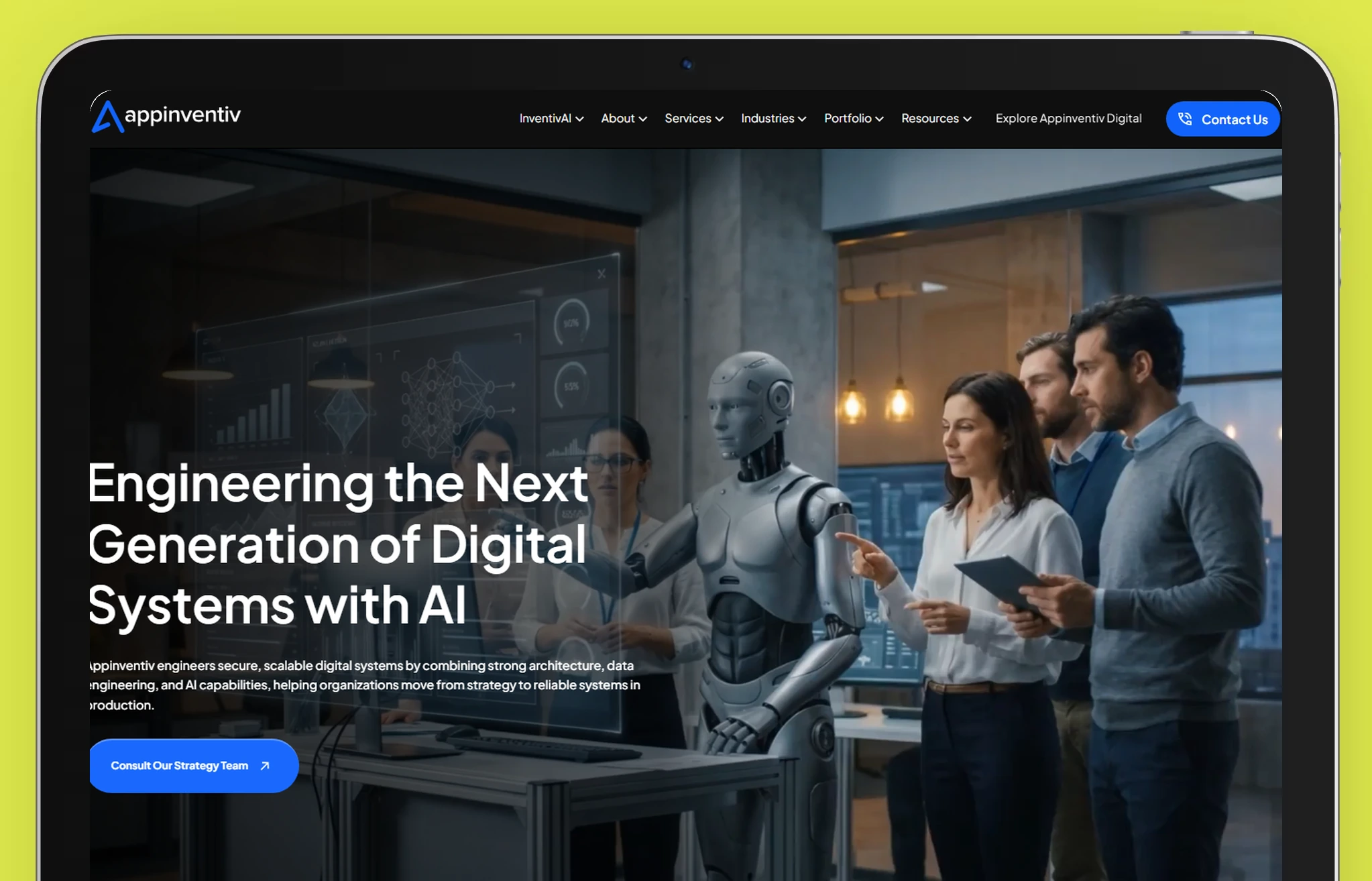
Quick facts
Appinventiv is a full-cycle mobile app design and development company. It is much more engineering-heavy than many agencies on this list. The company works with startups, enterprises, and global brands that need complete app design and development support.
Their services cover mobile app consulting, product design, UI/UX design, iOS and Android development, cross-platform development, AI-powered app development, and app modernization. This makes Appinventiv a strong fit for companies that need one team to plan, design, build, and scale a mobile product.
Appinventiv is a good option for complex app projects in ecommerce, fintech, healthcare, or on-demand services. However, it may feel too large or too development-focused for teams that only need a boutique UX/UI design partner.
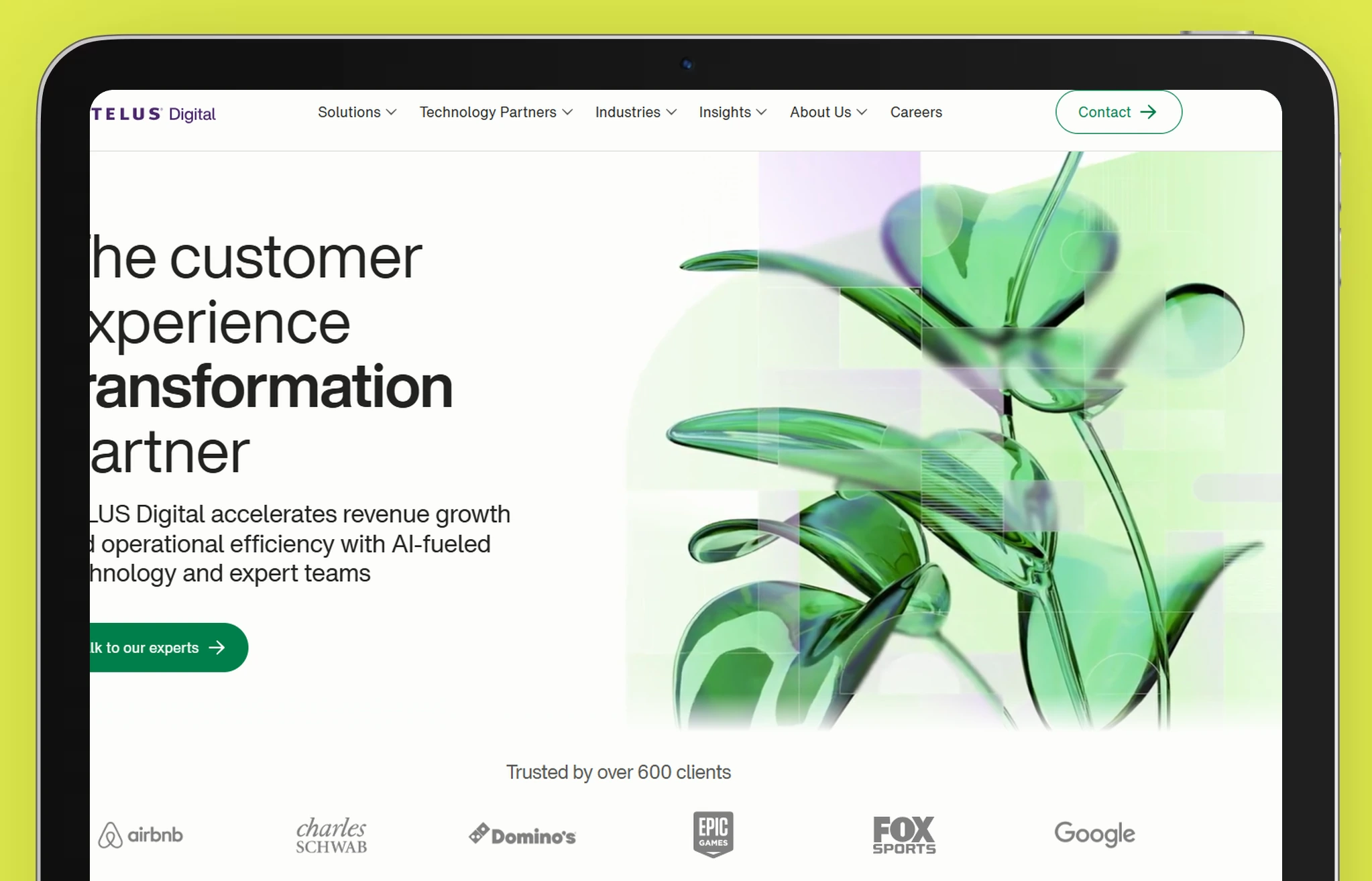
Quick facts
TELUS Digital is a large enterprise digital product and customer experience company. It is not a small mobile app design studio. The company is better suited for brands that need app design, app development, AI support, backend systems, and long-term digital operations.
Their mobile app and web development services cover full-stack implementation across platforms. TELUS Digital is a good fit for large companies that need customer-facing apps or internal enterprise apps with strong performance, security, and support.
The agency works well for enterprise teams that need more than UX/UI design. It can support strategy, development, testing, accessibility, analytics, and post-launch improvement. For small startups, the scale may feel too large.
Quick facts
Fantasy is a premium product innovation and digital experience company. It works with large brands that want polished app experiences, strong visual direction, and modern product thinking. The agency is not built for low-budget mobile UI work.
Fantasy is a strong choice when a mobile app needs to feel like a flagship product. Their work often connects app UX with brand identity, AI features, backend systems, and wider digital ecosystems. This makes them useful for sports, hospitality, entertainment, or consumer brands.
The agency has strong proof from high-end app and platform projects. However, public pricing is hidden. That means buyers should expect a premium engagement model.
Quick facts
Infinum is an end-to-end digital product design and engineering company. It is a strong option for teams that need mobile app UX and development in the same place. The company works across mobile apps, web apps, connected products, enterprise platforms, and AI/data products.
For mobile app projects, Infinum can support strategy, UX/UI design, development, backend integration, QA, and product scaling. This makes it useful for apps that need strong technical foundations and long-term reliability.
Infinum is especially strong for enterprise apps, IoT-connected products, fintech platforms, and healthcare products. It may not be the best fit for small teams that only need basic mobile UI mockups.
Quick facts
Fueled is a premium mobile app design and development agency. It works with startups, global brands, and enterprise teams that need polished app experiences with strong engineering behind them.
The agency is a good fit for mobile products where design quality, performance, backend systems, and long-term scalability matter. Its work covers product strategy, UX/UI design, iOS and Android development, web platforms, AI features, analytics, and managed services.
Fueled has strong mobile app proof across consumer apps, media platforms, travel products, and identity products. It is better suited for serious app builds than small UI-only tasks or low-budget app mockups.
Quick facts
UX Studio is a research-led UX/UI design agency. It is a strong choice for teams that need better app flows, clearer product structure, and user-tested design decisions.
The agency works well for SaaS apps, fintech products, healthcare tools, legaltech platforms, and complex digital products. Its process usually includes user research, information architecture, wireframes, prototypes, usability testing, UI design, and design systems.
UX Studio is not a full mobile app development company. It is better for teams that need mobile app UX, redesign support, user research, or usability testing before development.
Quick facts
Ramotion is a digital product and branding agency that works at the intersection of product experience and brand identity. It is a good fit for companies that want mobile app design to feel polished, consistent, and connected with the larger brand.
The agency supports app design, SaaS product redesign, onboarding improvements, web app design, brand identity, and design systems. This makes Ramotion useful for startups and product teams that need both usability and visual quality.
Ramotion is stronger as a design-led product agency than a low-cost native app development vendor. It is best for teams that care about product UX, brand consistency, and scalable design systems.
Quick facts
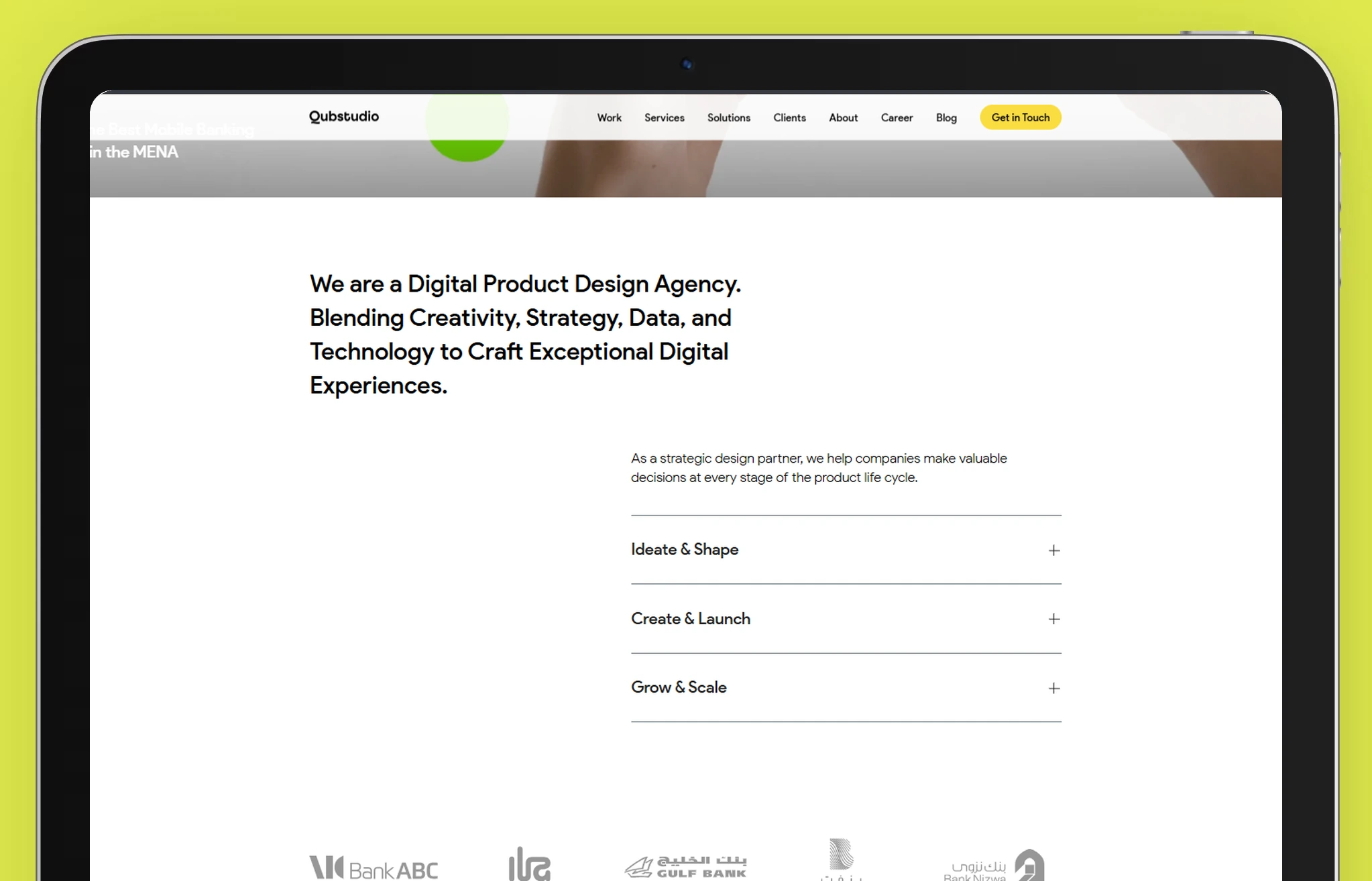
Qubstudio is a digital product design agency with strong experience in mobile app UX/UI, fintech, banking, SaaS, and complex product design. It is a good choice for teams that need research-backed design instead of simple visual screens.
The agency supports product strategy, user research, UX audits, mobile interface design, branding, and design systems. This makes it useful for product teams that need better structure, cleaner flows, and scalable UI components.
Qubstudio is especially strong for fintech and banking products. Its work with ila Bank, Gulf Bank, or CallHero shows how the agency handles mobile product design, onboarding, usability, and long-term product improvement.
Quick facts
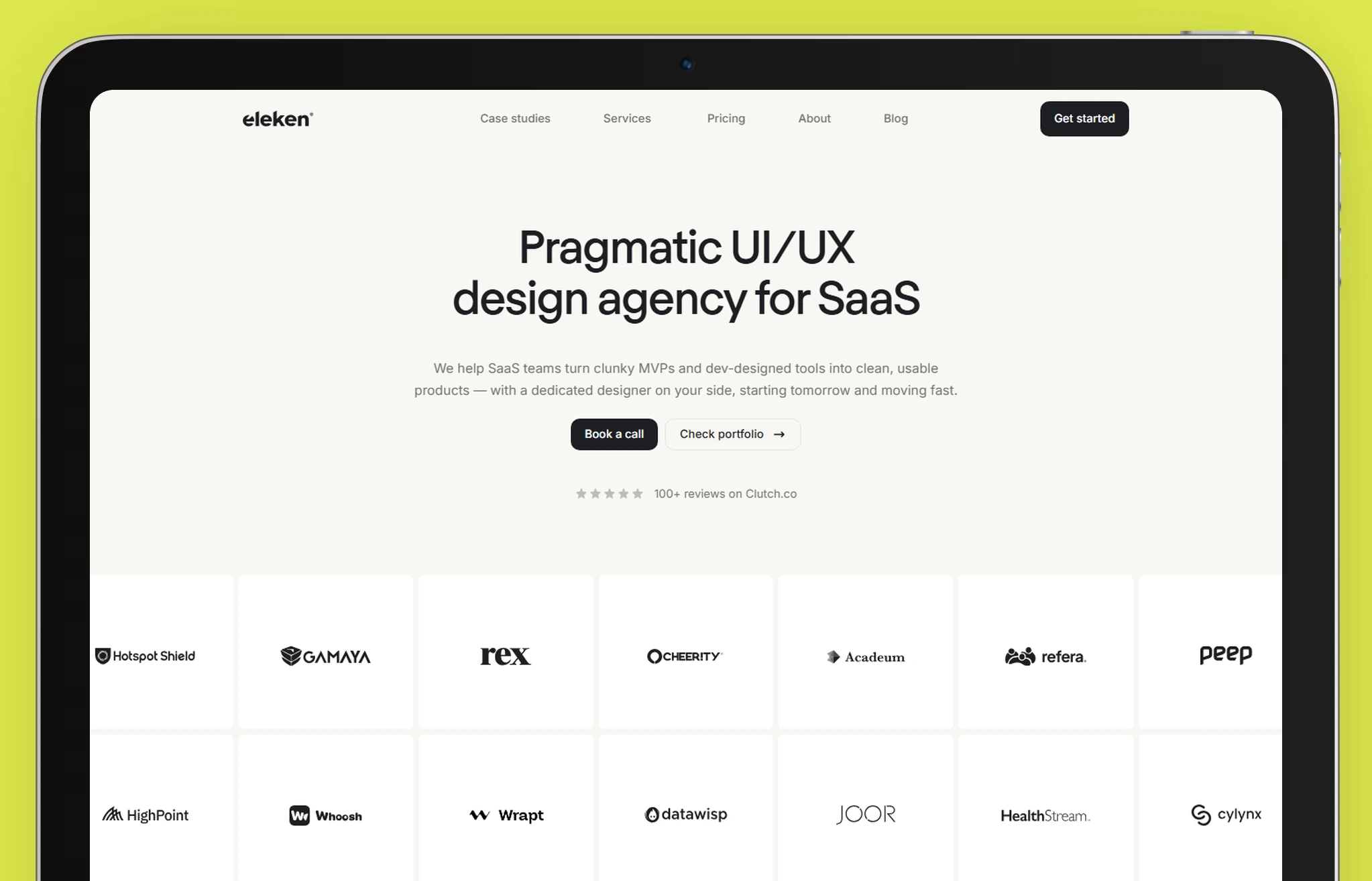
Eleken is a SaaS-focused UI/UX design agency. It is different from many agencies on this list because it works through a dedicated designer model. SaaS teams can use Eleken for ongoing design support without hiring a full-time in-house designer.
The agency is best for SaaS products that need mobile or web app UX, product redesign, UX audits, design systems, and cleaner user flows. It works well for startup and midmarket SaaS teams that already have developers but need stronger product design.
Eleken is not a full mobile app development agency. It is a better fit for design tasks, app UX improvement, interface redesign, and developer-ready handoff.
Quick facts
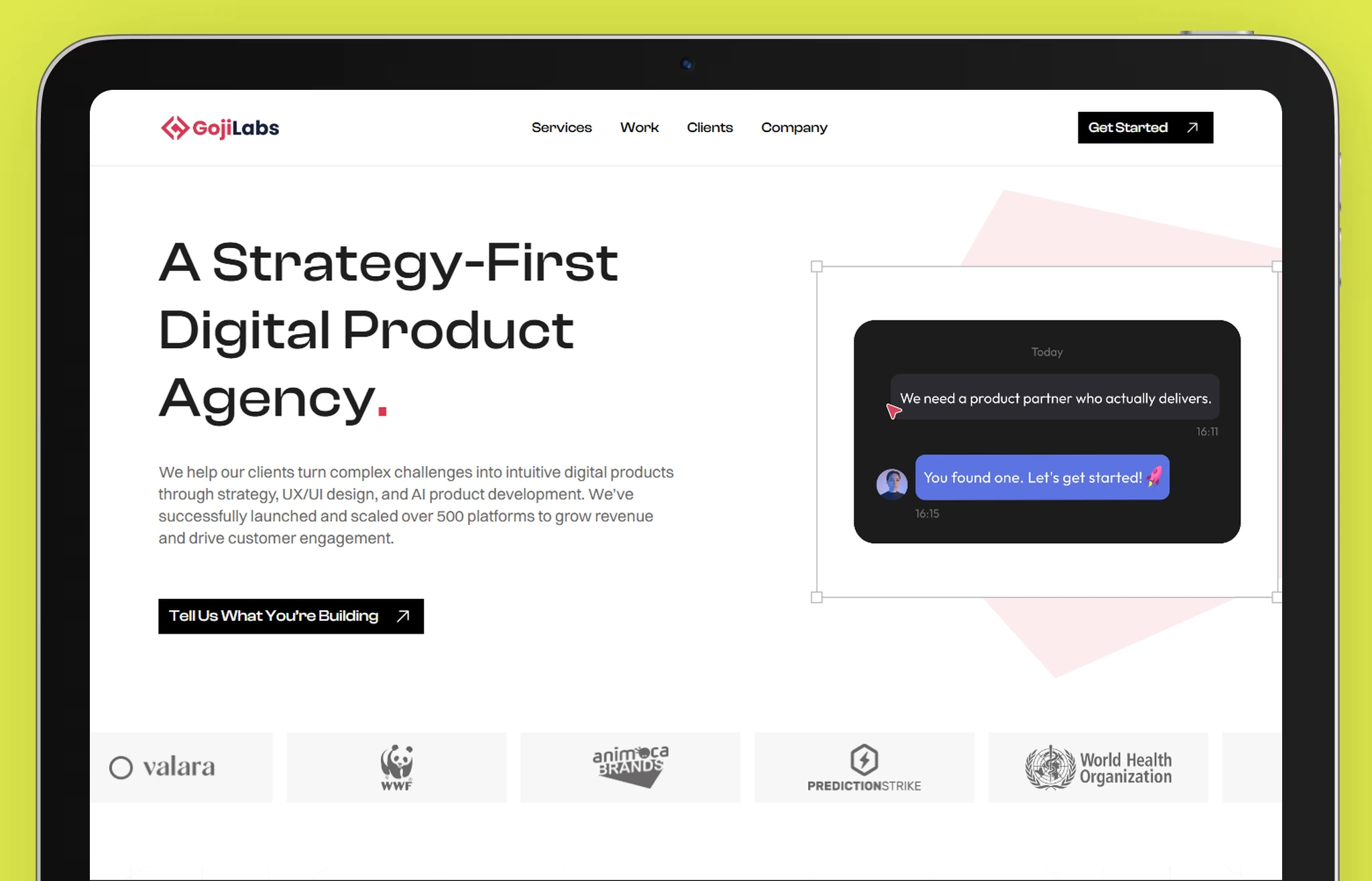
Goji Labs is a strategy-first digital product agency. It helps teams define, design, build, and launch mobile apps or custom software products. This makes it stronger than design-only studios for teams that need both UX and development.
The agency works across mobile app design, iOS and Android development, backend systems, AI product development, QA, and product launch support. It is a good fit for startups, nonprofits, fintech teams, healthcare products, and organizations with complex app ideas.
Goji Labs is useful when a team needs product clarity before building. Its strategy-first approach helps reduce weak product decisions before the app moves into design and development.
Quick facts
Utility is a mobile-first design and development agency. It works with startups, growing companies, and large brands that need custom mobile apps with strong design and engineering support.
The agency covers product strategy, user research, UX/UI design, iOS development, Android development, React Native development, backend systems, AI solutions, app store support, and product growth. This makes Utility a strong fit for teams that want one partner to design, build, and improve a mobile app.
Utility is especially useful for consumer apps, sports products, media platforms, event apps, healthcare tools, or AI-powered mobile products. It is not the right fit for teams that only need a few low-cost app screens.
Quick facts
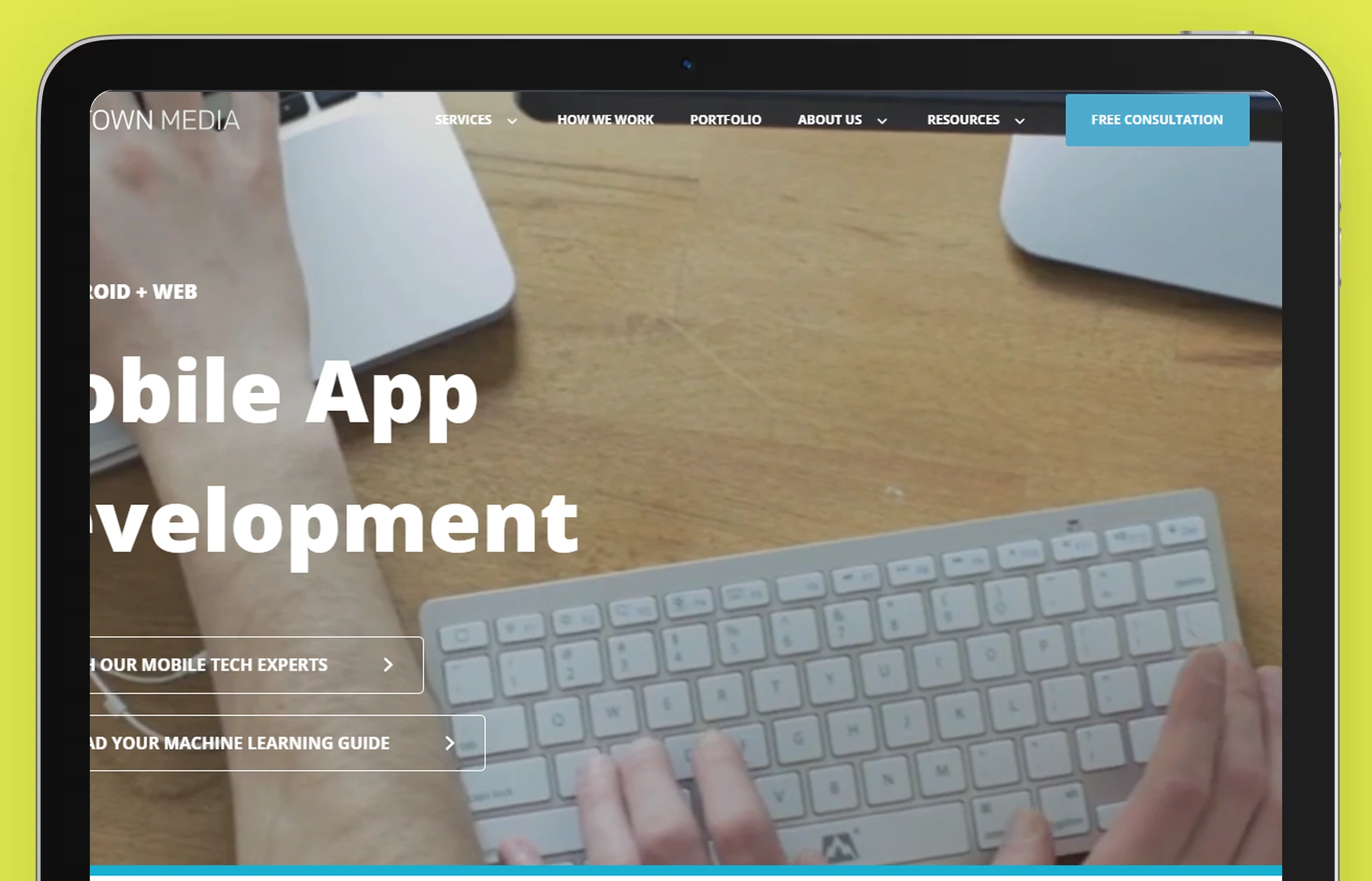
Dogtown Media is a mobile app design and development company with strong experience in healthcare, fintech, IoT, and AI-powered apps. It is more mobile-focused than many broad UX agencies.
The agency supports iOS app development, Android app development, mobile UX/UI, healthcare app development, financial app development, machine learning apps, IoT apps, and connected-device experiences. This makes it a practical option for teams that need app design and technical execution together.
Dogtown Media is a strong fit for healthcare organizations, fintech companies, startups, nonprofits, and teams building regulated or field-use mobile products. It is not the best choice for simple branding work, SaaS dashboard design, or cheap UI-only app mockups.
You need to understand your product goal, user needs, budget, timeline, and technical requirements before talking to any agency. A startup MVP, fintech app, healthcare app, or enterprise product will need a different design process.
Questions to Ask:
Before shortlisting agencies, define the problem clearly. If you only say “we need an app design,” most agencies will give you a generic proposal. Be clear about the app type, features, user roles, platform, and expected outcome.
A good agency will ask about your business goals before talking about screens. A weak agency will jump straight into visuals without understanding the product.
How Musemind Stands Out:
Musemind starts mobile app projects with research, strategy, and user flow planning. This helps the team understand the product before moving into wireframes or UI design.
Do not judge an agency only by portfolio visuals. A real case study should show what problem the agency solved, how they approached the app flow, and what changed after the design work.
Look for mobile-specific proof. This can include onboarding improvements, app rating growth, better usability, stronger conversion, or clearer navigation. If an agency only shows polished Dribbble-style screens, that is not enough.
Strong agencies explain the design logic behind the work. They show research, wireframes, user flows, prototypes, and final UI. This helps you understand whether they can solve product problems or only decorate screens.
How Musemind Stands Out:
Musemind has mobile app case studies across fintech, fitness, travel, education, and AI-powered products. Prime Iraq, Arrive, and Trainmate show how the agency handles different mobile app design challenges.
Good mobile app design starts before UI. The agency should understand user behavior, pain points, product goals, and key app journeys before designing final screens.
Research can include user interviews, competitor analysis, UX audits, usability testing, or prototype validation. The exact method depends on the project, but there should be a clear reason behind every major design decision.
Be careful with agencies that skip research. If they jump into UI too fast, the app may look good but fail in real use.
How Musemind Stands Out:
Musemind’s mobile app design process includes user research, information architecture, wireframing, prototyping, usability testing, and accessibility testing. This makes the final design more practical for real users.
Industry experience matters because every app category has different user expectations. A fintech app needs trust and error prevention. A healthcare app needs clarity and accessibility. A SaaS app needs smooth repeat workflows.
Choose an agency that understands your product category. They do not need to have worked on the exact same idea, but they should understand the behavior, risks, and UX patterns common in your market.
This reduces guesswork and helps the design team make better decisions faster.
How Musemind Stands Out:
Musemind works with SaaS, fintech, healthcare, education, and B2B products. This gives the team useful experience across products where trust, clarity, and usability matter.
A mobile app can become messy fast if every screen is designed separately. That is why design systems matter.
A good mobile app design agency should create reusable components, clear UI patterns, typography rules, spacing rules, color styles, and interaction states. This helps your product stay consistent as new features are added.
Design systems are especially important for SaaS apps, fintech apps, healthcare platforms, and enterprise products. Without one, your app will become harder to scale and harder for developers to maintain.
How Musemind Stands Out:
Musemind offers design system support for mobile apps, SaaS products, and digital platforms. This helps product teams keep the app consistent as the product grows.
Not every mobile app design agency builds apps. Some only provide UX/UI design and developer handoff. Others offer full-cycle app development.
Both models can work. The right choice depends on your team. If you already have developers, a design-focused agency may be enough. If you need one team to design and build the app, choose an agency with mobile engineering capability.
At minimum, the agency should prepare clean Figma files, clickable prototypes, design specs, and clear handoff notes. Poor handoff can create confusion for developers and slow down the build.
How Musemind Stands Out:
Musemind supports developer handoff with organized design files, prototypes, and clear UI documentation. The agency also provides Webflow and front-end support for teams that need extra implementation help.
Pricing should be clear enough to understand what you are paying for. A low price can look attractive, but it often becomes expensive if the agency skips research, testing, or proper handoff.
Check what is included in the scope. Look at the number of screens, research depth, prototype quality, revision policy, design system work, and post-launch support.
Communication is just as important as pricing. A good agency gives regular updates, explains trade-offs, and keeps the project moving. A weak agency hides behind vague timelines and unclear deliverables.
How Musemind Stands Out:
Musemind gives public pricing clues and clear service details. The team also uses a structured design process, which helps clients understand what they will get at each stage of the mobile app design project.
Mobile app design is not only about making screens look clean. A proper design process covers research, structure, user flows, visual design, testing, and developer handoff. The goal is to make the app easy to use and ready for real development.
Product discovery helps the agency understand your app idea, target users, business goals, and core features. This step gives the project a clear direction before design starts. It usually includes stakeholder interviews, competitor review, feature planning, and product goal mapping.
User research helps the design team understand how real users think and behave. Without research, the app can look good but still fail to solve the right problem. This service may include user interviews, surveys, market research, persona creation, and pain point analysis.
Information architecture defines how app content, features, and screens are organized. It helps users move through the app without confusion. For example, a fintech app needs clear account flows. A healthcare app needs simple access to records or appointments.
User flows show the steps users take to complete an action inside the app. This can include signing up, booking a service, making a payment, or completing onboarding. Good user flow design reduces friction and helps users reach their goals faster.
Wireframes are simple screen layouts. They focus on structure before visual design. This helps the team test the app logic without getting distracted by colors or graphics. Wireframes are useful for planning navigation, screen hierarchy, content placement, and key actions.
UI design turns wireframes into polished app screens. It includes colors, typography, icons, buttons, spacing, visual style, and interaction states. A good UI should support usability. It should not only make the app look modern.
A prototype shows how the app will work before development starts. Users and stakeholders can click through screens and test the main flows. This helps find problems early. Fixing a prototype is much cheaper than fixing a developed app.
Usability testing checks whether users can complete key tasks without confusion. It helps the agency find weak flows, unclear labels, and friction points. This step is important for apps with onboarding, payments, dashboards, booking flows, or complex features.
A design system gives your app reusable components and clear UI rules. It can include buttons, input fields, icons, cards, colors, typography, spacing, and usage guidelines. This helps your app stay consistent as new screens and features are added.
Accessibility design makes the app easier to use for people with different needs. It covers readable text, color contrast, touch target size, screen reader support, and clear error messages. This is especially important for healthcare, fintech, education, and public-facing apps.
Developer handoff prepares the final design for engineering. The agency should provide organized Figma files, design specs, assets, prototypes, and component guidelines. A clean handoff reduces confusion and helps developers build the app more accurately.
Mobile app design does not end at launch. After users start using the app, the team may need to improve onboarding, update flows, redesign weak screens, or add new features. Post-launch support helps the app improve based on real user behavior.
Mobile app design cost depends on the app size, screen count, research depth, design system needs, and agency experience. A simple app can cost a few thousand dollars. Complex SaaS, fintech, or healthcare apps usually cost more.
A simple mobile app design can take a few weeks. A complex app may take two to four months or more. The timeline depends on features, user roles, research, testing rounds, and feedback speed.
Mobile app design focuses on user experience, screen structure, interface design, prototypes, and usability. Mobile app development turns the design into a working iOS or Android app through code, APIs, backend systems, testing, and deployment.
Hire a design-only agency if you already have developers. Hire a full-cycle agency if you need one team for strategy, UX/UI design, app development, backend systems, testing, and launch support.
Check mobile app case studies, industry experience, UX research process, design system capability, public reviews, pricing clarity, and developer handoff process. Do not choose an agency only because its portfolio looks visually polished.
Startups should look for agencies that understand MVPs, user research, fast prototyping, and scalable design. Musemind, Goji Labs, Eleken, UX Studio, or thoughtbot can be strong options depending on whether you need design only or design plus development.
Enterprise teams should choose agencies with strong research, security awareness, design systems, accessibility, backend integration, and large-scale delivery experience. IDEO, TELUS Digital, Appinventiv, Infinum, or Fueled are stronger fits for complex enterprise app projects.
Some mobile app design agencies also build apps. Appinventiv, Fueled, Infinum, Goji Labs, Utility, and Dogtown Media offer development support. Eleken, UX Studio, Qubstudio, and Ramotion are stronger for design-led support.
UX research helps the agency understand user behavior before designing screens. It reduces guesswork and improves onboarding, navigation, task flows, and feature structure. Without research, an app can look modern but still fail in real use.
Some teams only need UX/UI design, while others need full app development with backend support. Before hiring, check case studies, and also their mobile app experience. Besides, you can also their research process, public reviews, and design system capability. A good agency should help you create an app that is easy to use, clear to navigate, and ready to scale.
For startups, SaaS teams, fintech products, or growth-stage companies, Musemind is a strong choice because it combines mobile app UX/UI design with research, product strategy, prototyping, and design systems.




An Experience Design Agency focusing on building functional, simple, human-centered digital products for future.