You have a strong idea, spend hundreds of hours researching it, and finally decide to build an MVP to see how it performs in the real world. The next challenge is choosing the right partner from thousands of MVP development companies that can understand your idea, protect its value, and turn it into a product users can actually test. That can make the process even more stressful.
Don’t worry, we will help you solve this puzzle. As a founder, it won’t be worth investing your valuable time in searching for the ‘right agency’. Yes, you heard right, ‘the right agency’. We will do it for you.
We have made a list for you from our industry expertise. This guide helps you compare the best MVP development companies for startups in 2026. So, you can shortlist the right team for your product stage, budget, and launch goal.
The term MVP is now well-known to many founders. But what is an MVP actually?
MVP means ‘Minimum Viable Product’. It is the simplest usable version of a product that can solve one clear problem for early users. It has only the core features needed to test the idea. It is not a full product. It is not just a visual demo either.
MVP development is the process of planning, designing, building, and testing that first usable version. The goal is to learn from real users before spending too much time or money on a bigger product. That validation matters: CB Insights analyzed 431 VC-backed startups that shut down since 2023 and found that poor product-market fit contributed to 43% of the failures where a cause could be identified.
You may need MVP Product Development when your idea is promising but still unproven. This can happen before fundraising, before a public launch, or before hiring a large internal team.
A founder may need a clickable prototype to test the product flow, collect early feedback, or present the concept during investor meetings.
A startup may need a working first version to test demand. A product team may need MVP software development when the first release needs user accounts, payment flows, APIs, AI features, or backend logic.
MVP app development becomes useful when the product has to be tested on iOS, Android, or both. A simple design prototype may not be enough in that case because users need to interact with the product in a real app environment.
We evaluated every company using the same Validation-First Score. The score focuses on how well each company supports the early stages of MVP development, when founders need to validate an idea, control scope, test usability, and avoid unnecessary development.
Each company can earn up to 2 points across five factors, for a maximum score of 10.
The table below looks at each company by fit, founding year, team size, Clutch rating, and pricing clue. Public data can change over time, so each point was checked against company websites, Clutch profiles, or other public agency profiles. When a detail was not clearly listed, it is marked as unclear instead of estimated.
Scores are based on the publicly available information reviewed for this article, including company websites, service pages, case studies, and Clutch profiles.
A lower validation-first score does not necessarily mean a company delivers lower-quality work. Some companies specialize more heavily in engineering, enterprise software, or post-validation development, while this framework specifically measures evidence related to early-stage MVP validation.
Each company’s validation-first score is included in its quick facts section below, so you can compare its validation capabilities before reading the detailed review.
The right MVP partner depends on what you need to prove first. Some startups need a clickable prototype for investor meetings, and some need a working web app with core features. Others need a SaaS MVP that can support real users from day one.
This section breaks down each MVP development company by its strengths, service depth, client proof, pricing clue, and best-fit use case. The goal is simple. You should be able to see which company fits your product stage, budget, and launch plan before starting a sales call.
Quick facts
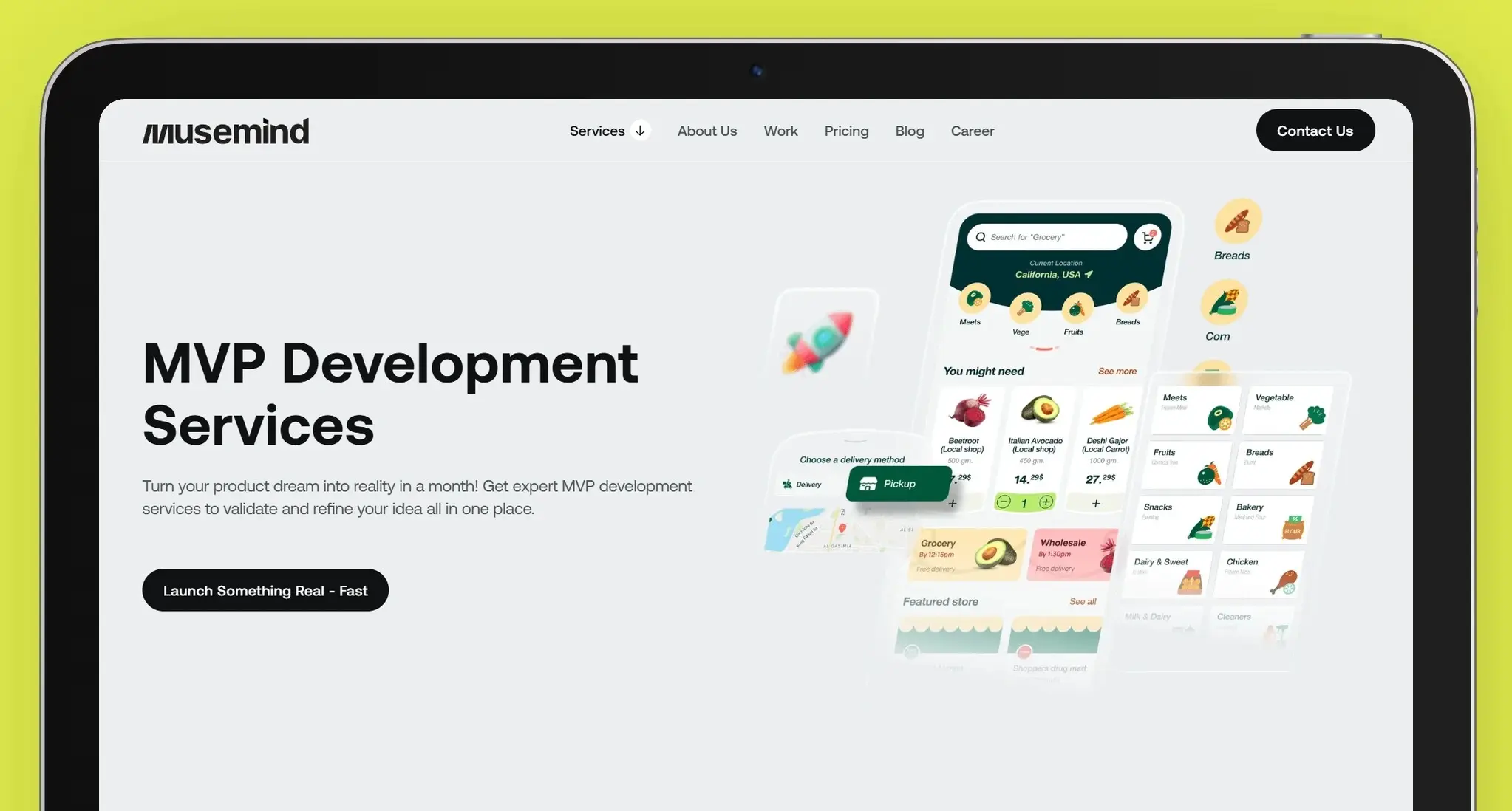
Musemind is a strong choice for startups that need more than basic MVP development. The agency is useful when the product idea still needs sharper UX thinking, cleaner user flows, and a testable prototype before heavy engineering begins.
Its MVP development services cover different launch stages. A founder can start with MVP consultation or a single-feature MVP. A product team can move into pilot MVP development, MVP web development, or a clickable prototype. When the scope is clearer, Musemind can also support complete MVP development.
Musemind has also worked on startup products that reached measurable post-launch milestones. Once the team confirms the exact figure and that it can be published. Musemind is especially strong when design quality matters from the first version. Many MVPs fail because users do not understand the product fast enough. Musemind helps reduce that risk by focusing on research, user flows, wireframing, interaction, and visual clarity before launch.
Musemind’s Clutch profile includes a verified 5.0 review from Brian Lloyd, CEO and Founder of Skeptick AI. The project was for an AI governance SaaS platform. Musemind handled web development, UX/UI design, and web design for a landing page refresh.
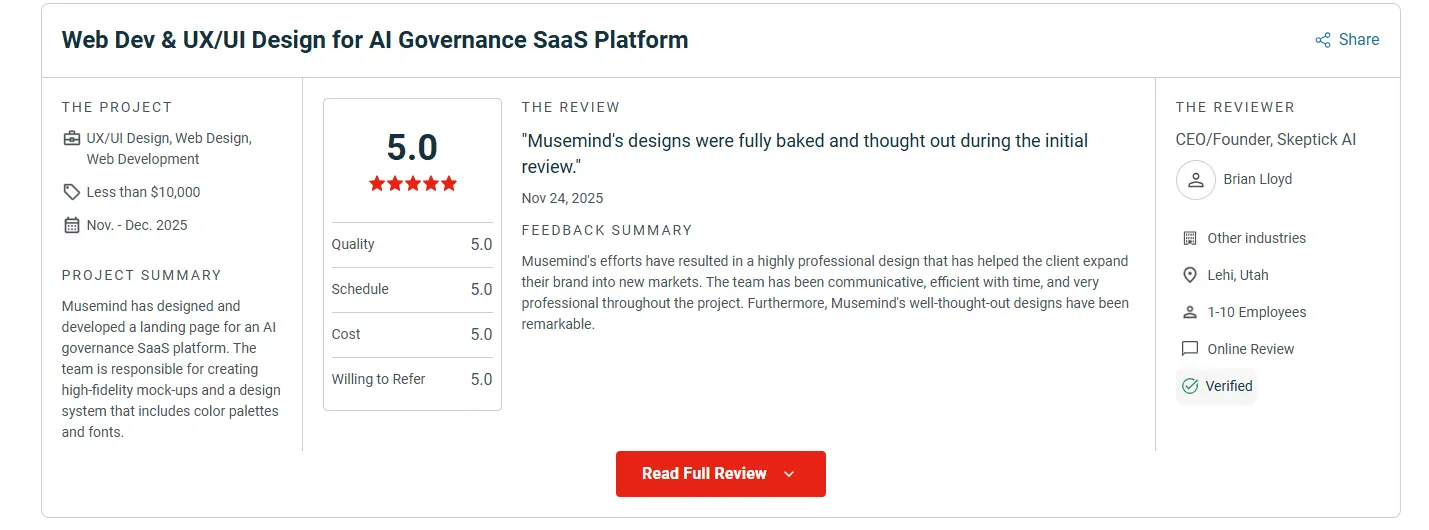
The client needed a top-tier platform design with enterprise-level quality. Musemind created high-fidelity mockups and a design system that included color palettes and fonts. A well-structured design system can also help MVP teams keep interfaces consistent as the product grows. In the review, the client said Muemind’s designs were fully thought through from the first review.
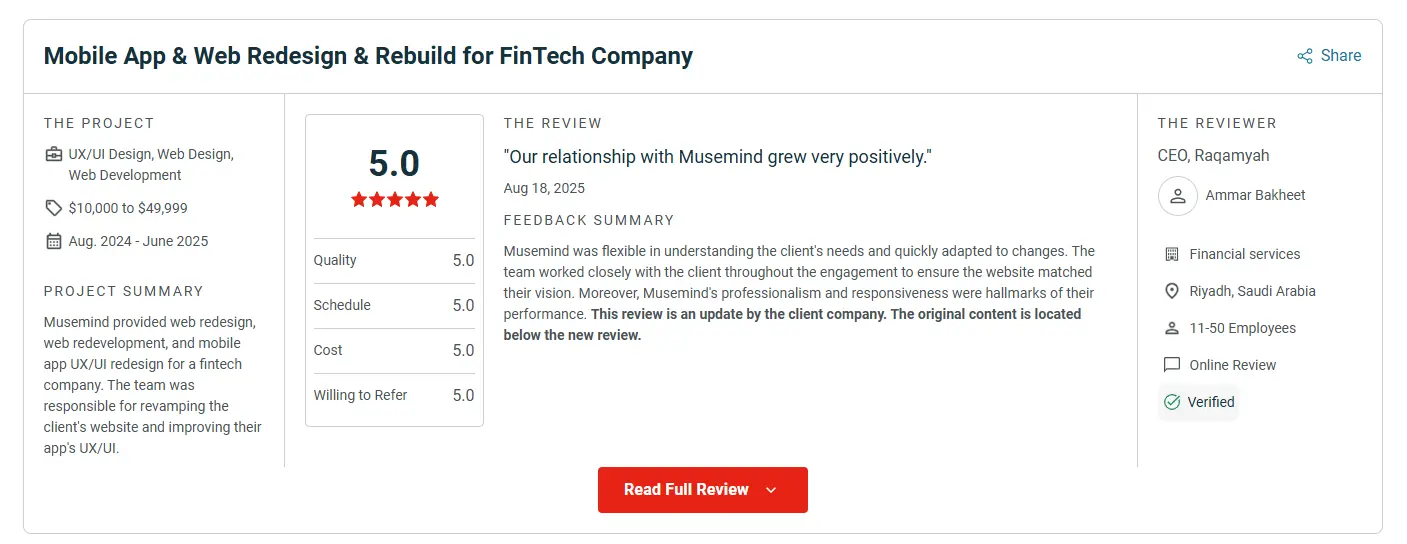
The feedback also points to strong communication and efficient use of time. The client described the team as professional throughout the project. This matters for MVP development because early-stage products need fast execution without weak design decisions. Musemind’s work for Skeptick AI shows that the team can support SaaS companies that need polished UX, clear visual systems, and market-ready product presentation.
Musemind is a good fit when a startup wants to move fast without skipping product thinking. The team can help shape the MVP before development starts. That is important because early products usually fail from unclear scope, weak UX, or too many unnecessary features.
The agency also has proof across product design, SaaS design, mobile apps, web apps, and MVP-focused projects. Clients like Microsoft, The Motley Fool, Packt, Konoom, Trainmate, and Cercando add extra credibility. The pricing is also easier to evaluate than many agencies because Clutch lists both a minimum project size and hourly range.
Choose Musemind if your MVP needs a strong user experience foundation. It is a better fit for startups that want product clarity, clickable prototypes, SaaS UX, web MVP design, and validation support before scaling into a larger product.
Limitation: Musemind is stronger in product design, prototyping, and pre-build validation than in heavy backend engineering. If your MVP requires complex cloud infrastructure, advanced backend systems, or engineering-heavy architecture from day one, you may need a dedicated engineering partner.
Quick facts
Thoughtbot is a good match for founders who already know they need a serious engineering partner. The team is not only about design handoff. It helps shape the MVP roadmap, validate assumptions, choose the right technical base, and build the product with a cross-functional team.
Their MVP page talks about an MVP Shaping Sprint. That makes thoughtbot useful when the early idea needs product judgment before development starts. The Folio case study is a strong example. thoughtbot helped the startup move from idea to Rails MVP in under a year, reach 200 hotel clients, and later raise a $14M Series A. Harvard Business Review also worked with thoughtbot on a React Native mobile app with product management, UX/UI, and testing.
The main trade-off is budget. A $150–$199 hourly range puts thoughtbot above many startup-focused vendors. That price makes more sense when the product needs senior engineering decisions early, especially around architecture, code quality, and long-term maintainability.
Quick facts
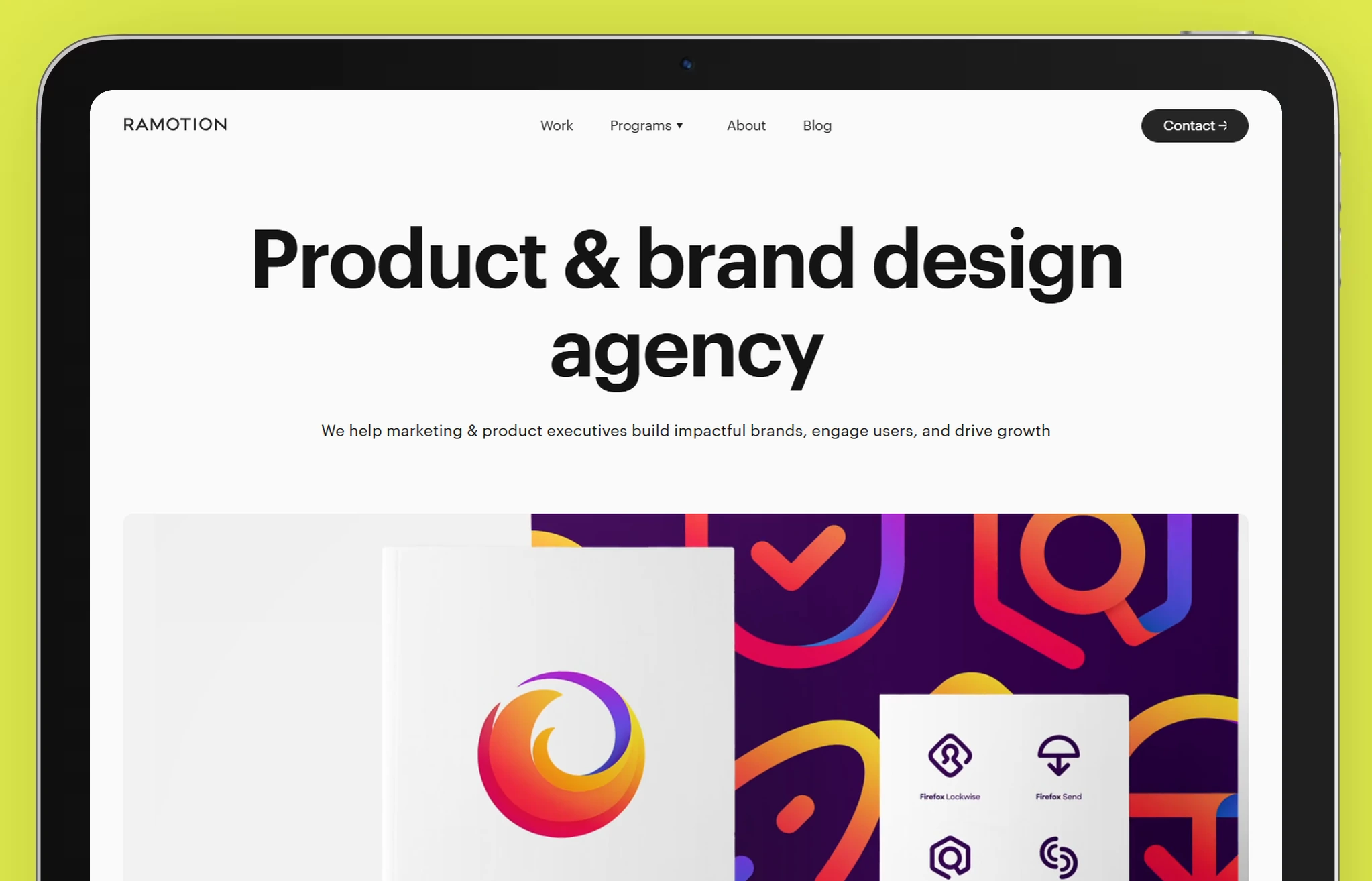
Ramotion is a strong fit when a startup needs its first product to look credible from day one. The agency does not work like a low-cost build shop. Its strength sits closer to brand, interface quality, and product presentation.
That matters for SaaS teams that sell to investors, enterprise buyers, or technical decision-makers. A weak first impression can make even a useful product feel unfinished. Ramotion helps with that part by connecting brand identity, UX/UI, web design, and product visuals into one clear experience.
The agency’s public profile shows a premium positioning. Clutch lists a $50,000+ project minimum, 10–49 employees, and a San Francisco location. Ramotion’s own site also says it works with digital products and brands across different lifecycle stages.
A small validation project may not need this level of polish. The fit becomes stronger when the first public version has to support fundraising, enterprise sales, or a premium SaaS positioning. In those cases, weak visuals can create doubt before users even try the product.
Quick facts
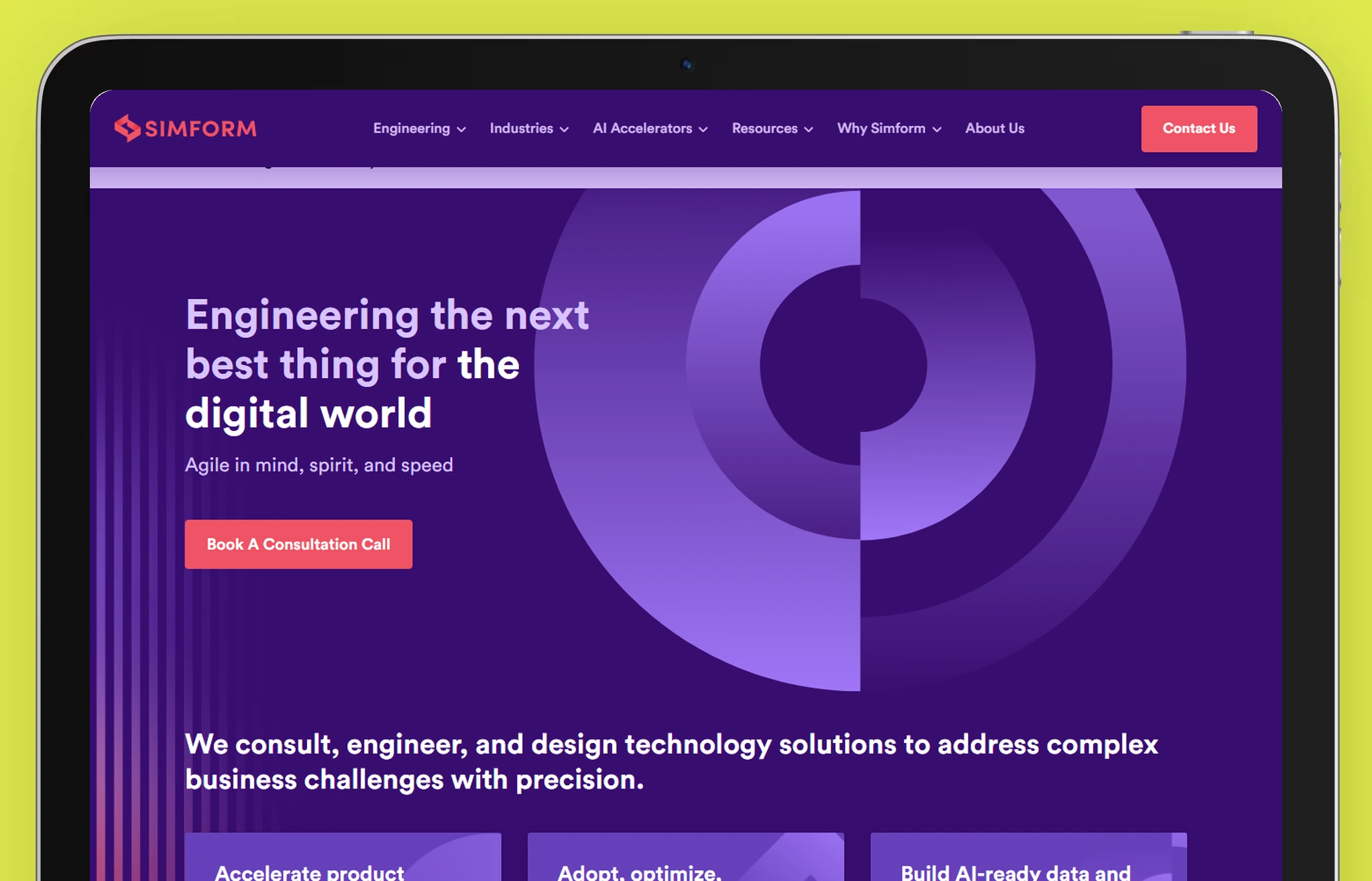
Simform belongs in this list for buyers comparing early-stage software development companies with strong engineering depth. It is not a lightweight prototype studio. The company is better suited to products that need backend systems, cloud infrastructure, mobile performance, data workflows, or AI features from the first release.
This makes Simform relevant to startups that already anticipate technical complexity. A marketplace with multiple user roles, a logistics product with real-time data, or a healthcare platform with integrations may need more than a basic app team. In those cases, a custom MVP development company with cloud and product engineering depth can reduce risk before the product reaches real users.
The company’s service range also supports long-term delivery. Simform covers product engineering, AI/ML, cloud, DevOps, data engineering, mobile app work, and enterprise platform support. That is useful when the early build is expected to become a larger software system after validation.
Scope is the main thing to control here. A large engineering partner can add value when the roadmap is clear. Without a tight first feature set, the product may become more expensive than the market test requires.
Quick facts
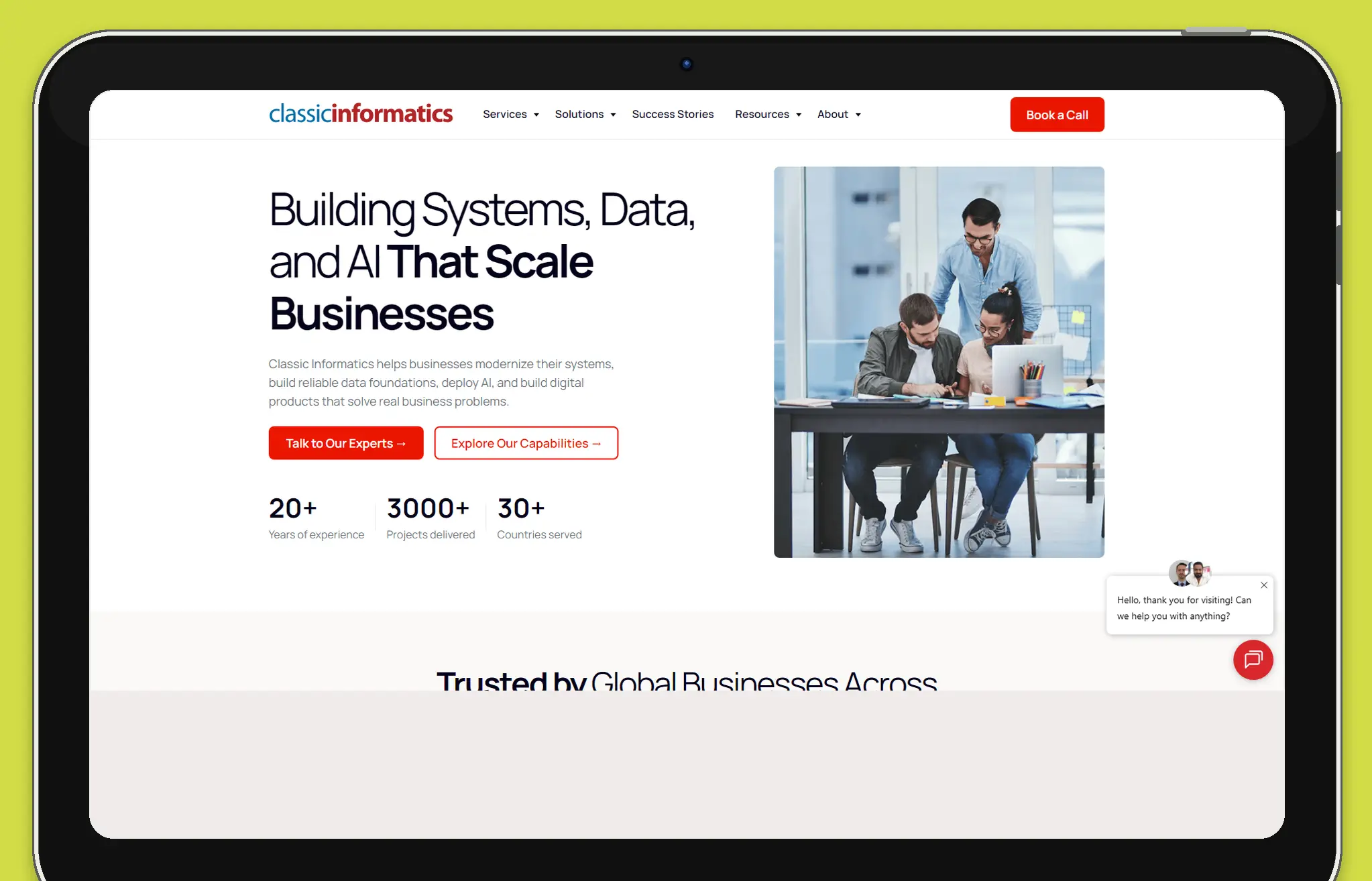
Classic Informatics offers MVP development services built for founders who want one team from scoping to launch. They don't hand off design and engineering to separate vendors. The process starts with discovery. The team locks the core hypothesis and feature set before writing any code. Then they make architecture decisions early. This lets the MVP scale later without a rebuild.
This makes Classic Informatics a strong fit for MVPs with real technical weight. Consider healthcare products that need to integrate with EHR systems, fintech tools with compliance requirements, or enterprise SaaS platforms that must pass a security review. Classic Informatics brings the most value when an MVP needs real engineering from day one. That means backend logic, data pipelines, and third-party integrations built right into the first version, not bolted on later.
Quick facts
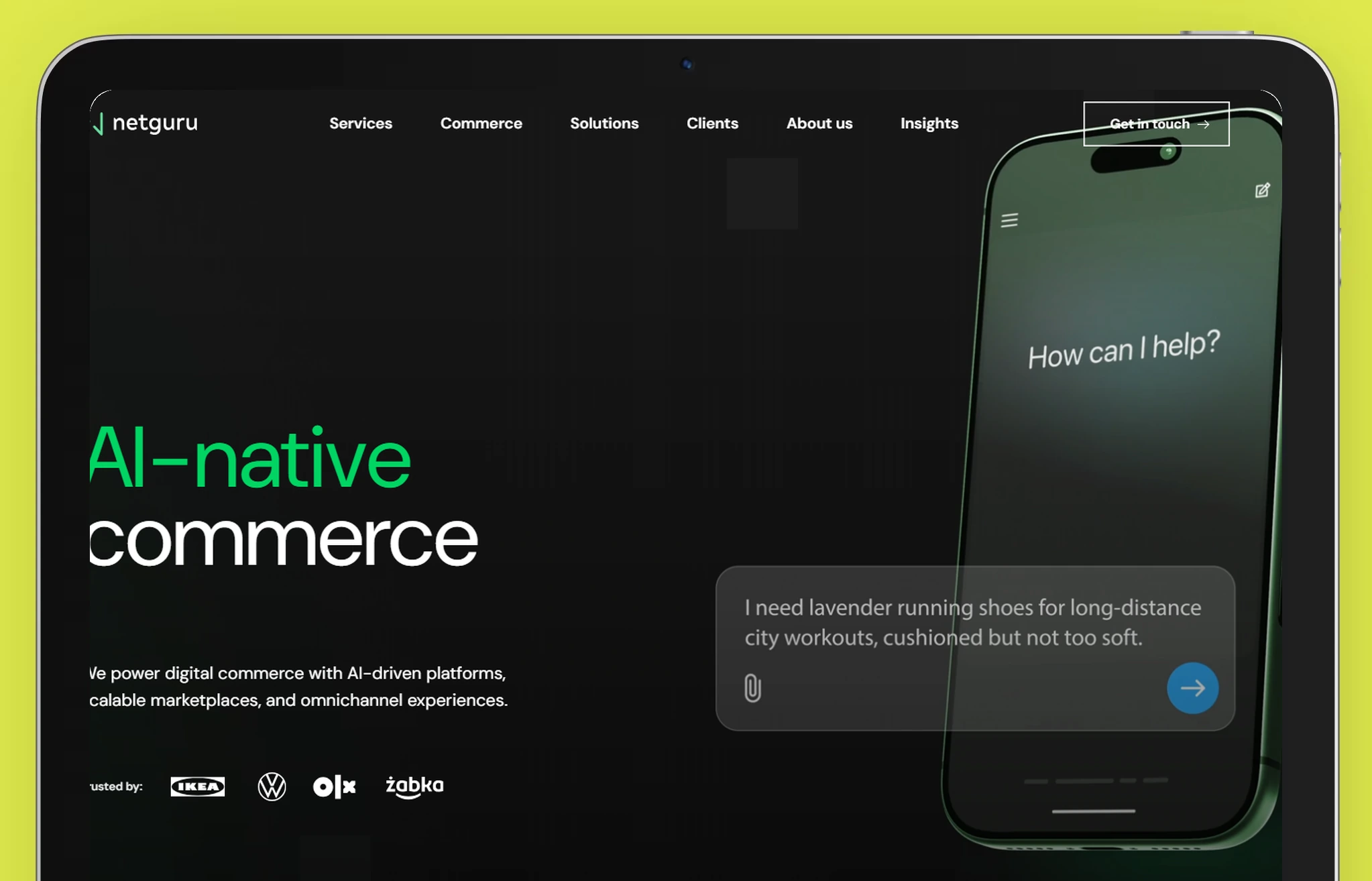
Netguru is closer to the premium side of top MVP software development firms. It fits teams that already have a serious business case and need one partner for product strategy, design, software delivery, and later iteration.
The company is especially relevant for marketplaces, digital commerce tools, mobile apps, and modern web platforms. Its service mix includes UX research, UI design, web and mobile engineering, AI consulting, QA, low-code support, and team extension. That makes it useful when the first version has to support a real go-to-market plan rather than a quick internal demo.
Netguru’s public case studies showcase work on larger digital products and with well-known brands. Delivery Hero used its cross-functional support across backend, frontend, data, mobile, and design roles. Careem appears in its portfolio for research-led UX and UI work on a large consumer app.
The pricing clue matters for shortlisting. Clutch lists a $50,000+ minimum project size, so Netguru will not be the first choice for every early founder. For teams comparing MVP development agency pricing, it is a better fit when the budget already supports a structured build that includes design, engineering, QA, and product process.
Quick facts
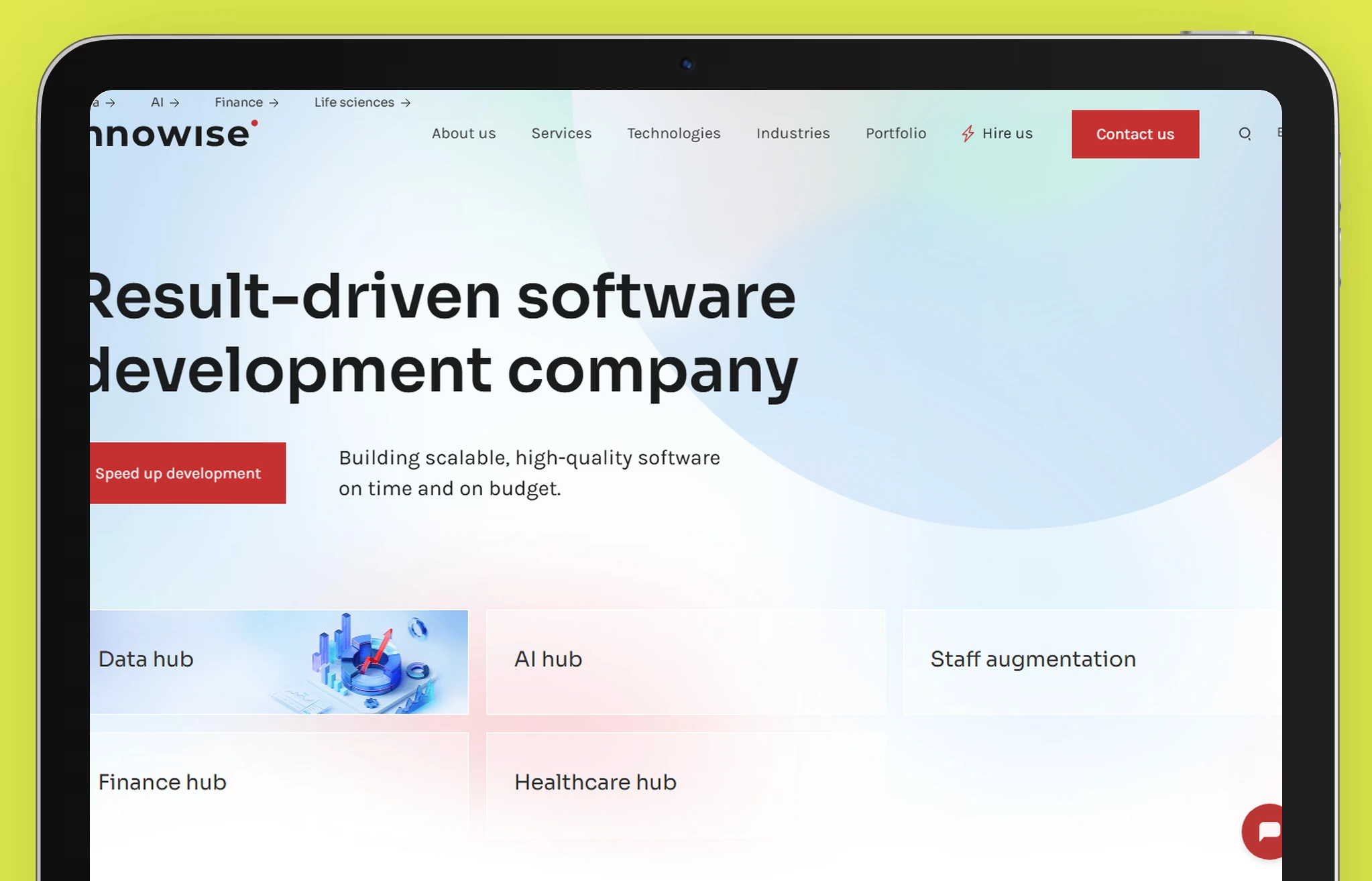
Innowise fits buyers who need an app development partner with large technical capacity. The company has a wide service base and a large team structure, which can help when the first product involves complex systems or a long roadmap.
This is useful for companies that want to outsource development of a minimum viable product (MVP) app but do not want to split the work across several vendors. Innowise covers web apps, mobile apps, AI, blockchain, cloud, QA, cybersecurity, staff augmentation, and dedicated teams. That range can support startups in fintech, healthcare, logistics, enterprise SaaS, or other technical markets.
It also makes sense for buyers comparing MVP app development companies. A mobile-first product may still need backend logic, cloud deployment, security, QA, and analytics behind the app. Innowise has the service depth to support that wider product environment.
The trade-off is focus. Broad vendors can feel heavy for a founder who only needs discovery, wireframes, or a clickable prototype. Innowise becomes more relevant when the buyer needs delivery capacity, technical range, and a team that can stay involved after the first release.
Quick facts
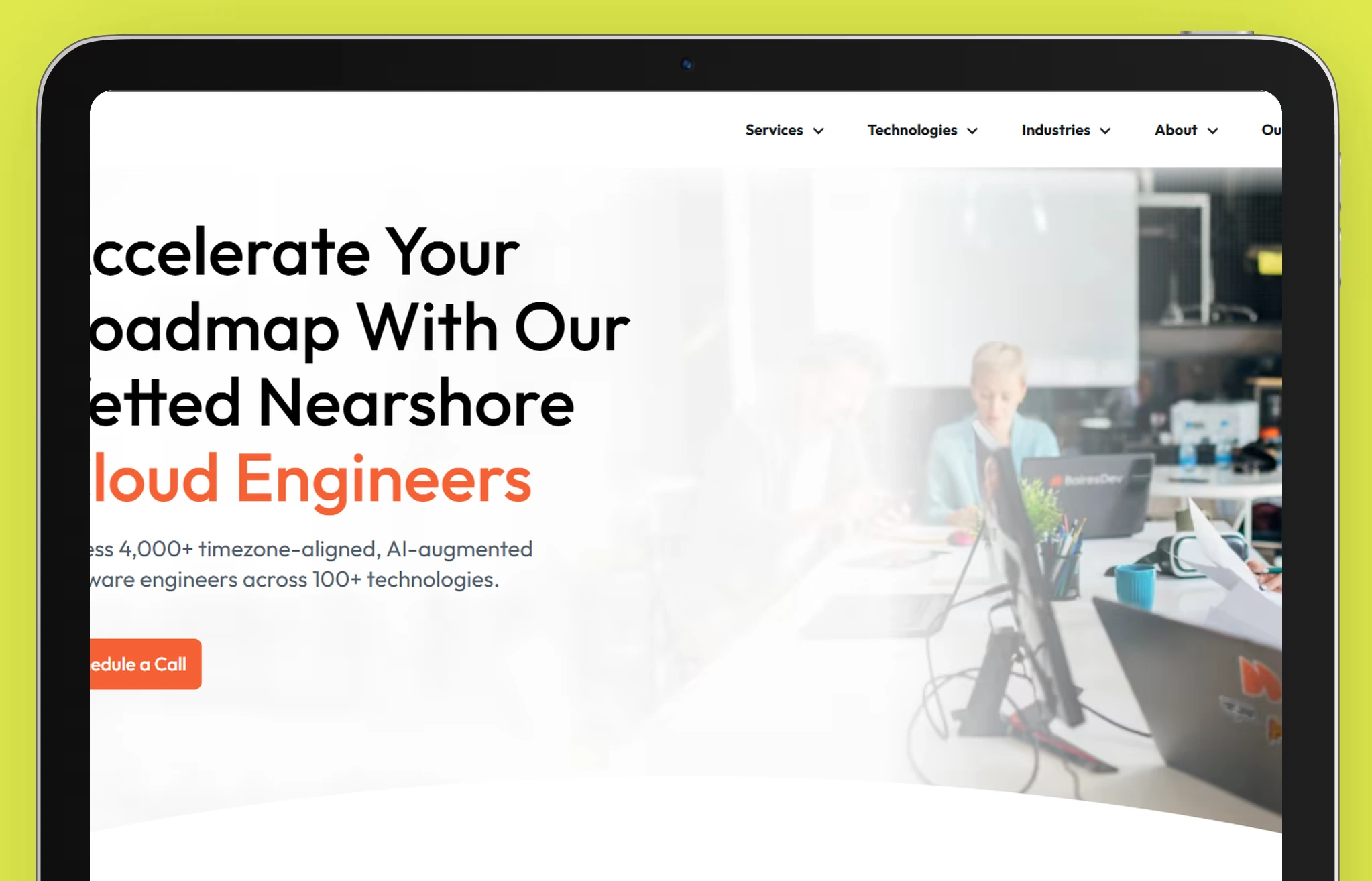
BairesDev fits buyers who want to hire MVP developers through a larger nearshore engineering partner. The company is not a small startup studio. It is closer to a staff augmentation and software outsourcing provider with a large pool of technical talent.
That can be useful when the first product needs more than a designer and one full-stack developer. A serious app may need backend engineers, QA, DevOps, front-end support, mobile talent, and AI expertise. BairesDev covers those areas through custom software, mobile development, web development, testing, modernization, and dedicated teams.
BairesDev is broader than a typical early-stage MVP studio, but it works well for businesses that need delivery capacity and wider technical coverage. It can help when a business wants delivery capacity and technical coverage instead of a small discovery-led team.
The budget filter is clear. Clutch lists a $50,000+ project minimum, so this is not the natural pick for a rough prototype. BairesDev makes more sense when the product already has funding, internal ownership, and a roadmap that needs senior engineering capacity.
Quick facts
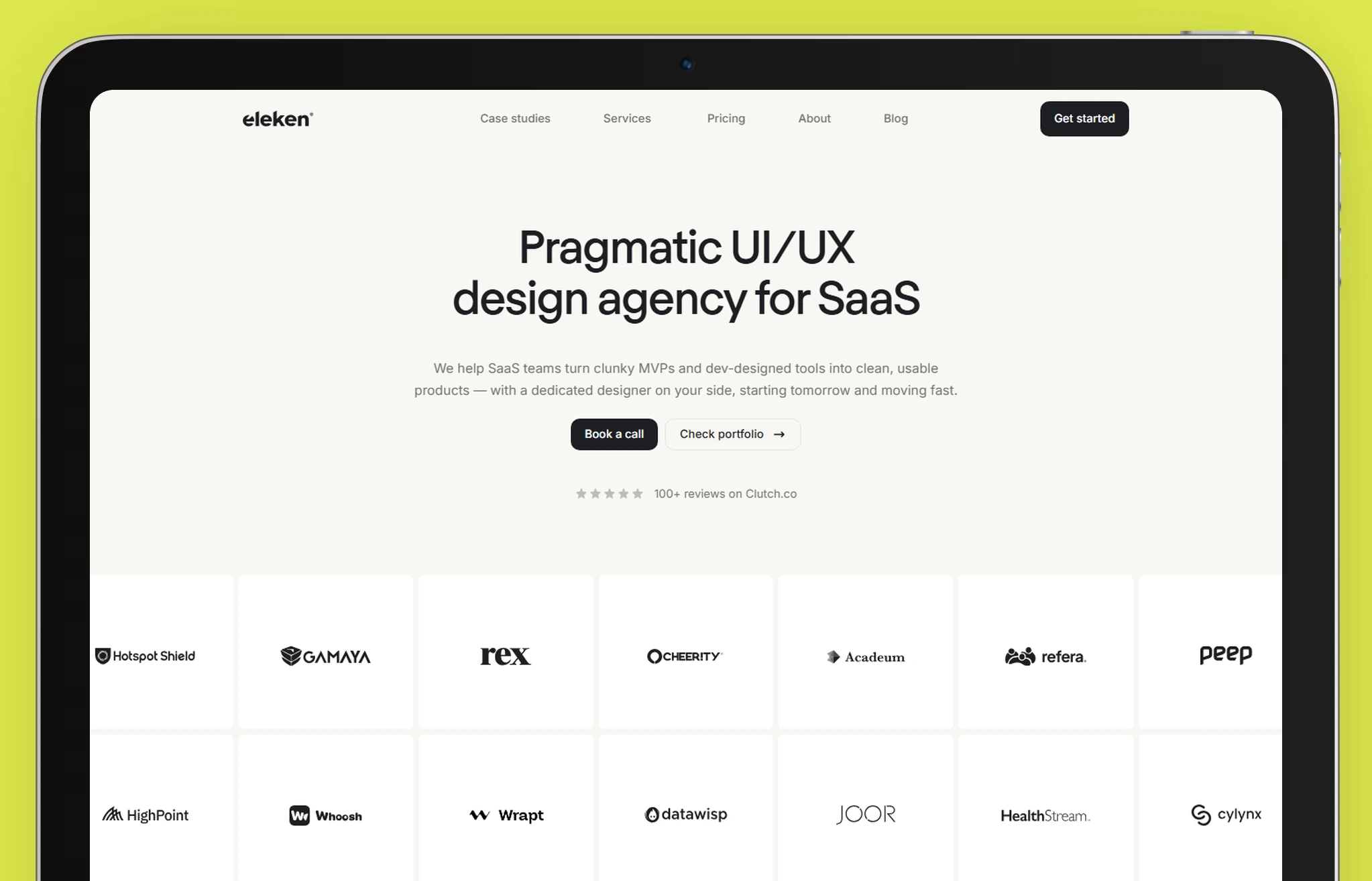
Eleken should be viewed differently from engineering-heavy vendors on this list. It is not the company to hire when you need backend code, DevOps, and full product engineering. Its strength is SaaS UX.
That makes Eleken useful for founders comparing SaaS MVP development companies but already having developers in place. Many early SaaS tools start as dev-designed interfaces. They may work technically, but users struggle with navigation, onboarding, dashboards, or workflows. Eleken helps clean up that layer.
The agency’s website is direct about its SaaS focus. It works with clunky early products, complex B2B tools, data-heavy platforms, and teams that need a dedicated designer without building an internal design department. Clutch also lists Eleken’s service line as 100% UX/UI design, which supports the design-specialist positioning.
A buyer should not expect Eleken to replace a software engineering team. The better use case is pairing Eleken with in-house developers or another build partner. That setup works well when product usability is the bottleneck and the team needs design to move as fast as the engineering sprint.
Quick facts
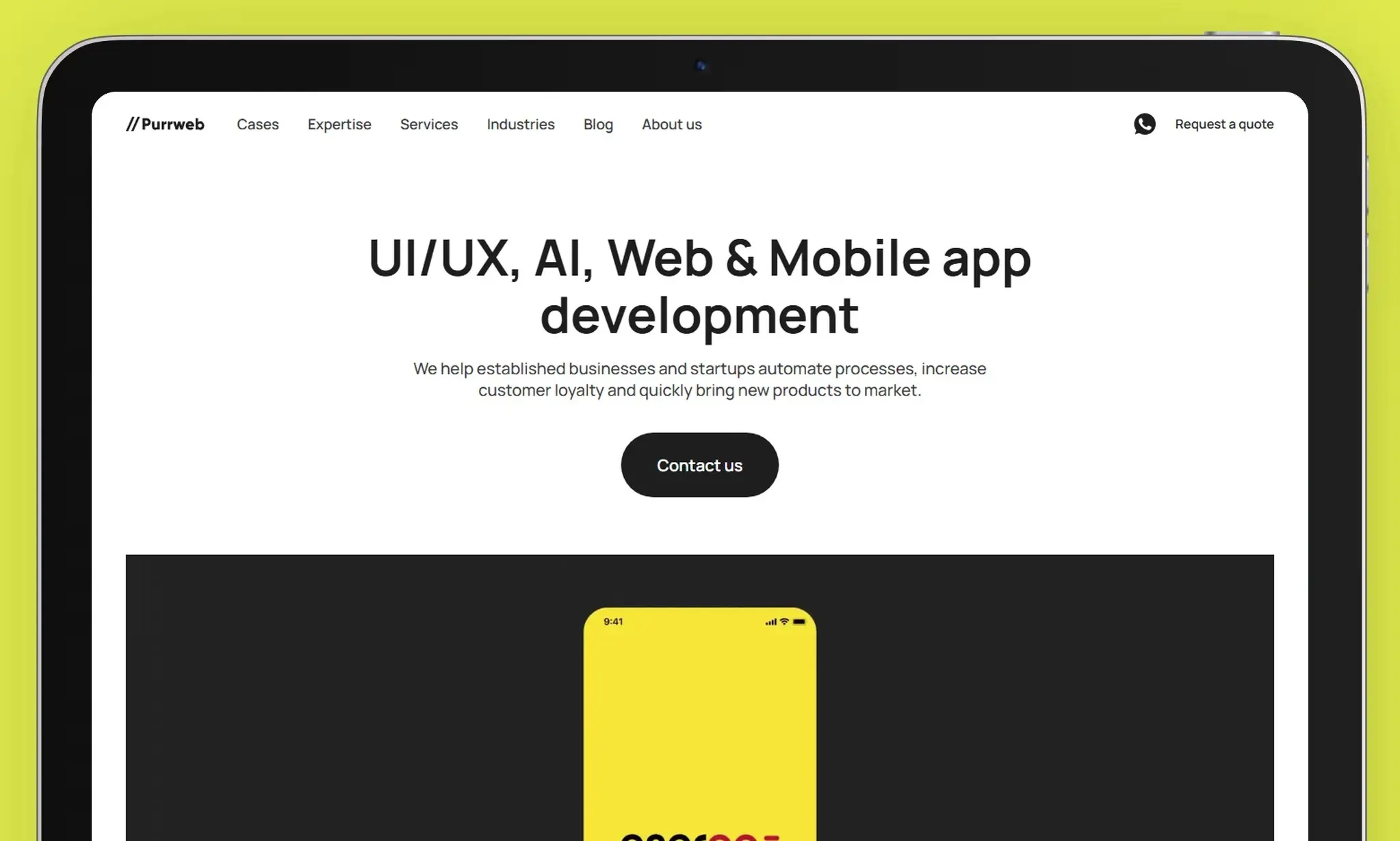
Purrweb is a startup-friendly option for founders who need a fast, mobile-focused MVP team. Its public positioning is simple. The team helps founders shape a first version, design it, and build it with a strong focus on UX.
The company is especially relevant for mobile-first products. Clutch shows a heavy focus on mobile app development and UX/UI design. Purrweb also works with React Native, which can help a startup launch on iOS and Android without building two fully separate native apps from the beginning.
This makes Purrweb a practical option for founders looking for affordable MVP development companies with app experience. The pricing clue is lower than many larger vendors in this list. Clutch lists a $5,000+ minimum project size, though its review summary shows many real projects falling into higher ranges depending on scope.
There is still one thing to handle carefully. Fast product work depends on clear requirements. Some review details suggest that better requirement templates could improve the early process. For a founder, that means the product idea, target users, core features, and launch goal should be clarified before the team starts designing screens.
Quick facts
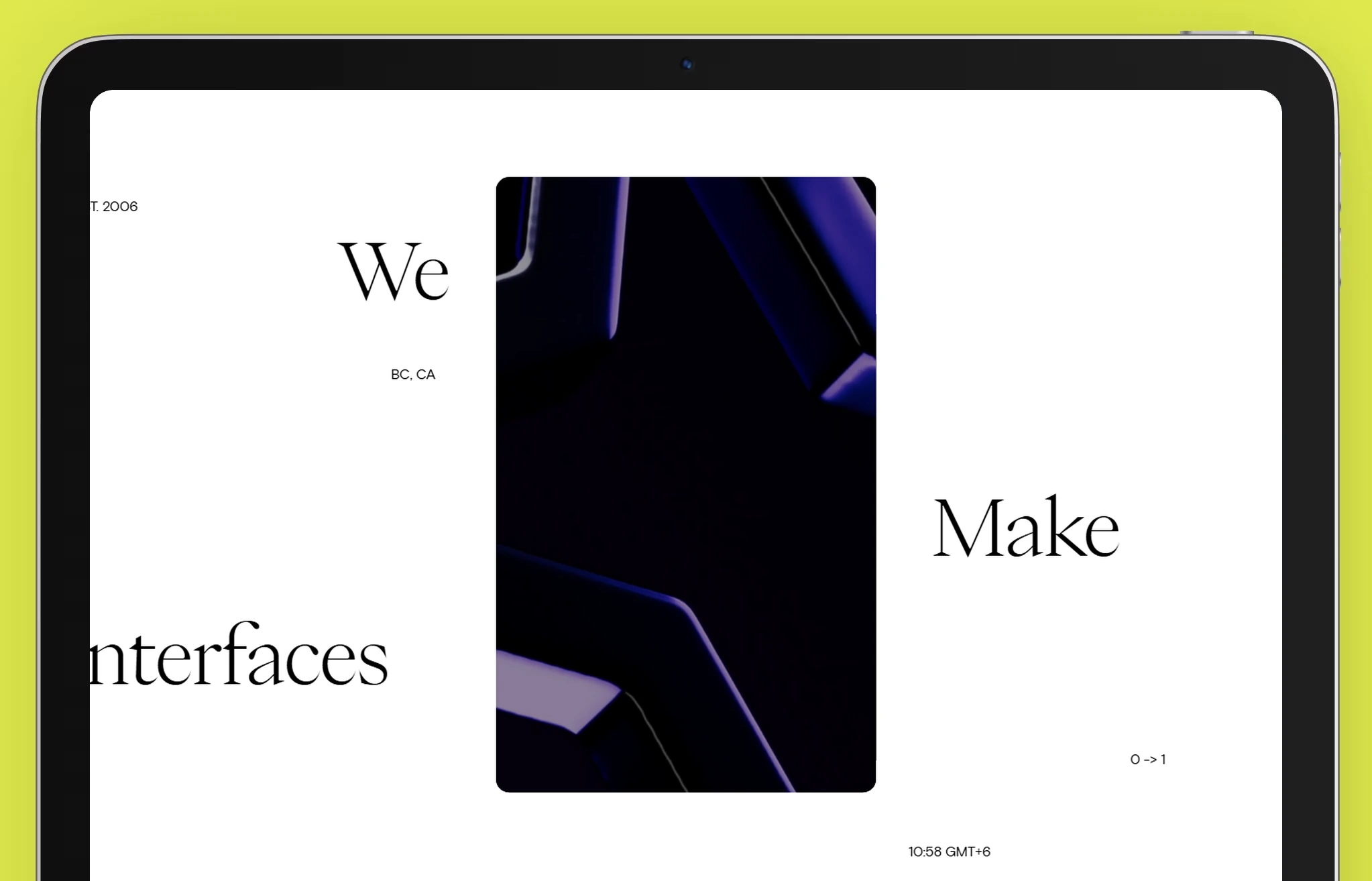
Metalab is a premium choice for teams that treat the first version as a serious product moment. It is not built for a cheap test page or a quick prototype. The studio is better known for interface quality, product clarity, and digital products that need to feel mature from the first release.
This makes Metalab relevant for funded startups comparing MVP Product Development partners with strong design taste. A SaaS tool, consumer app, fintech product, or marketplace may need more than a usable screen flow. It may need product strategy, UX research, brand confidence, and a visual system that can scale as new features are added.
The agency’s own positioning is direct. It says it makes interfaces and has helped startups and reputable brands design, build, and ship products since 2006. Clutch also lists well-known client names such as Slack, Coinbase, Amazon, Google, TED, and Lonely Planet.
The barrier is budget. Clutch lists a $100,000+ minimum project size and no public hourly rate. That puts Metalab on the premium end of this list. It works best when the buyer wants a polished MVP Creation with product and interface quality at the center.
Quick facts
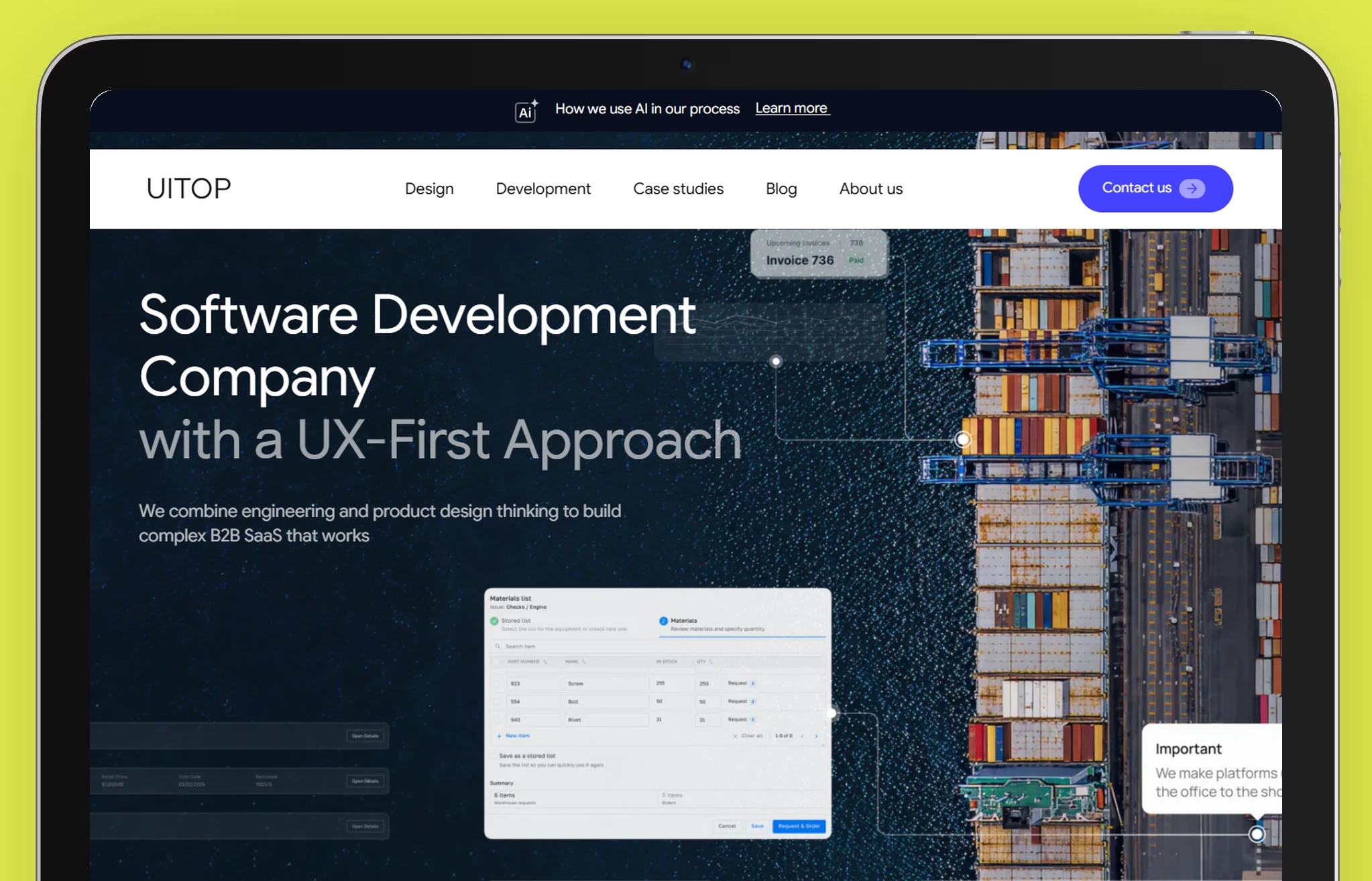
UITOP is useful when the product is not a simple consumer app. The agency focuses on B2B software, especially niche SaaS platforms, vertical ERP, CRM, dashboards, and operational tools. That focus makes it different from general design studios.
For buyers comparing SaaS MVP Product Development partners, UITOP has a clear use case. Many B2B products fail early because the workflows are too hard to understand. Users need to manage data, roles, reports, approvals, inventory, orders, or customer records. UITOP’s UX-first approach is built around making those complex systems easier to use.
The company’s own website connects product design with software engineering. It mentions SaaS UI/UX, custom dashboards, data visualization, interactive prototyping, design systems, clean architecture, backend stability, cloud-native systems, API architecture, and scalable backend work.
This is a good match when the MVP needs Build needs clarity around workflows and software logic. A simple landing page or brand-only prototype would not need this level of B2B depth. The stronger fit is a product where usability, data structure, and business operations all need to work together.
Quick facts
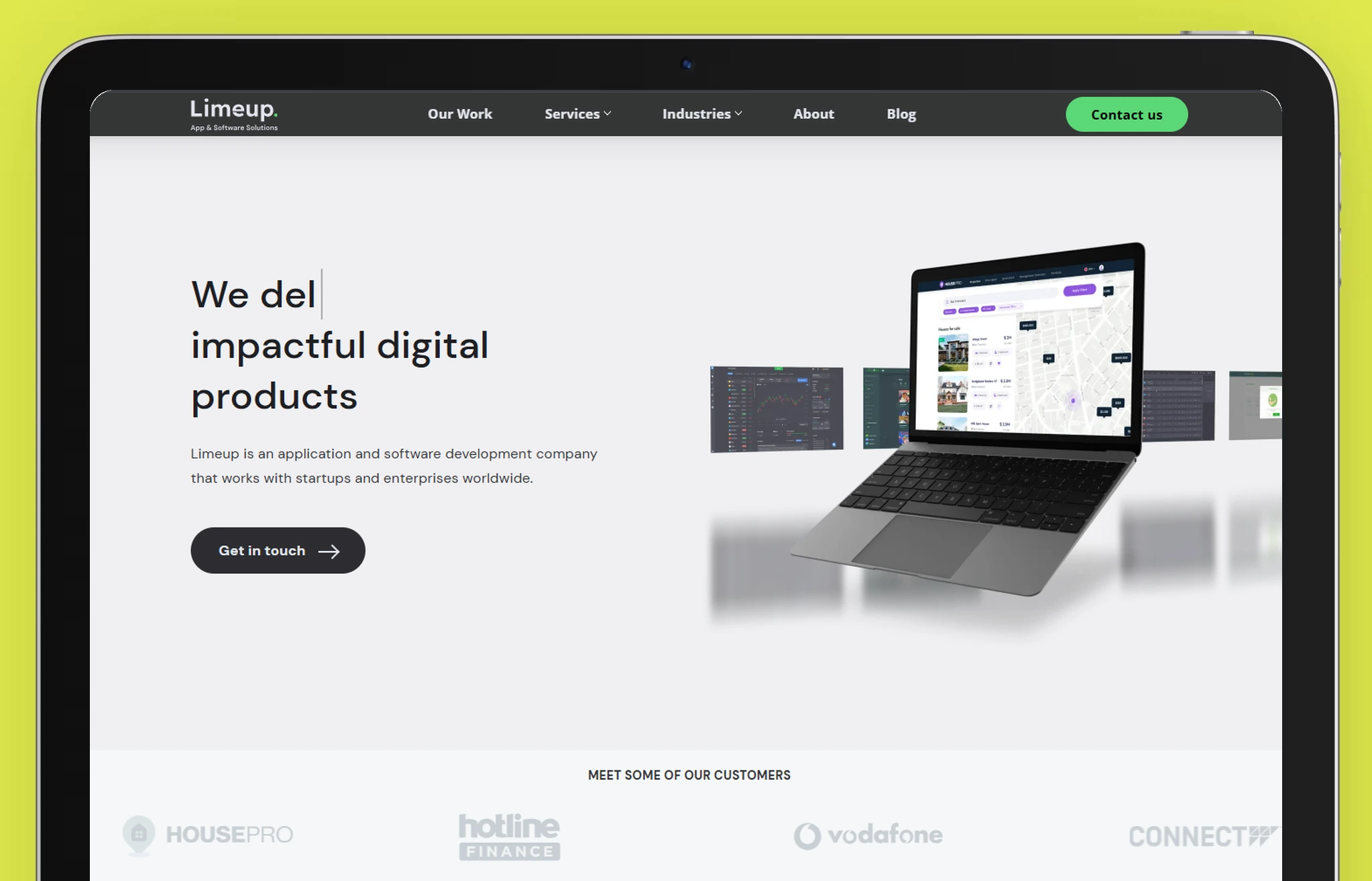
Limeup fits buyers who want MVP software development with both design and engineering support. The company works with startups and enterprises, so it can handle more than a small design task. Its service range covers custom software, mobile apps, AI, UI/UX, QA, DevOps, outsourcing, dedicated teams, and staff augmentation.
The strongest fit is a product that needs a balanced build team. A founder may need iOS and Android support. A B2B company may need a web platform with internal workflows. Another team may need AI features, backend logic, or QA before release. Limeup has enough service coverage to support those different paths.
Its public website also shows industry experience across finance, healthcare, real estate, manufacturing, education, logistics, renewable energy, and blockchain. That helps when the product idea sits inside a specific business domain rather than a generic app category.
Limeup may not be the best fit for a design-only MVP creation. The value is clearer when the buyer needs a build partner with UX, engineering, mobile, and support capacity in one place.
Quick facts
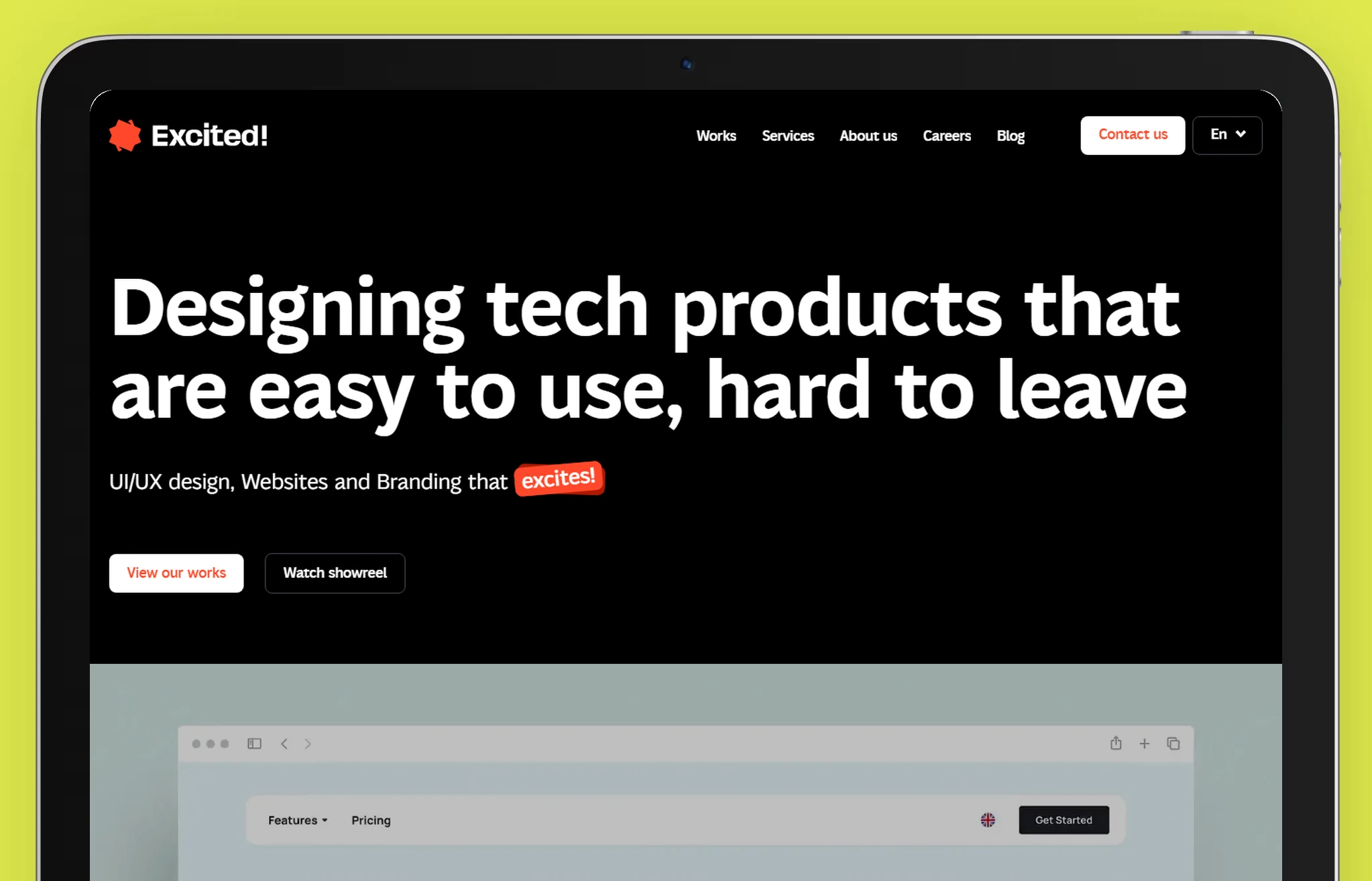
Excited is a design-first agency for teams that need sharper product experience before the first serious release. It is not positioned as a full engineering vendor. The stronger fit is UX strategy, product interface design, mobile screens, SaaS flows, and developer-ready handoff.
That makes Excited useful for MVP Product Development when the main risk is usability. A product team may already have developers. What they may not have is a clean onboarding flow, clear dashboard structure, or a design system that keeps the product consistent as new features appear.
The agency’s Clutch profile shows a 90% UX/UI design focus. Its own profile also mentions user research, usability testing, mobile app design, SaaS design, Webflow, and design systems. Review patterns point to timely delivery, communication, high-quality work, and organized project management.
Excited works best around the design layer of MVP creation. For a team that needs backend architecture, QA, DevOps, and software engineering under the same roof, another company on this list may be a better match.
Quick facts
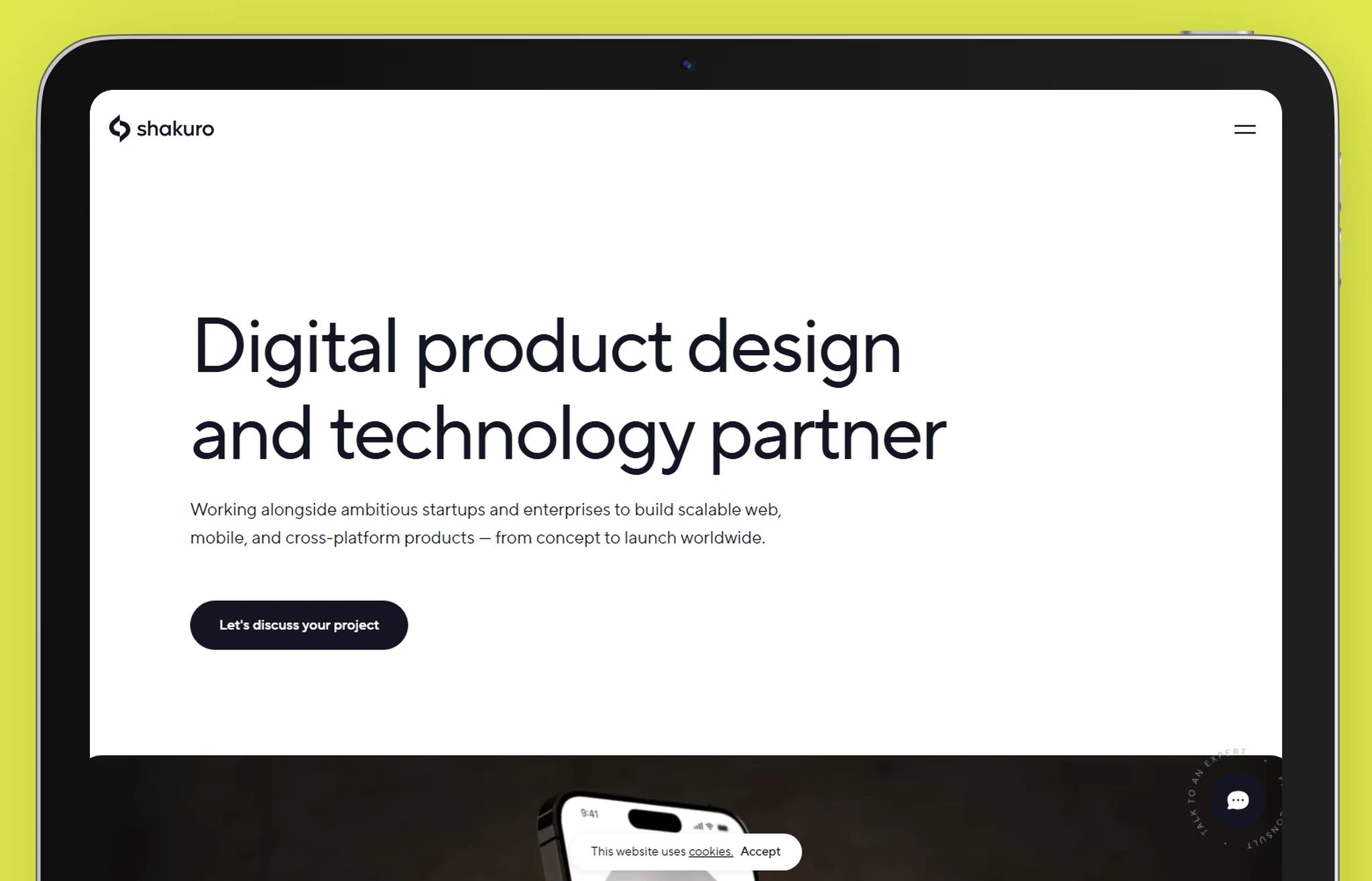
Shakuro has a wider build profile than many design-only agencies. It can support product visuals, UX/UI, branding, web work, mobile apps, and custom software. That mix makes it relevant for teams comparing MVP app development partners with both creative and technical support.
The agency is useful when the product needs to look polished but still move toward a working release. Clutch review examples include UI/UX for productivity-focused software, custom CRM work, financial platform features, and app-related design projects. That gives Shakuro a more practical build angle than studios that only create concepts.
Pricing is another reason it appears in this list. Clutch lists a $5,000+ project minimum and a $25–$49 hourly rate. That does not mean every MVP build will be cheap. It does suggest a lower entry point than premium agencies with $50,000 or $100,000 minimums.
The fit depends on how much strategic product discovery you need before execution. Shakuro looks stronger when a team already has a direction and needs design, app screens, software work, or brand support to bring the first version together.
Quick facts
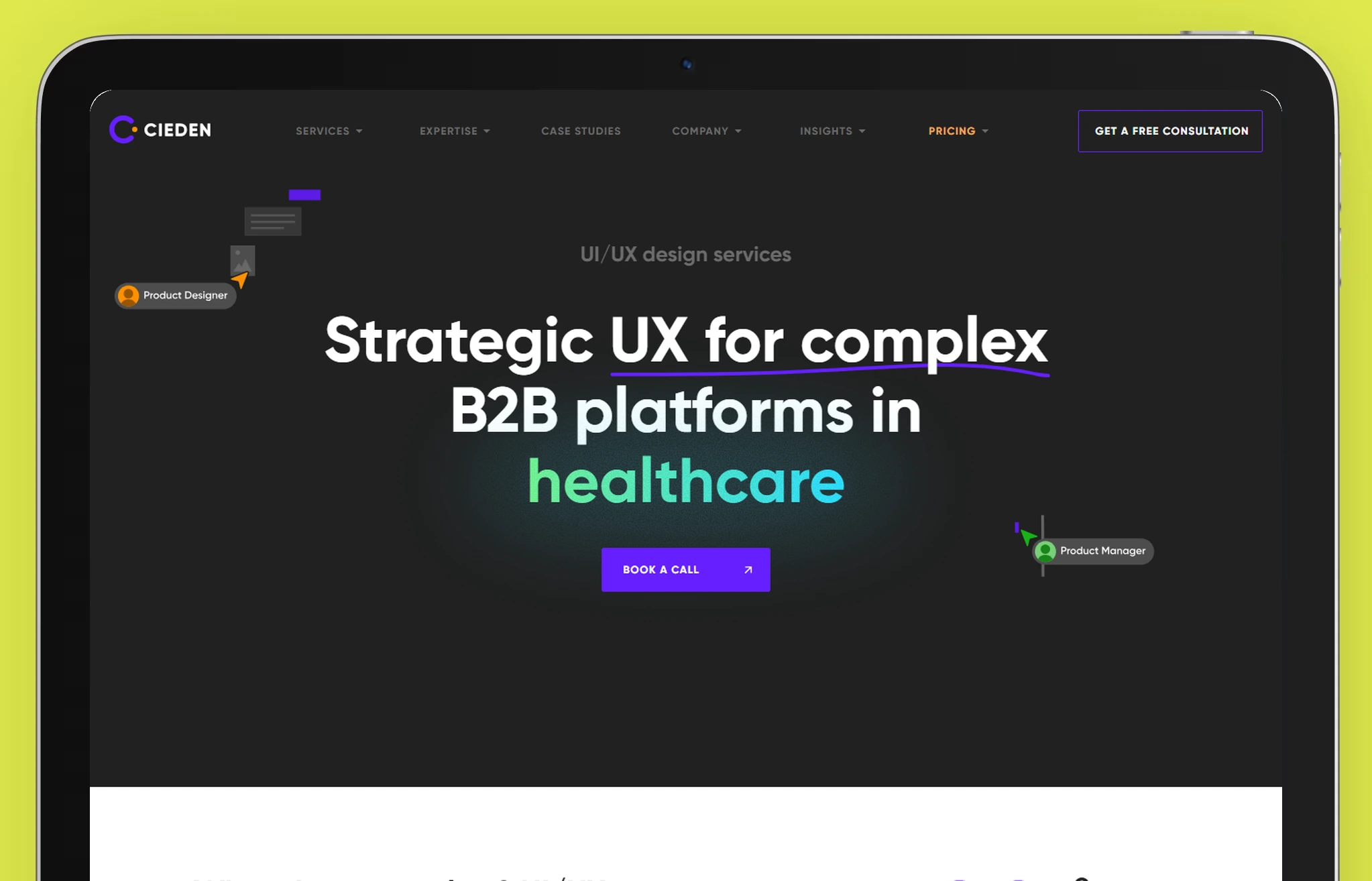
Cieden is best understood as a specialist for product clarity. The agency is not trying to be a large MVP Software Development vendor. Its Clutch profile is heavily focused on UX/UI design, user research, UX strategy, and usability testing.
That focus works well for B2B products where the first release can become confusing fast. A fintech tool, healthcare workflow, data platform, or SaaS dashboard may involve many roles, screens, permissions, and decision paths. Cieden helps simplify that experience before users touch the product.
One review example is especially relevant. A revenue data solution hired Cieden to create a design system and clickable prototypes for end-user feedback. That kind of work sits close to MVP Product Development because it helps a team test user journeys before investing too much in the wrong interface.
Cieden is less suited to buyers who want one vendor to handle every layer of engineering. Its value is stronger before or alongside the build, where research, flows, prototypes, and product design decisions shape what the software should become.
Do not start with price only. Start with the product risk, then check whether the agency has the right skill set to reduce that risk.
First, decide what the first version should prove. It may need to test demand, user behavior, pricing, onboarding, technical feasibility, or investor interest. Without this clarity, the MVP can become too broad.
Some products need better UX before code. Others need backend logic, API work, mobile engineering, or cloud setup. If users may struggle to understand the product, choose a design-led team. If the product has technical complexity, choose a stronger software partner.
Look at their portfolio before booking a call. A SaaS dashboard, healthcare app, marketplace, AI tool, or fintech product needs different thinking. Similar case studies are a stronger signal than a long service list.
A good agency should ask about users, features, business goals, timeline, budget, and success metrics. If they jump straight into screens or code, that is a red flag. Strong MVP Product Development starts with scope control.
Find out whether you will get a product strategist, UX designer, UI designer, developer, QA specialist, or project manager. The team structure should match the product stage.
Ask about minimum project size, hourly rate, fixed-scope options, and what is included in the first phase. MVP development company pricing should be discussed before detailed planning starts.
The first release is not the end. You may need bug fixes, feature updates, analytics review, user feedback sessions, or design improvements. Choose a team that can support the product after launch.
A strong MVP partner should help you reduce risk before development gets expensive. If an agency avoids basic questions about scope, testing, ownership, or pricing, that is usually a sign to slow down.
If an agency gives you a full build estimate before understanding your users, goals, core features, and technical needs, the quote is probably based on assumptions rather than a real product plan.
You should be able to understand the minimum project size, hourly rate, fixed-scope options, or at least how the agency structures its pricing. Avoid teams that refuse to give any pricing context before a sales call.
A polished portfolio is not enough. Look for case studies, real products, client reviews, measurable outcomes, or examples that show what the team actually delivered.
An MVP exists to learn. If the agency has no plan for prototype testing, usability checks, QA, or user feedback before launch, the team may be treating the MVP like a smaller version of a full product instead of a validation tool.
The contract should state who owns the source code, design files, documentation, and other project assets after payment. If ownership is vague, clarify it before development starts.
Your first release will almost certainly need changes. Ask how the team handles bug fixes, user feedback, feature updates, and iteration after launch.
There is no single fixed price for MVP development. In 2026, a simple clickable prototype may cost only a few thousand dollars, while a production-ready SaaS or mobile MVP can easily move beyond $50,000.
The final budget depends mostly on scope, number of user flows, platform, integrations, backend complexity, and the team you hire. Pricing can vary significantly depending on team location, scope, and technical complexity.
These are planning ranges, not fixed agency quotes. A clickable prototype usually costs $3,000-$15,000, a web app MVP $15,000-$45,000, a SaaS MVP $25,000-$75,000, and a mobile app MVP $25,000-$80,000 or more, depending on the team and scope.
The biggest cost increases usually come from adding more user roles, third-party integrations, payments, real-time features, AI capabilities, complex admin tools, or compliance requirements. A tightly scoped MVP with one core workflow can stay relatively lean, while a product with multiple roles, dashboards, payments, messaging, and integrations can quickly become closer to a full V1 than a true MVP.
For early budgeting, the safest approach is to define what the MVP must prove first, then estimate only the features required to test that assumption. That usually gives a much more useful budget than starting with a long feature list.
Most companies offer product discovery, feature planning, UX research, wireframing, UI design, clickable prototypes, web app creation, mobile app creation, backend engineering, QA, and launch support. Some firms focus only on design and product strategy. Others offer full MVP Software Development with engineering, cloud setup, API integration, and post-launch support.
The cost depends on product complexity, feature count, design depth, platform type, integrations, and team location. A simple clickable prototype may cost much less than a working SaaS platform or mobile app. Many agencies on this list show public minimum project sizes between $5,000 and $100,000+ on Clutch. A serious first release usually needs a clear scope before any company can give a reliable estimate.
A clickable prototype can take a few weeks to build. A working first version may take two to four months. More complex products can take longer if they need user roles, payments, dashboards, APIs, AI features, or mobile app support. The timeline becomes easier to manage when the core feature set is small, and the product goal is clear from the beginning.
Freelancers can work well for small tasks, landing pages, prototypes, or narrow technical work. A company is usually safer when the product needs strategy, design, engineering, testing, and project management together. For founders without an internal product team, an agency or software partner can reduce coordination problems. It also helps when the product needs several skills at once.
Good ones do. Product strategy is important because the first version should not be a random feature list. A strong team can help you define users, prioritize features, map workflows, and decide what should be built first. This is especially useful when the idea is still broad. Strategy work can prevent wasted budget before design or engineering starts.
Yes. Many MVP app development companies build iOS, Android, or cross-platform apps. Some use React Native or Flutter to launch faster across both platforms. That said, not every company on a list is mobile-first. Before hiring, check their mobile case studies, technology stack, app store experience, and ability to support backend systems.
Start with portfolio fit. Look for products similar to your idea, industry, user type, or technical complexity. Then check their process, pricing model, communication style, review profile, and post-launch support. You should also ask who will work on the project. A strong sales call means little if the delivery team does not have the right product and technical experience.
Be careful if the company promises a full product without discovery. That usually means they are skipping the most important early decisions. Other red flags include vague pricing, no clear process, weak portfolio proof, poor communication, no testing plan, unclear IP ownership, and no plan for iteration after launch.
It is worth it when the product idea needs validation before a larger investment. A focused first version can help you learn what users want, what they ignore, and what should change. It is not worth it if the team treats the MVP as a cheap version of the final product. The value comes from learning fast and making better product decisions.




A digital transformation agency bringing strategy, design, and development together to build useful digital products for ambitious businesses.