A good product design does more than look sharp. It moves the numbers that matter: activation, retention, conversion, and revenue. That gap between "looks polished" and "performs in real use" is where most teams pick the wrong partner. Founders often hire for pretty screens and end up with an app that feels slow, confusing, or off in daily use.
Now, how could you determine which company you should hire and who would be the best match to work directly on your team? Yeah! This is a valid concern.
We have conducted research and made a list based on different product needs. Among these, 18 product design companies, you may get the best product team that works directly with your team.
A product design company helps a brand turn a complex idea or an existing product into a usable digital experience.
For a software product, this work usually starts by understanding the users. The team looks at what users need, where they get confused, and what stops them from taking action. Based on that, they shape how the product works and how each screen should guide the user.
But product design is not only about making screens look good. A strong product design company also helps decide what the product should do first. It shows which features are useful, which parts feel unclear, and how the product can support the business goal.
Some product design companies only handle UX and UI design. Others also support development. So if a company needs both design and build support, a digital product design and development company can be a better fit.
We measured each product design company on six axes. No awards fluff, no "world-class" filler. Every claim ties to a named client, a real metric or case study, a location, a price signal, and a link we checked on the firm's own site.
Not every product design company is built for the same kind of startup. Some are better for early MVPs. Some are stronger for growth-stage SaaS redesigns. Others fit enterprise innovation or high-budget product builds.
We sorted this list by product design focus, SaaS and fintech experience, service depth, pricing clarity, case-study proof, and development support. The table below gives a quick view of each company before you read the full breakdown.
Before we rank the agencies, one thing needs to be clear. Musemind publishes this list, so every company, including Musemind, was evaluated by the same criteria. We looked at pricing transparency, SaaS and fintech specialization, full-stack capability, MVP speed, verifiable client proof, and region coverage. The goal is not to call one agency “best overall.” The goal is to show which product design company best fits which type of startup.
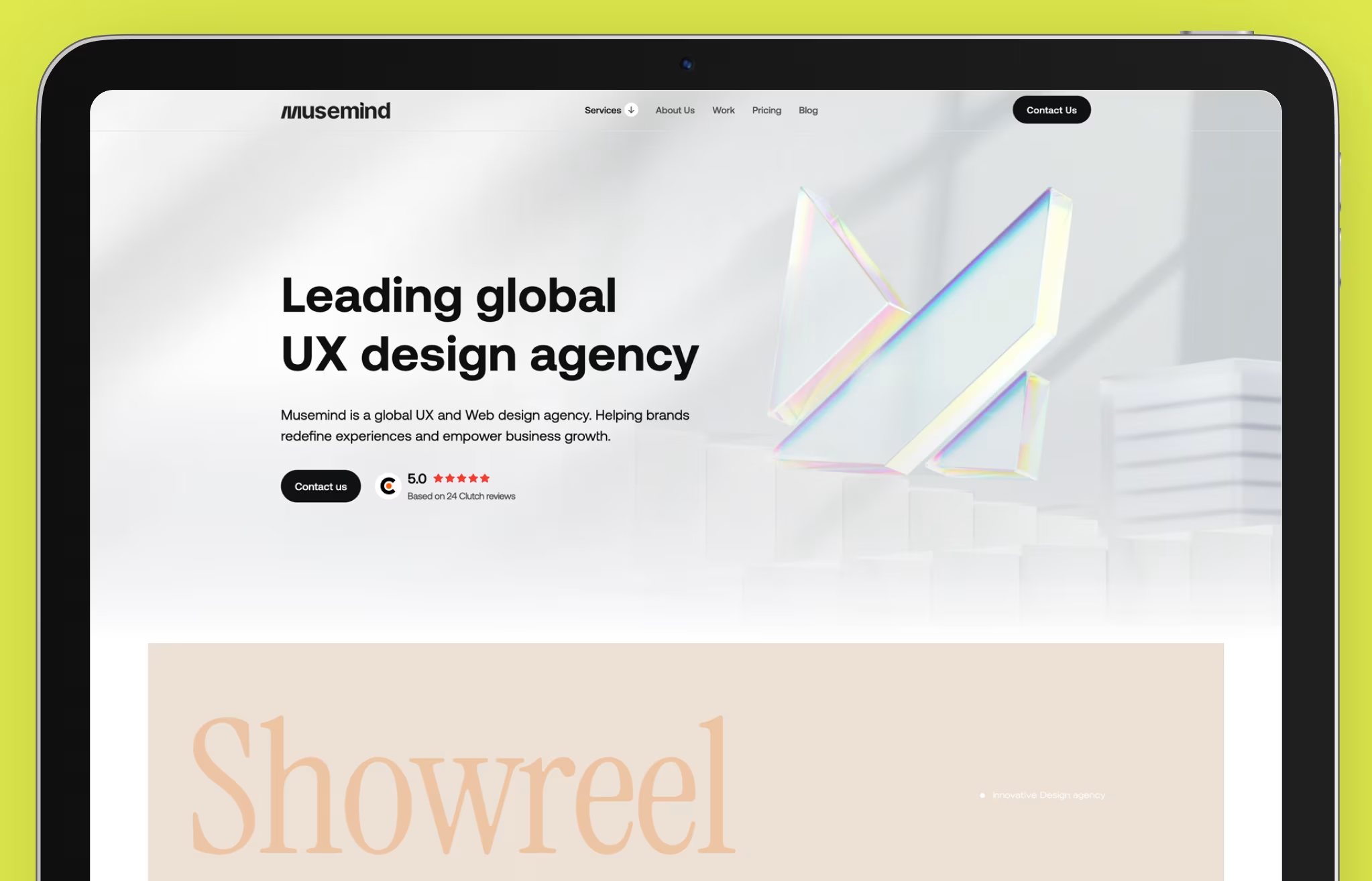
Start with the founding year, because it is the point. Every other firm on this list is older. IDEO opened in 1991. Metalab in 2006. Musemind launched in 2021 and already ships for Visa, Meta, and Microsoft. A studio that lands enterprise logos like those inside a few years did not coast there on tenure. It got there on delivery.
That trajectory is why Musemind fits startups better than the old guard does. A firm built in 1991 was built around long research cycles and enterprise budgets. Founders do not have that runway or that checkbook. Musemind runs the full cycle (research, user flows, wireframes, UI, interactive prototypes, usability testing, design systems, and front-end handoff) on a modern stack (React, Webflow, Framer) at a pace that matches a fundraise and a launch calendar, not a two-year consulting engagement.
Being young is the advantage here, not the caveat. The process was built for today's tools and today's product patterns, so there is nothing to retrofit from a pre-mobile era. For AI-era SaaS and fintech products, that matters. The mobile portfolio backs it up with real work: fintech (Prime Iraq) and an AI fitness app (Trainmate), so the mobile depth is native, not repurposed web screens
Musemind has worked across SaaS, fintech, healthcare, cybersecurity, logistics, ecommerce, education, travel, and enterprise software.
Public client and project examples include Microsoft, The Motley Fool, Packt, Indeed, Daxtra, Ministry of Hajj and Umrah, OnDeck, Peel, i-Payout, Recharge, Panther, Boon, Prime Iraq, Konoom, and DocShipper.
The Panther case study is one of its stronger proof points. Musemind redesigned the cybersecurity product experience and brand presentation. The project helped Panther support funding across three rounds.
Boon is also useful for SaaS proof. The project included product redesign, user research, UI design, development, gamification, and design-system work.
Prime Iraq shows fintech UX depth. The project involved bilingual Arabic and English support, localized UX, mobile-first design, accessibility improvements, and usability testing.
A testimonial on Musemind’s pricing page from Robin Fish, Founder and CEO of Arrive, says: “They brought our app redesign to life beyond expectations.”
A Clutch review from Lucy Martis of Martis Private Office also highlights Musemind’s communication. She described the team’s communication as “friendly, professional, and solutions-focused.”
That matters because SaaS and fintech design projects need more than strong visuals. They need clear thinking, steady delivery, and a team that can explain decisions without slowing the product team down.
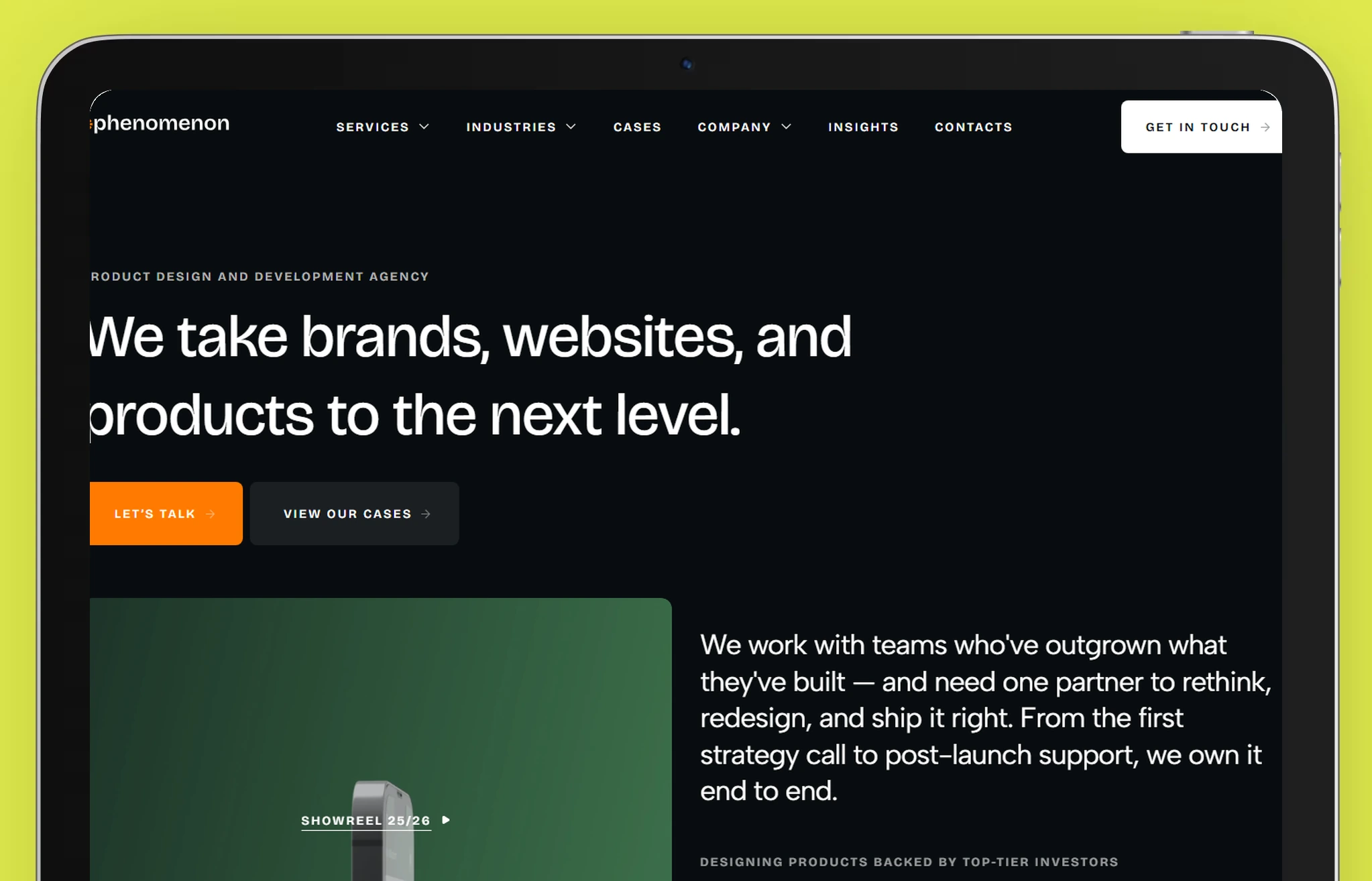
Phenomenon Studio is a strong choice for SaaS and fintech teams that need both product design and development support.
Its best proof comes from the KlickEx case study. The project focused on cross-border payments for Pacific Island communities. Phenomenon redesigned key money movement flows and reported a 35.3% increase in Add Money conversion. The Money Transfer flow improved by 30.7%.
That makes Phenomenon stronger than agencies that only show visual polish. It connects UX work to product movement.
The agency is also useful for MVPs. It can support discovery, UX/UI design, branding, development, and post-launch improvement. That is helpful when a startup does not want to manage separate design and engineering vendors.
Phenomenon is not the cheapest option. It is also not a narrow subscription-style UX partner like Eleken. It fits teams that need a serious design-and-build partner for SaaS, fintech, healthcare, or AI product work.
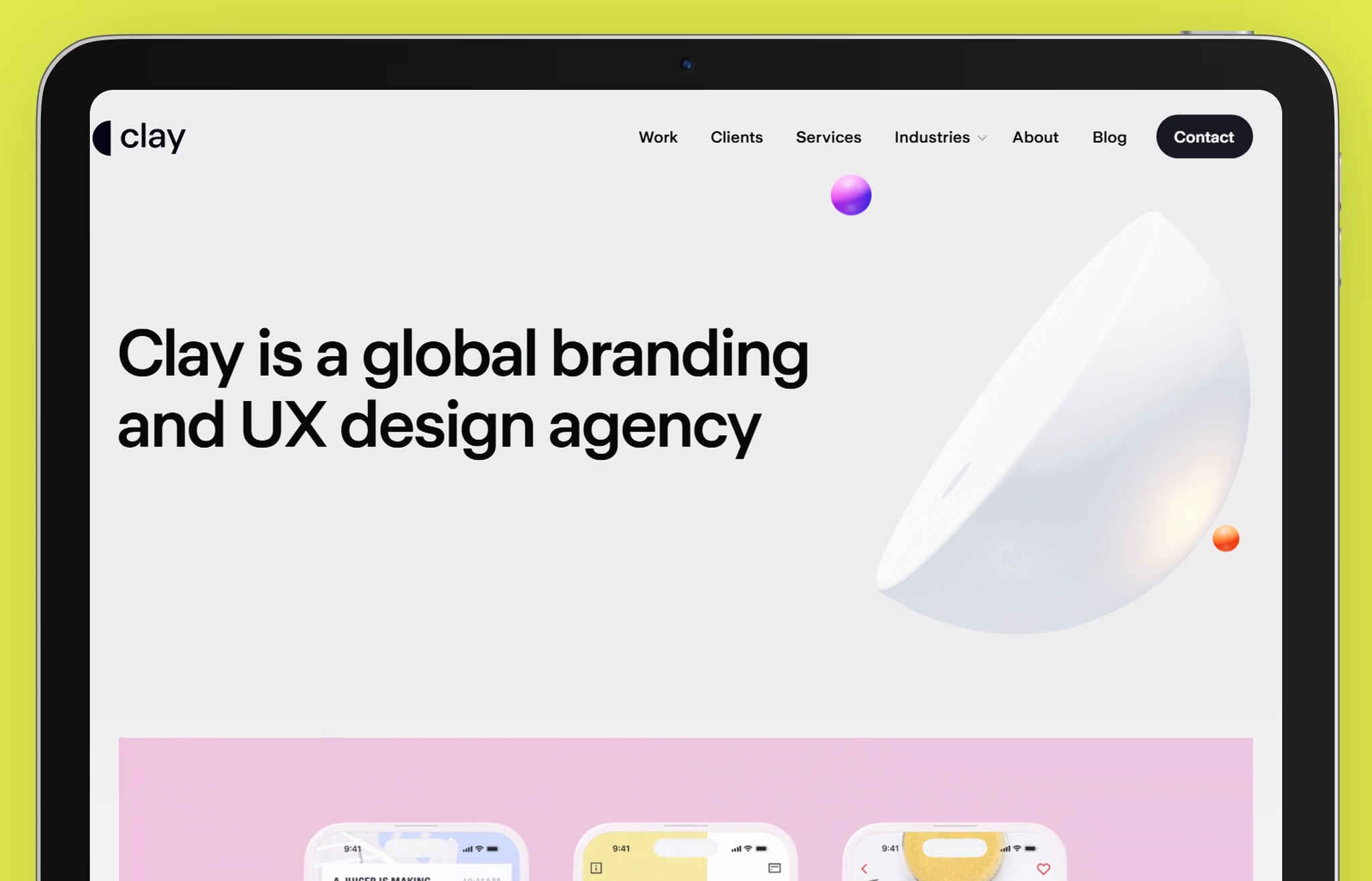
Clay is a strong fit for companies that need product UX and brand identity to work together.
That makes it useful for fintech, Web3, B2B SaaS, and enterprise software teams. These companies often need more than a better interface. They need a clearer product story, a stronger website, a cleaner design system, and a brand that feels credible.
The Slack case is a strong proof point. Clay designed and built Slack’s interactive demo experience. That matters because the project was not just visual design. It helped explain the product to new users and supported sales.
Clay also has strong work across STC Bank, Discover, Snapchat, Grayscale, and Marqeta. This shows good range across financial products, social platforms, Web3, enterprise tools, and consumer-facing digital experiences.
Clay is not the best fit for low-budget UI work. It is also not the most metric-heavy agency in this list. But for teams that need premium UX, branding, websites, and design systems from one senior-led agency, Clay is a strong option.
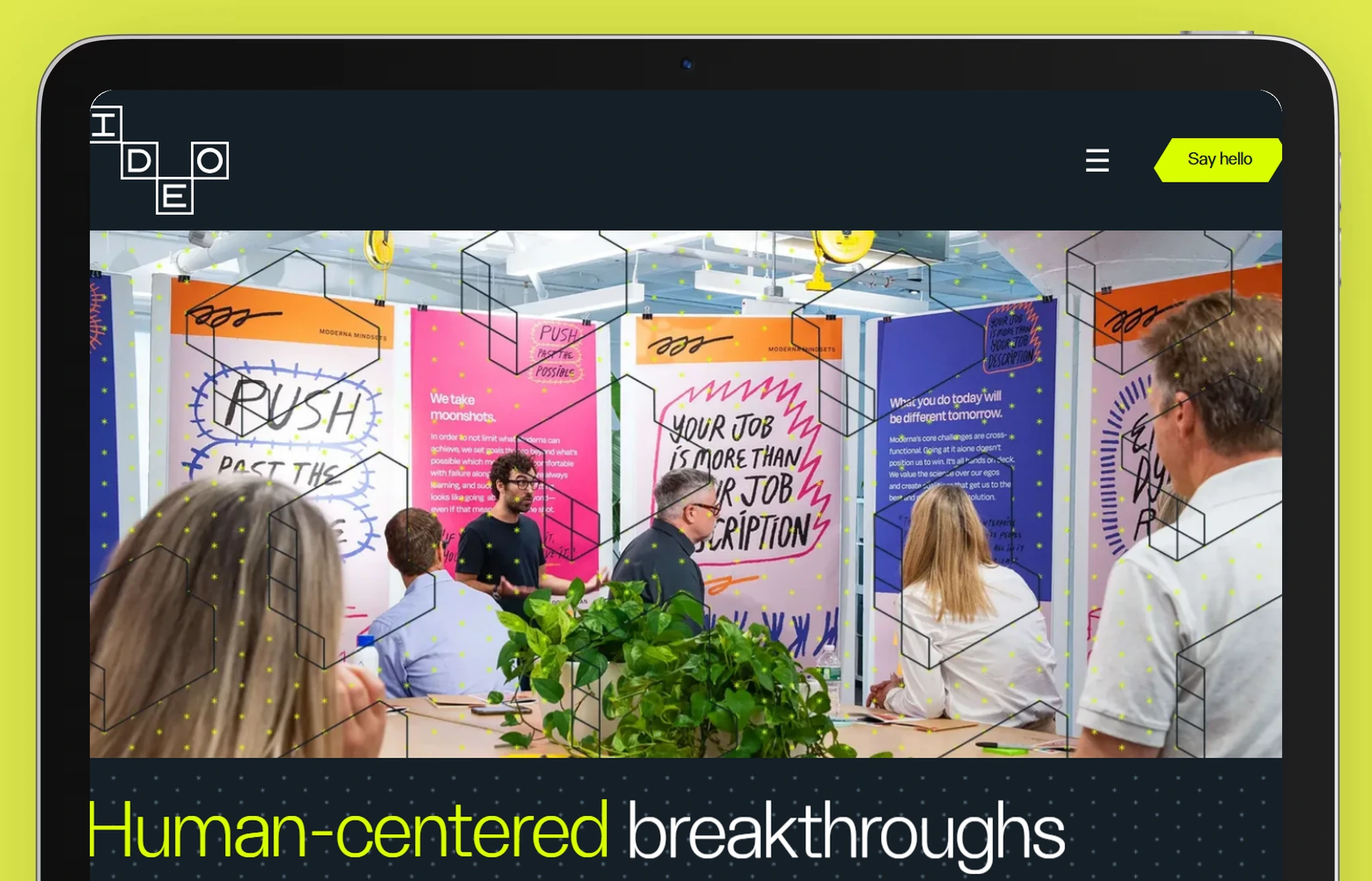
IDEO is not a typical UI/UX agency. It is a research-led design and innovation company.
That makes it powerful for complex problems. Healthcare systems, public-sector tools, service redesign, and new business ideas usually need more than interface design. They need research, prototyping, stakeholder alignment, and strategic thinking.
Its PillPack work is one of the clearest product examples. IDEO helped shape the brand, website, dashboard, packaging system, and service experience. PillPack was later acquired by Amazon for $1 billion.
IDEO is also strong in healthcare and organizational innovation. Its work with Omada Health, Ford, H&M, Sephora, and Kooth shows how the firm connects product design with business, behavior, and service systems.
IDEO is not the right choice if a SaaS startup only needs fast UI execution. It is also not the most pricing-transparent option. But when the problem is complex and research-heavy, IDEO is one of the strongest names on the list.
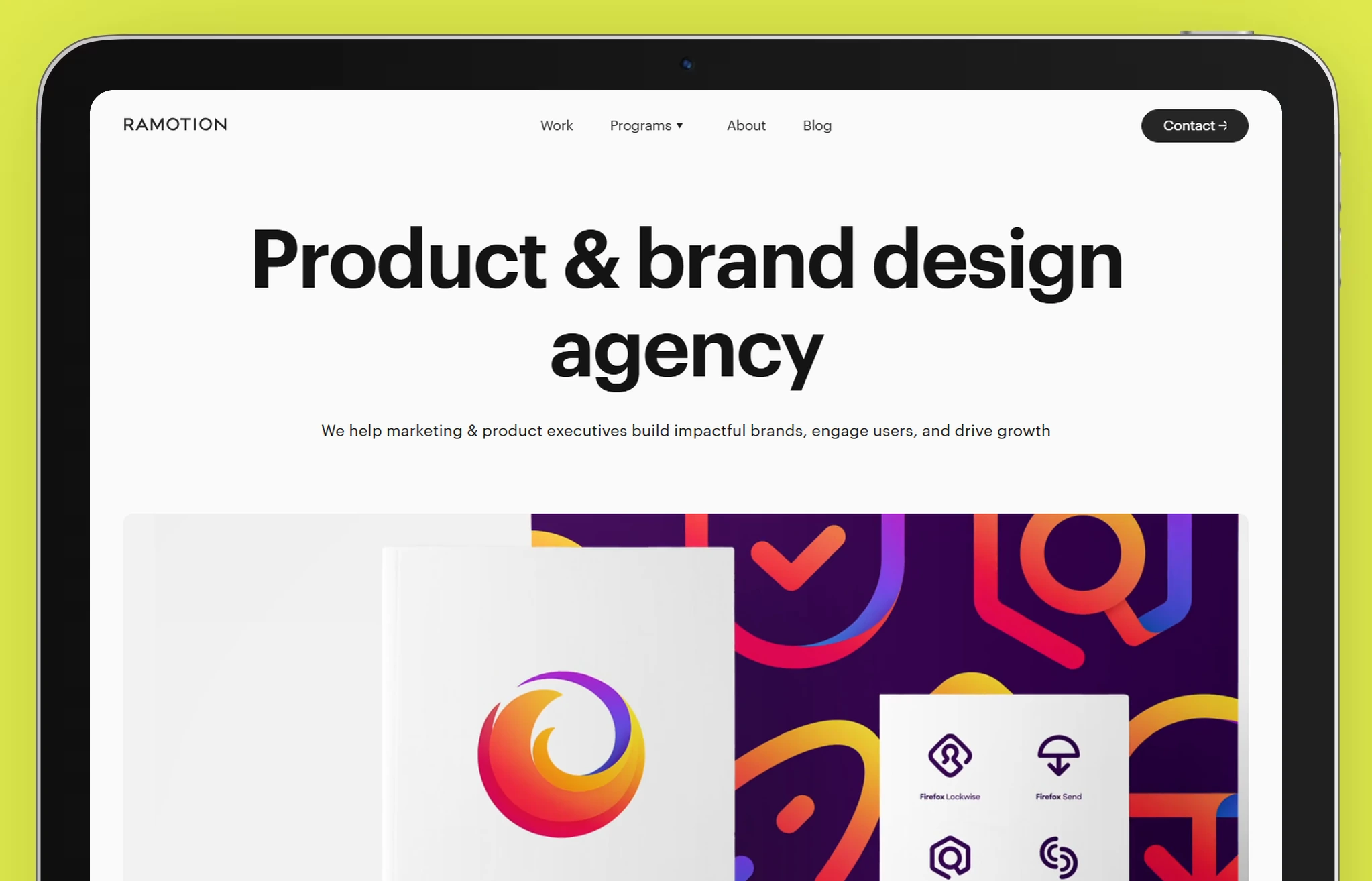
Ramotion is a strong choice for B2B SaaS, fintech, and tech companies that need product UX and brand maturity at the same time.
Its strongest proof is the Turo case study. Ramotion redesigned Turo’s support portal and improved self-service by 58%. It also reduced support-team load by 30%. That is the kind of result buyers should care about because it connects design work to operational impact.
Ramotion is also useful when a company needs its product, website, brand, and design system to mature together. Its work with Quantexa, Truebill, Holidu, and Puzzle shows depth across SaaS, fintech, travel tech, and enterprise platforms.
The agency is not a cheap MVP shop. Its pricing points to premium work. But for funded startups and B2B tech teams that need serious UX, brand strategy, design systems, and development support, Ramotion is a strong fit.
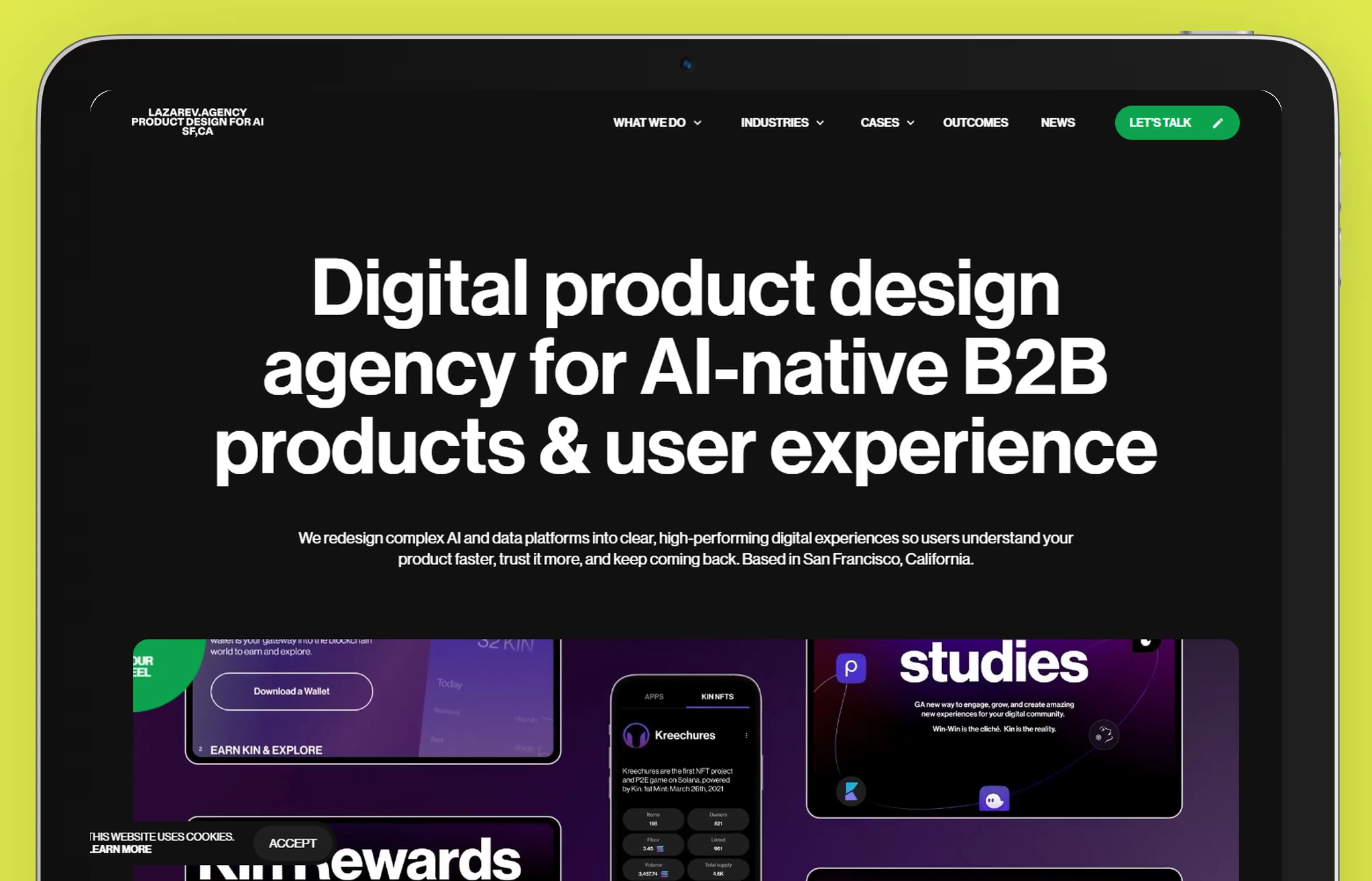
Lazarev Agency is a strong fit for AI-native SaaS and complex B2B products.
Its main strength is AI product UX. The agency does not only talk about AI as a trend. It works on AI copilots, recommendations, confidence states, explainability, human override, and failure recovery. That makes it useful for products where users need to understand and trust AI decisions.
The strongest proof is Accern. Lazarev connects the project to $40M growth and acquisition. Other public examples include VT.news, Peel, and Elva. These cases show product UX work across AI research, media, ecommerce analytics, and data-heavy tools.
Lazarev is not the right choice for a small team that only needs a few MVP screens. Its pricing signal points to premium work. It fits better when a funded SaaS, fintech, or enterprise team needs a serious AI UX strategy and a scalable product experience.
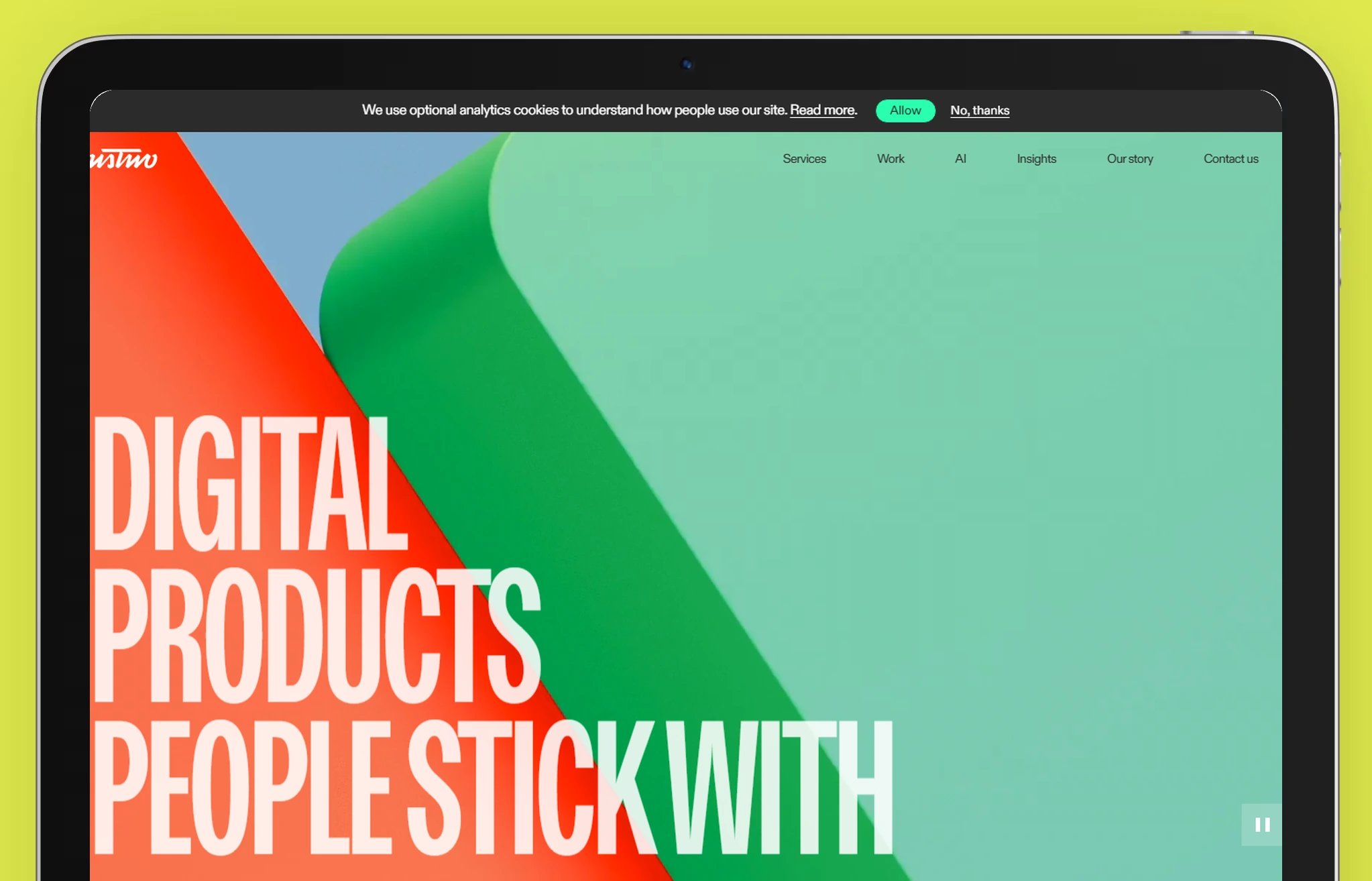
ustwo is a strong choice for enterprise teams that need product strategy, UX, and engineering in one studio.
Its strongest proof comes from the iShares case study. ustwo helped improve a global investment product experience with a scalable design system, accessibility improvements, reusable components, and localization support. The product serves 120 million investors.
The agency is also strong in healthcare, financial services, media, education, and AI-enabled products. Its work with Peloton, HSBC, Three, and Soph’s Plant Kitchen shows a mix of consumer product design, fintech delivery, behavior-change thinking, and full-stack product build.
ustwo is not the right fit for a small startup that only needs quick UI screens. It works better for enterprise or growth-stage teams that need a serious digital product studio with research, design, engineering, and scale support.
Fantasy is a strong fit for enterprise brands that need product innovation with AI, brand, and engineering support.
Its strongest proof is the LIV Golf case study. Fantasy rebuilt the digital ecosystem with native apps, a full website, backend systems, live-data layers, and a scalable design system. The launch happened in 72 days.
That kind of work shows why Fantasy belongs on this list. It is not only about designing screens. It can support product strategy, AI workflows, engineering, platform delivery, and brand systems.
Fantasy is not a practical choice for a startup that only needs a small MVP or basic UI polish. It fits better when a company needs a flagship product experience at enterprise scale.
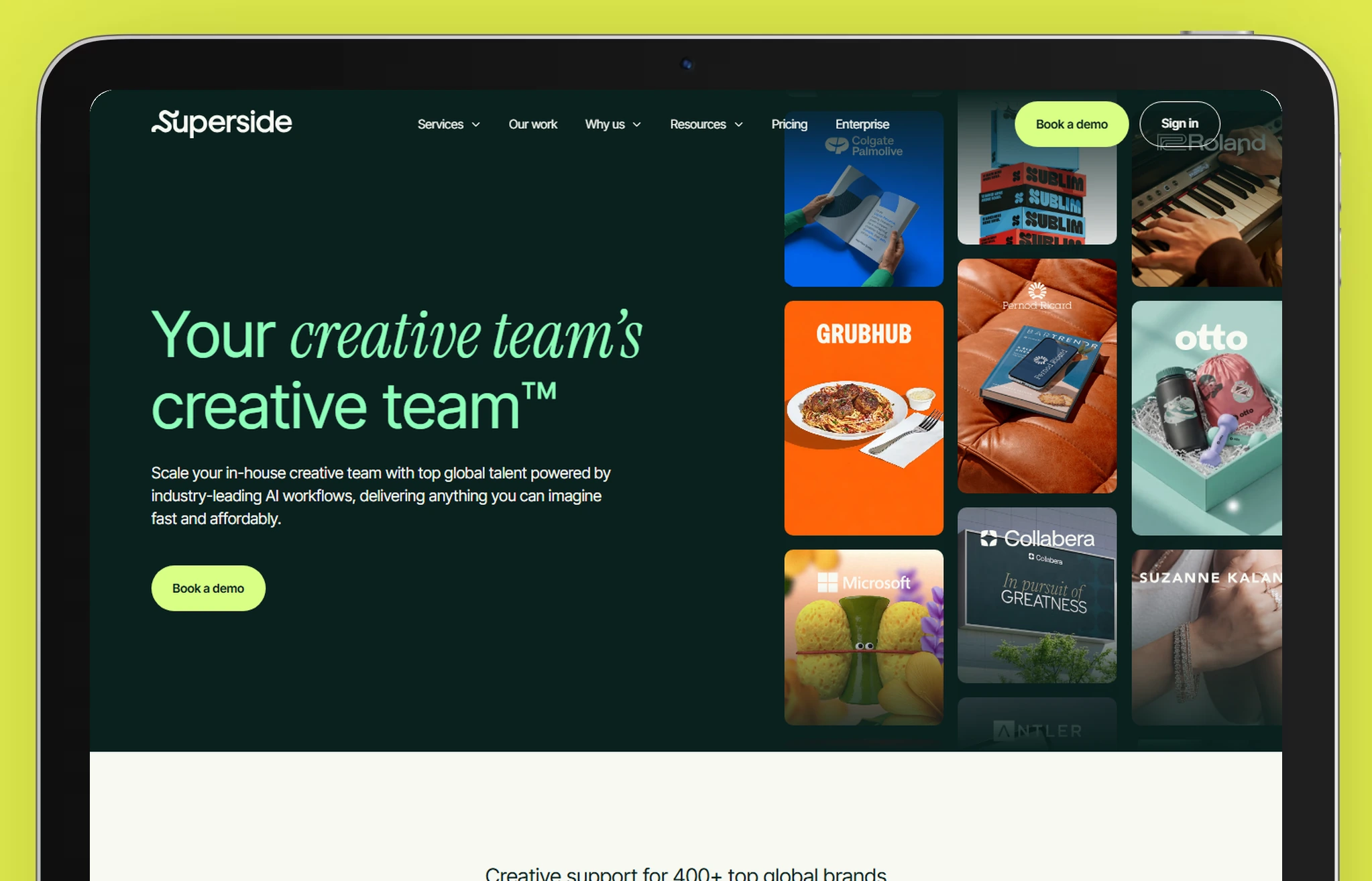
Superside is different from most agencies in this list.
It is not a traditional product design agency built only around UX research, product strategy, and interface design. It works more like an AI-powered creative service for teams that need design capacity at scale.
That makes Superside useful for larger SaaS, fintech, and enterprise teams that already have product direction in place. These teams may not need a full discovery partner. They may need more design output, faster creative production, design-system support, web design, product design help, and AI-powered workflows.
Its product design service covers UX audits, MVP design, design systems, product consulting, and ongoing UX improvements. That gives it a real place in this list. But the buyer should understand the difference.
Superside is not the best choice if an early-stage startup needs a senior product partner to define the product from scratch. Musemind, Phenomenon Studio, Cieden, or Eleken may fit that need better depending on the scope.
Superside is stronger when a growing team needs to scale design production without hiring more people. It can support product design work, but its bigger strength is creative scale across brand, web, motion, campaigns, and AI-powered production.
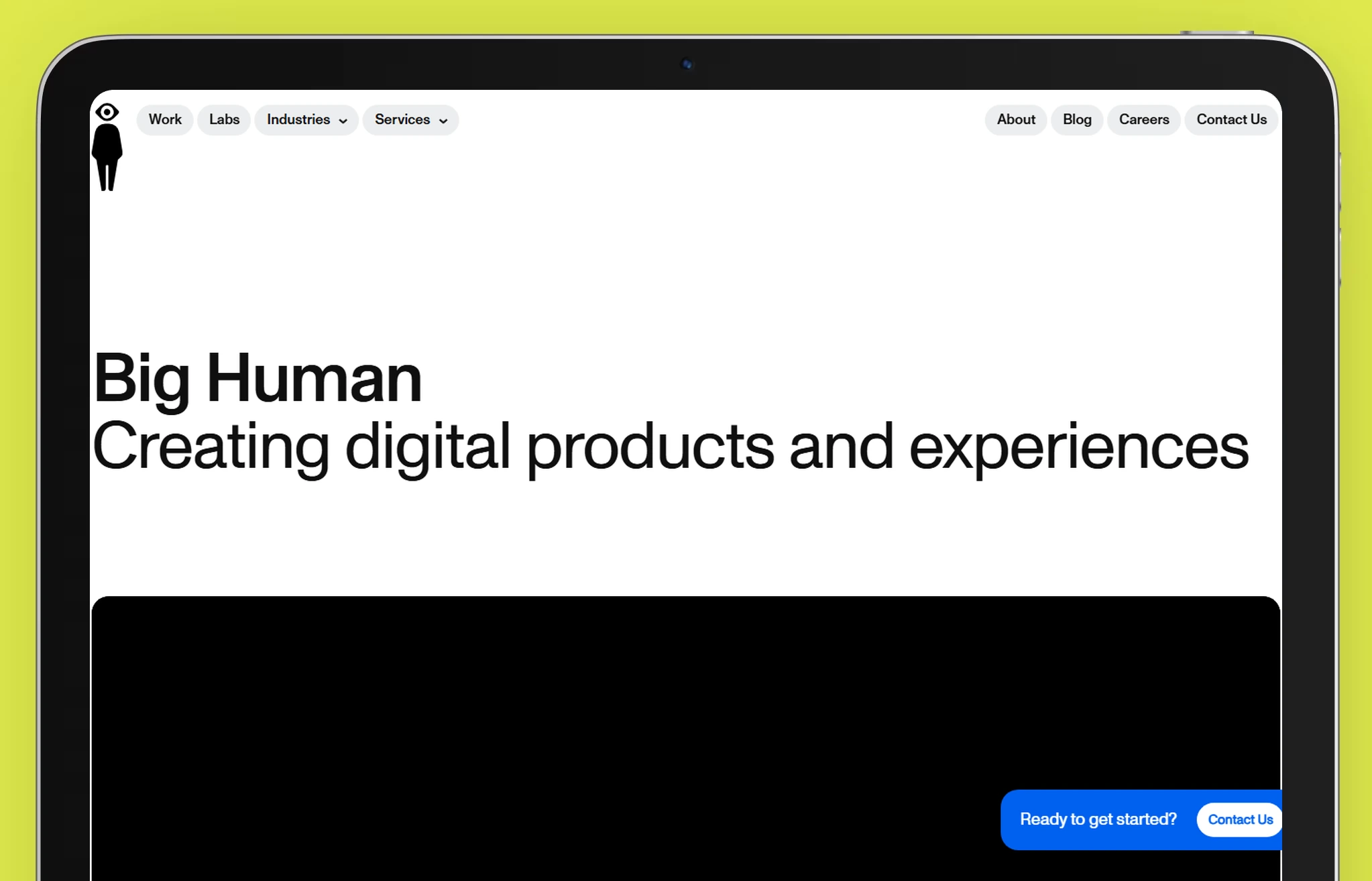
Big Human is a strong fit for startups and consumer-facing products that need strategy, design, branding, and development in one team.
Its strongest proof is product invention. Big Human was behind HQ Trivia, which reached 35 million downloads and 2.4 million concurrent players. It also worked on Vine, which later became part of Twitter. That gives the agency more product credibility than firms that only show polished website redesigns.
Big Human is useful when a company needs to shape both the product and the brand around it. Its work covers mobile apps, fintech tools, marketplaces, ecommerce products, social products, and startup platforms.
It is not the right choice for a company that only needs cheap UI screens or a small landing page. Big Human fits better when the product needs a stronger strategy, stronger brand direction, and real build support.
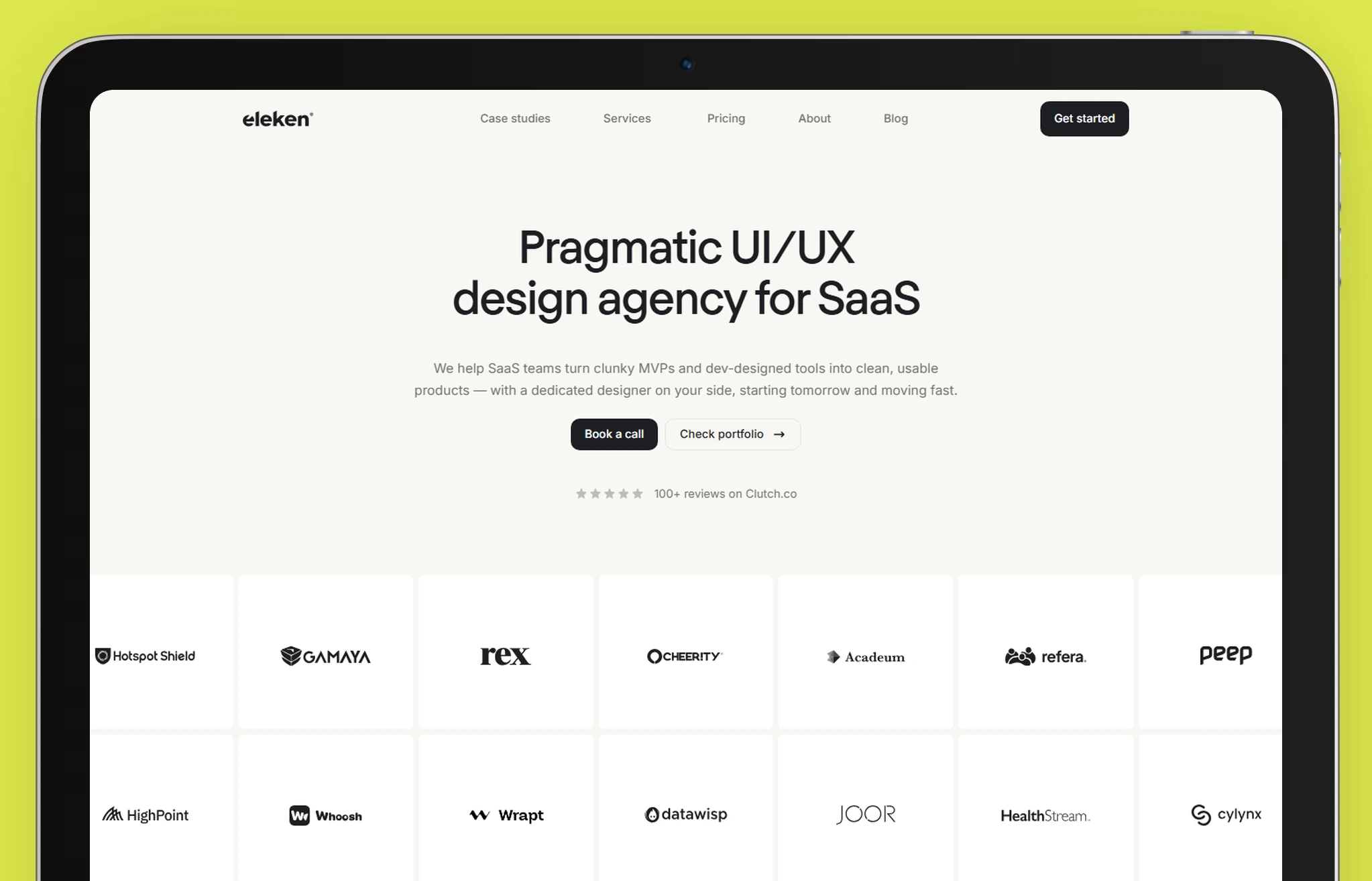
Eleken is one of the clearest SaaS-focused product design agencies on this list.
Its strongest advantage is the subscription model. A SaaS team can work with a dedicated designer instead of hiring in-house or running a large fixed-scope agency project. That makes Eleken a better fit than many firms here when the main need is ongoing UX improvement.
The RedOwl case study is a useful proof point. Eleken helped design an AI-powered payment platform with KYC and KYB flows, a design system, and investor-ready screens. RedOwl later secured $1M in seed funding.
Eleken is not a full product engineering partner. It is mainly a design agency. So if a startup needs both UX and development, Phenomenon Studio, Arounda, or Halo Lab may fit better.
But for SaaS teams that need steady product design support, Eleken is a strong and practical choice.
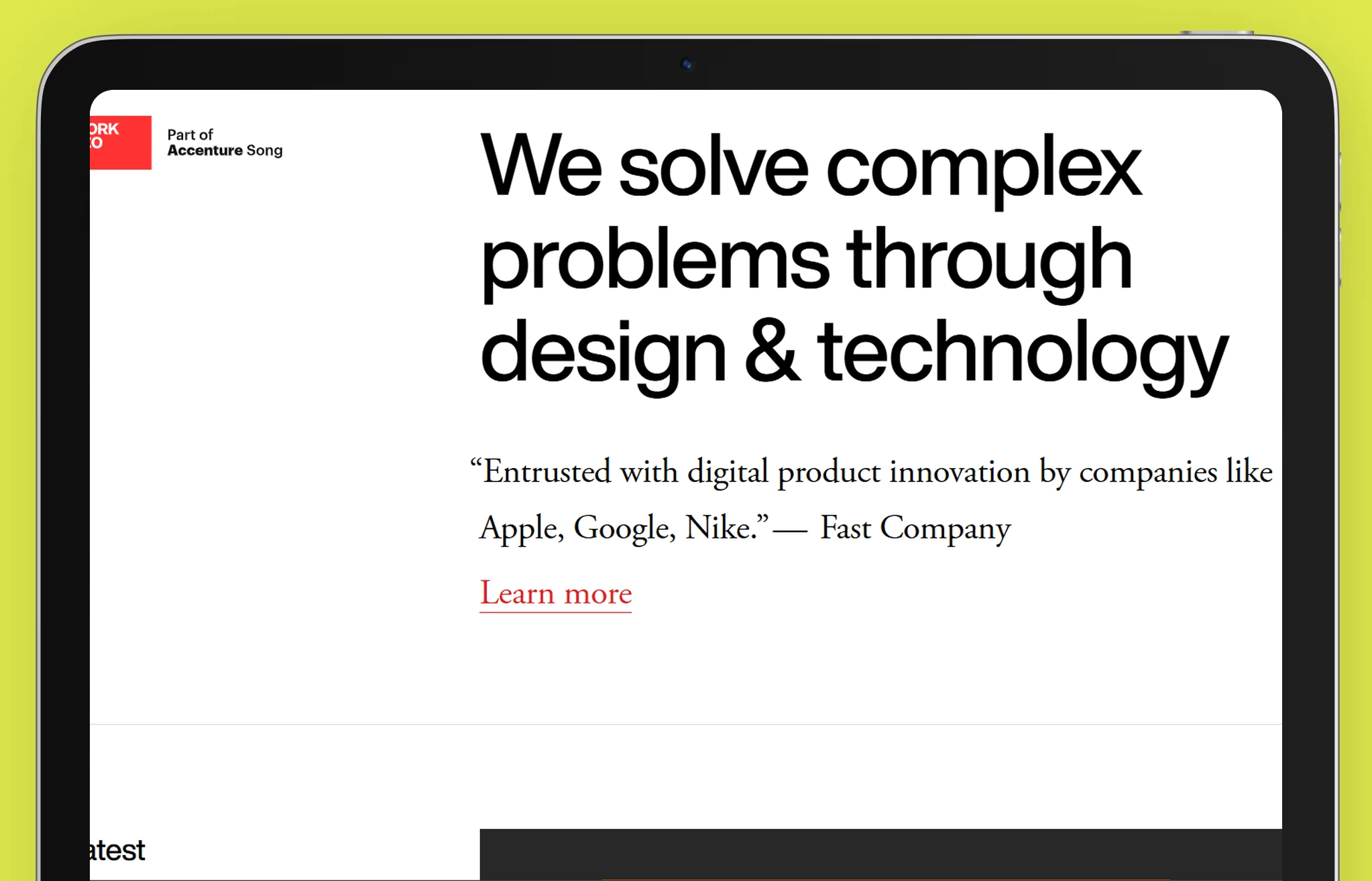
Work & Co is one of the strongest firms on this list for enterprise product design and full-stack digital product delivery.
Its biggest advantage is that it both designs and builds. The agency works with senior product teams that cover strategy, UX, UI, engineering, QA, accessibility, and optimization. That makes it a better fit for high-stakes products than for small tactical design tasks.
The Apple case is a strong proof point. Work & Co helped design and develop in-store software for Today at Apple. The program reached 5 million attendees in its first year.
Its broader outcome proof is also strong. Work & Co has public results across ecommerce, mobile apps, civic products, healthcare tools, and AI-enabled experiences.
This is not the agency for a small startup that only needs a fast MVP interface. But for enterprise teams that need a digital product built properly from strategy to launch, Work & Co is a serious option.
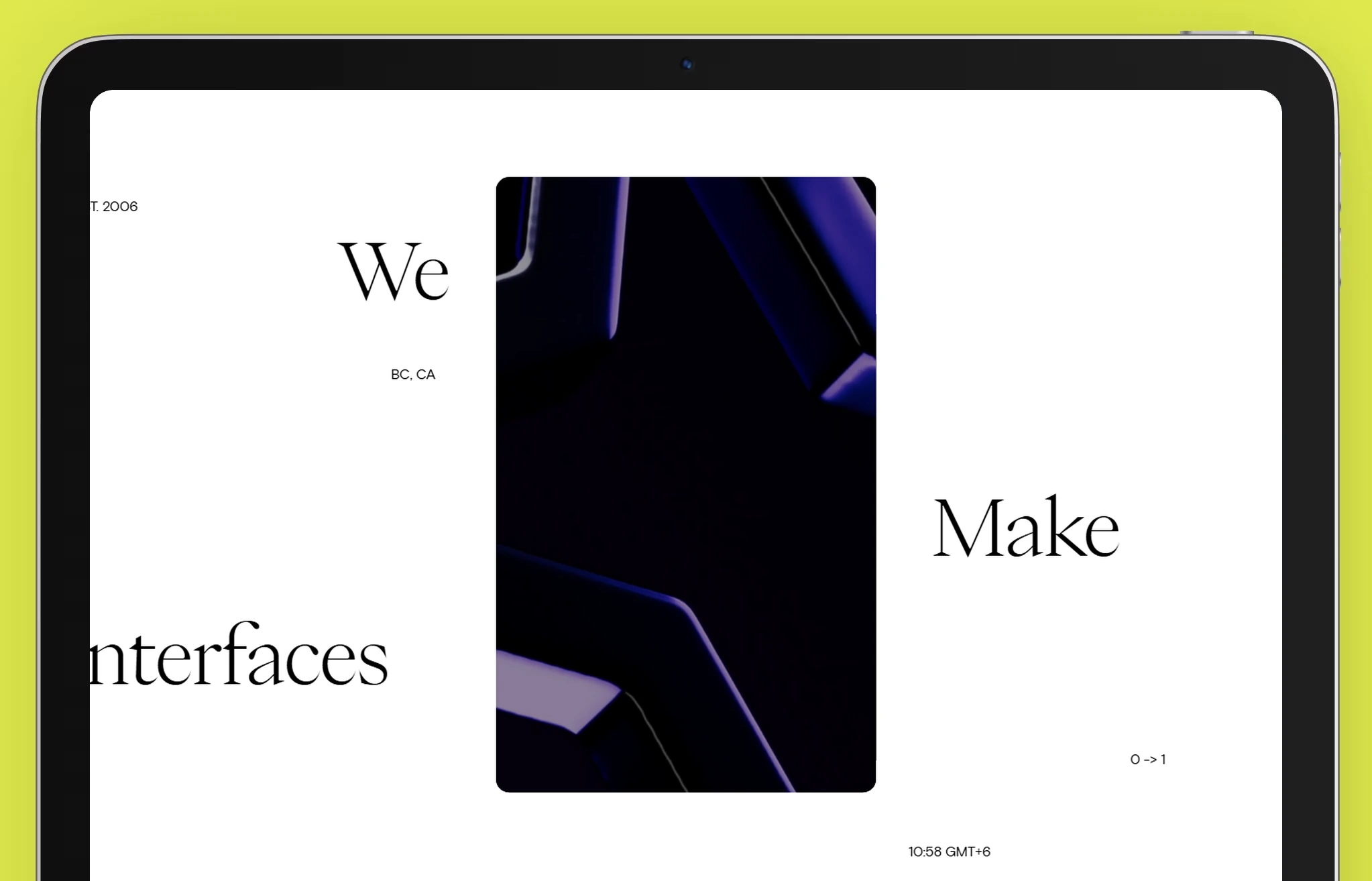
Metalab is a strong choice for product-led startups and AI companies that need premium interface design.
Its portfolio is the main proof. Metalab has worked with Slack, Coinbase, Uber, Midjourney, Suno, Amazon Photos, and Modular. These are not generic logos. They show product work across AI, fintech, productivity, consumer apps, developer tools, and high-scale platforms.
The Amazon Photos case is a useful scale signal. Metalab’s work shipped on day one to 54 million Prime subscribers. Its Waking Up work also made it a top meditation app, with nearly 40,000 five-star reviews.
Metalab is not the cheapest option. It is a stronger call when a company has the budget for a premium product strategy, interface craft, brand support, and engineering help.
For a $100K+ enterprise or high-growth product build, Metalab is one of the stronger options on this list.
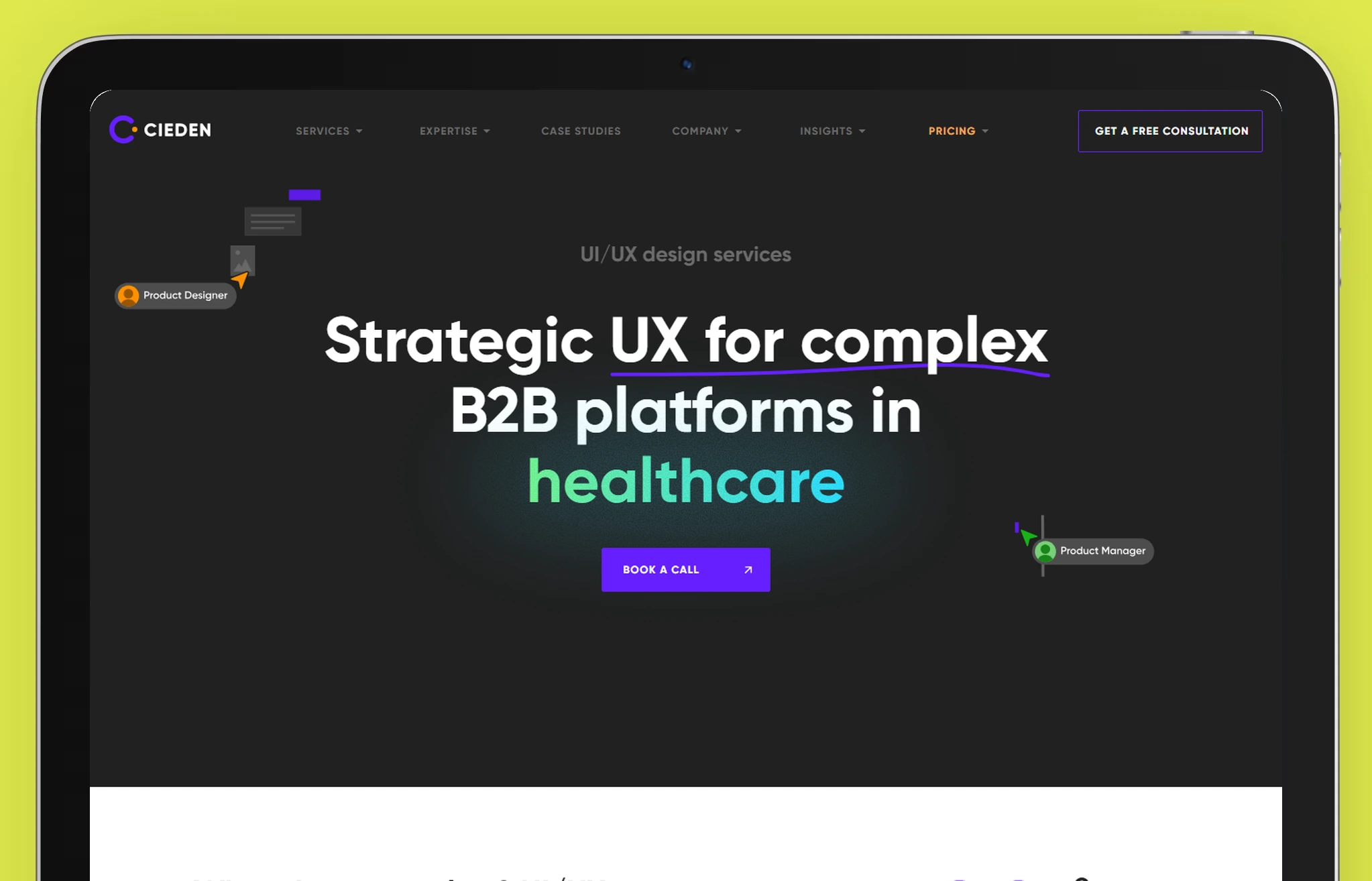
Cieden is a strong fit for complex B2B products where the problem is not just visual design.
Its best work sits around workflow-heavy products. Think SaaS dashboards, fintech tools, AI interfaces, healthcare platforms, telecom systems, and logistics products. These products need clear logic before they need beautiful screens.
The Sitenna case is the strongest proof point. Cieden redesigned a telecom site acquisition and management platform. The work included UX audit, UX/UI, design system, brand, and website support. After the redesign, Sitenna secured $5.1M in funding.
Cieden also has useful proof from LYKON, where the project showed 135% NPS growth. That is stronger than a vague design claim because it connects product improvement to user response.
Cieden is not the right pick if a company mainly needs deep backend engineering. But for B2B SaaS, AI, fintech, and healthcare teams that need senior UX thinking, business analysis, and scalable design systems, it is a strong option.
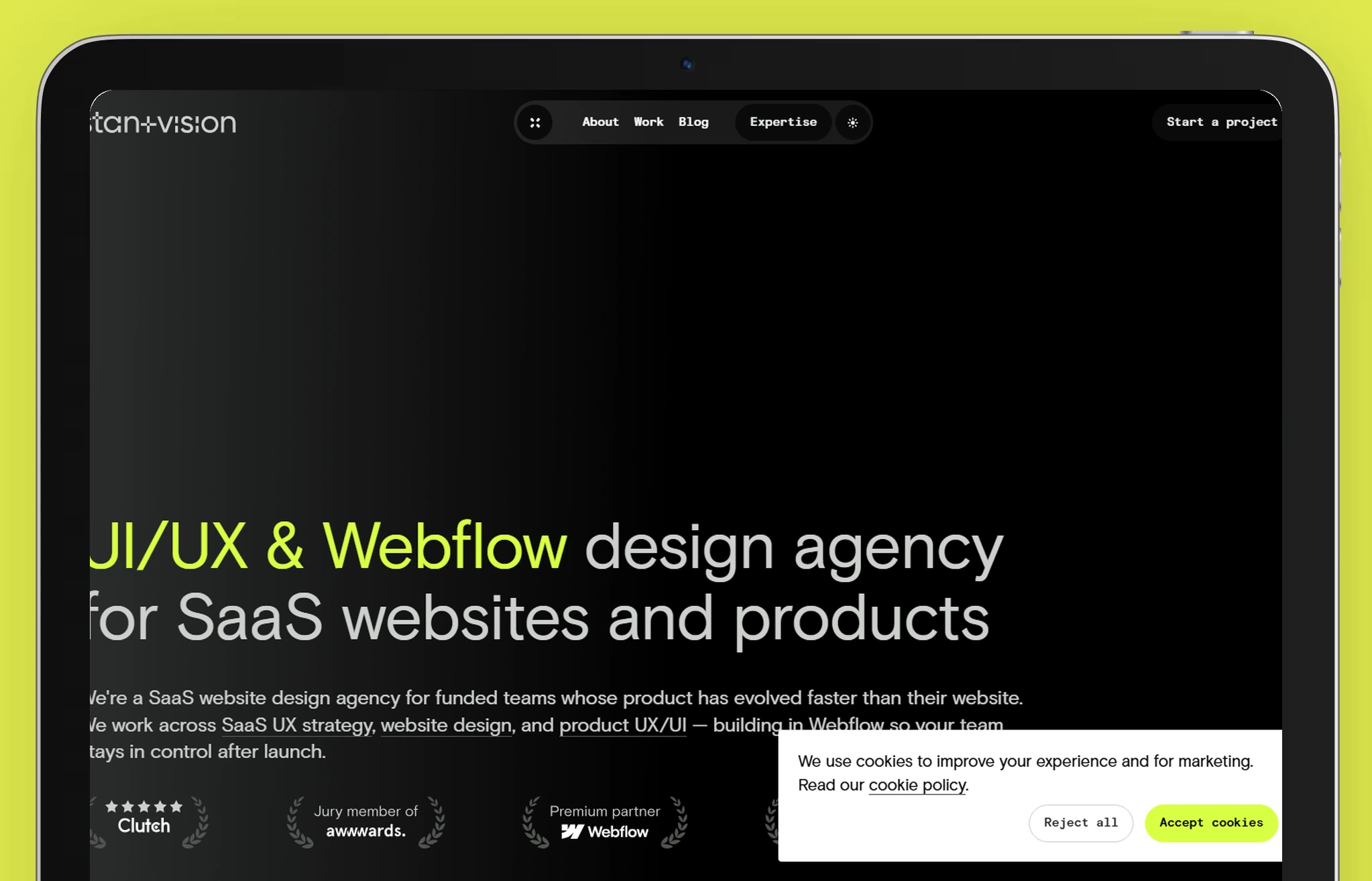
StanVision is a strong fit for funded SaaS teams that need product UX and website marketing clarity in tandem.
That is the agency’s sharpest angle. Many SaaS teams have a product that has evolved faster than their website. The product says one thing. The website says something else. Users get confused before they even sign up.
StanVision helps fix that gap with SaaS UX, website design, positioning, branding, and Webflow development. This makes it useful for product-led teams that need both conversion and product understanding.
The Tolstoy case is a strong proof point. StanVision’s work is tied to a 54% increase in DAU and a 44% higher CTR. Primer also shows a strong impact on SaaS websites, with a 67% conversion lift.
StanVision is not the right pick for deep custom software engineering. But for SaaS, fintech, AI, and data-product teams that need Webflow, UX clarity, and conversion-focused design, it is a strong option.
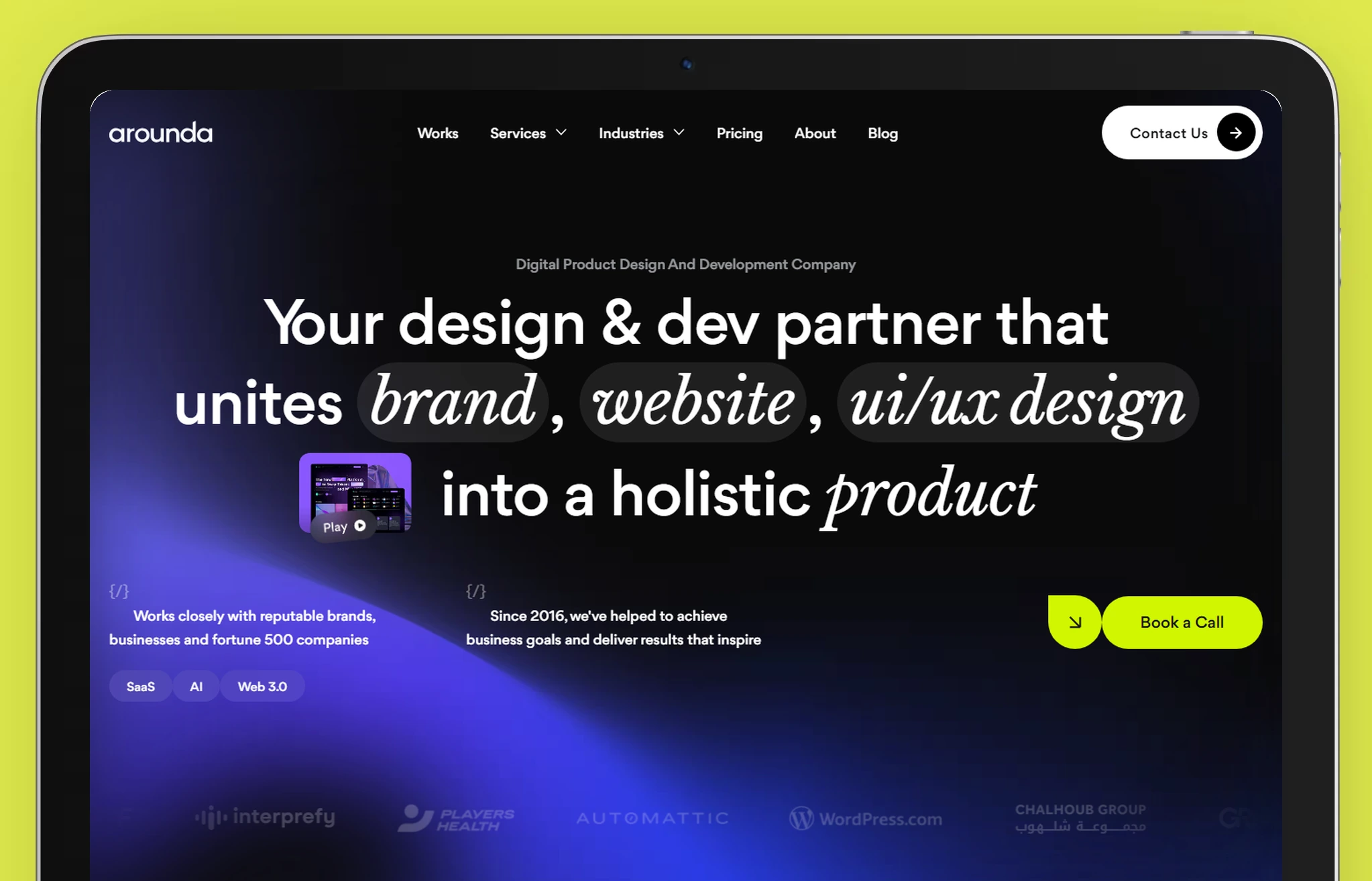
Arounda is a strong option for SaaS, fintech, Web3, healthcare, and AI teams that need design with implementation support.
Its main strength is platform modernization. Arounda helps companies improve product UX, brand trust, system logic, and product usability. That makes it useful for products that already exist but feel messy, outdated, or hard to use.
The MYSO Finance proof point is useful because it connects the project to $2.4M raised and 85% user engagement. Arounda also has measurable examples from NetGet and GuestWise, including faster navigation, higher usability, stronger brand trust, and better conversion.
Arounda is not the same kind of giant strategic consultancy as IDEO. It is also not a pure AI UX specialist like Lazarev. But for teams that need UX/UI, MVP design, redesign, design systems, branding, and product development support, Arounda is a practical choice.
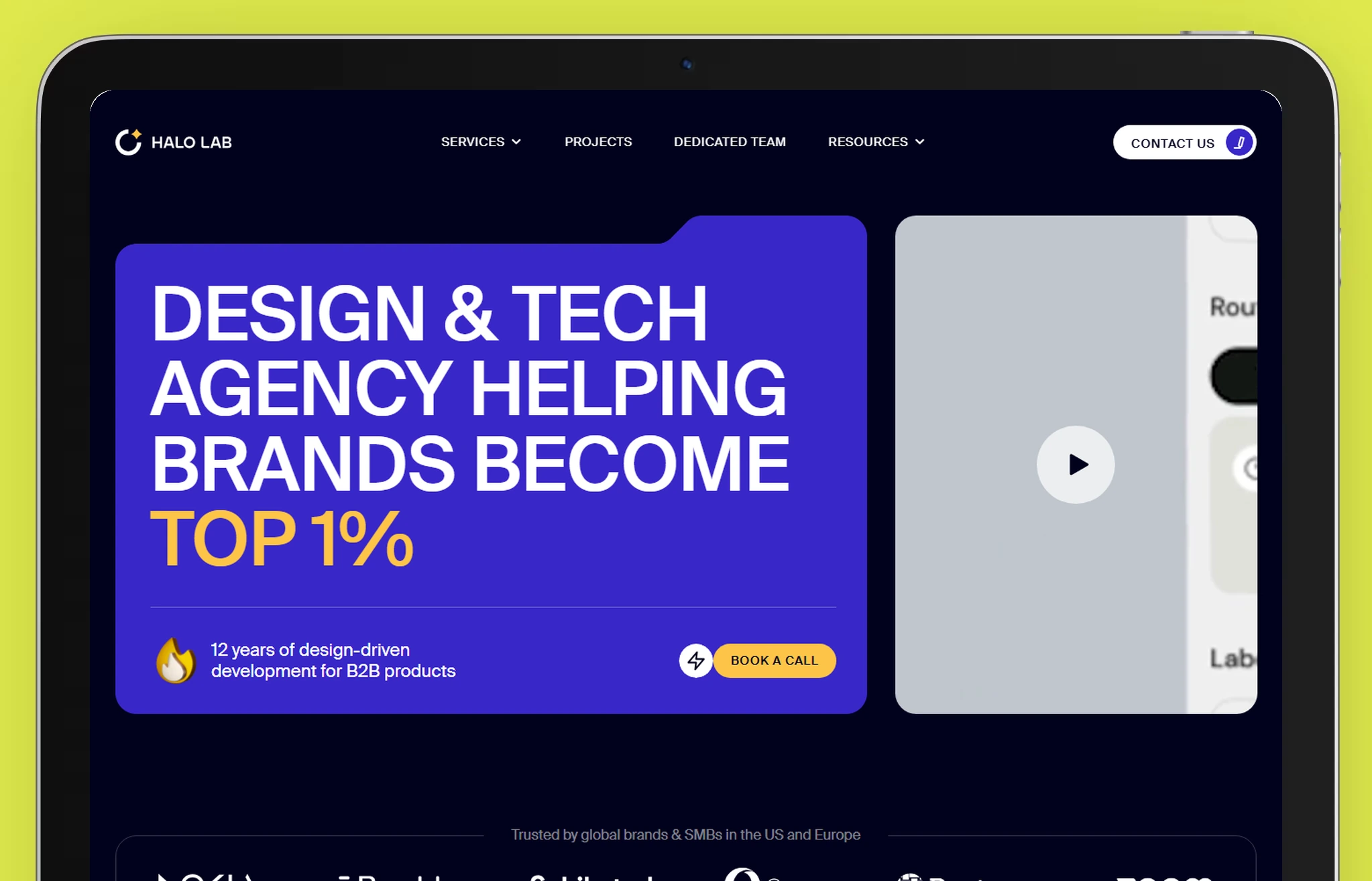
Halo Lab is a strong fit for startups and midmarket teams that need product design with practical development support.
Its service range is wide. The agency covers UI/UX design, branding, Webflow, web development, mobile app design, MVP development, and product redesign. That makes it useful for teams that do not want to manage separate vendors for design and build.
The HomeQ proof point is useful because it connects the work to 67% yearly growth and acquisition by Bonterra. Halo Lab also shows public work across healthcare, education, finance, SaaS, and web applications.
Halo Lab is not the strongest choice for deep enterprise strategy or advanced AI product UX. But for startups and SaaS teams that need clean UI, brand support, Webflow, MVP work, and development at a more accessible price point, it is a solid option.
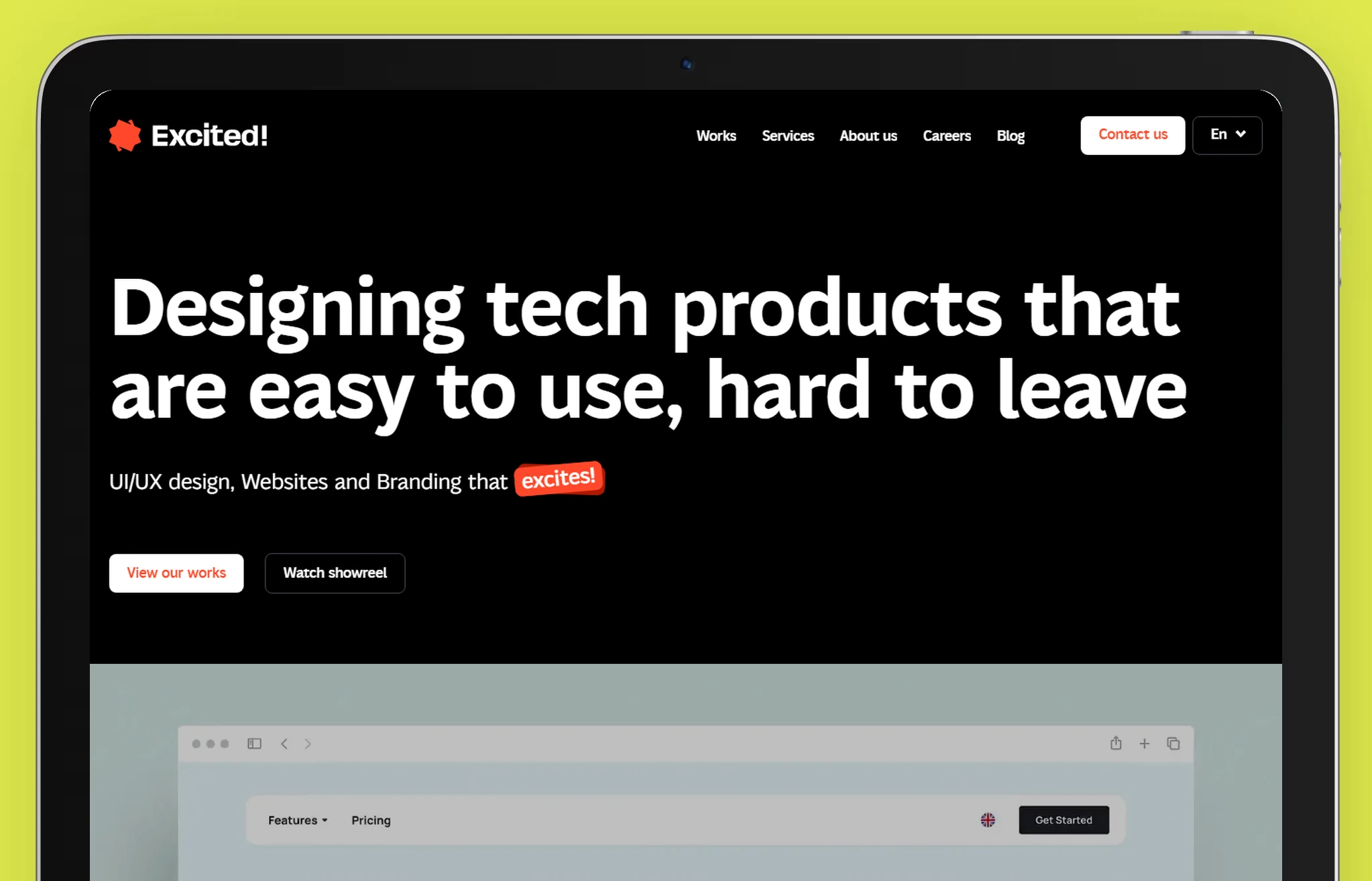
Excited is a strong fit for SaaS and AI product teams that care about polished UX, brand feel, and interface quality.
The agency works across SaaS platforms, mobile apps, fintech products, healthcare tools, Web3 products, and AI interfaces. Its strength is not only the product structure. It also brings branding and motion design into the product experience.
XILO is a useful SaaS proof point because it shows product redesign for an insurance sales automation platform. Verida adds credibility on the mobile and Web3 side.
Excited is not the best choice for a startup that needs heavy backend engineering. But for SaaS, AI, fintech, and mobile product teams that need sharp UX/UI, design systems, branding, and Webflow support, it is a strong option.
A product design company helps shape how a digital product works, looks, and supports user goals. For SaaS and fintech products, this usually includes UX research, user flows, wireframes, UI design, prototypes, design systems, and sometimes development support.
Start with product fit. A SaaS startup should look for an agency with SaaS case studies, clear UX process, pricing signals, fast MVP support, and design-system experience. Do not choose only by visual portfolio. Pretty screens are not enough.
For early-stage SaaS startups, Musemind is a strong fit when the team needs senior product design, Webflow, MVP design, and ongoing support without enterprise pricing. Eleken is better if the main need is a dedicated SaaS UX designer subscription.
A UX design agency often focuses on research, flows, wireframes, and usability. A product design company usually covers a wider product scope. It may include UX, UI, product strategy, prototyping, design systems, branding, and development support.
Some do, but not all. Work & Co, Phenomenon Studio, Arounda, Halo Lab, Fantasy, and ustwo offer stronger development support. Eleken is mostly design-focused. Musemind supports Webflow, MVP design, and product-related development needs.
Pricing depends on scope, team seniority, region, and development needs. Smaller UI/UX projects may start around $5,000 to $10,000. Premium agencies often start from $50,000 or $100,000+. Subscription models can start from a few thousand dollars per month.
Prepare your product goal, target users, current product links, known UX problems, timeline, budget range, and main business objective. If you already have analytics, user feedback, or competitor examples, share them early. It helps the agency estimate scope faster.
Hire a freelancer for small UI tasks or short design support. Hire a product design agency when you need strategy, UX research, design systems, Webflow, development support, or multiple specialists. SaaS and fintech products usually need more than one designer.
Digital product design focuses on software products like SaaS platforms, mobile apps, dashboards, fintech tools, and websites. Industrial product design focuses on physical products, materials, ergonomics, manufacturing, and engineering constraints.
Yes, if the fintech product has complex flows, trust issues, onboarding friction, or compliance-heavy steps. A strong product design company can simplify KYC, dashboards, payments, user permissions, error states, and mobile workflows.
The best product design company depends on what your product actually needs.
If you are an early-stage SaaS or fintech startup, do not chase the biggest agency name first. Look for a team that understands your product stage, budget, users, and speed. You need clear UX thinking, practical execution, and proof that the agency can work with products like yours.
Musemind fits teams that need senior product design, Webflow, MVP support, branding, and ongoing UX/UI help without enterprise-agency pricing.
But it is not the only strong option. That is the real point of this list. The right agency is not the one with the loudest claim. It is the one whose strengths match your product, timeline, and next business goal.




An Experience Design Agency focusing on building functional, simple, human-centered digital products for future.