An AI UI UX design agency designs interfaces and user experiences for products powered by AI, including LLM applications, copilots, AI dashboards, agents, recommendation systems, and machine learning platforms. Unlike deterministic software, AI products also require UX for uncertain outputs, corrections, failures, source visibility, and human oversight.
AI based UI UX design means two different things. Some buyers want an agency that designs AI products. Others want an agency that uses AI tools inside its own design process.
We reviewed 11 AI UI UX design agencies across seven factors: demonstrated AI product work, enterprise fit, service depth, portfolio evidence, client trust, pricing transparency, and AI-specific UX expertise. We gave additional weight to evidence of designing uncertainty, explainability, feedback, human review, and data-heavy workflows.
We did not rank agencies only by design style. We looked for teams that can support AI SaaS products, LLM interfaces, AI dashboards, automation tools, enterprise software, and machine learning platforms.
Here is what we checked:
Use this table as a fast AI UI UX design agency comparison before reading the detailed reviews. From this table, you will see some agencies are better for AI SaaS design, some are stronger for enterprise AI interfaces design. A few are more useful when you need a AI user experience design agency for AI products that can handle research, product strategy, prototyping, and design systems together.
Quick facts
Musemind is a UI/UX and product design agency founded in 2021 and headquartered in Dubai, with offices in New York, London, Berlin, Riyadh, and Dhaka. Musemind holds a 4.9 rating across 48 verified Clutch reviews and has delivered design work for Visa, Microsoft, Telenor Group, Jordan Kuwait Bank, and Qatar Creates.
For AI products, Musemind fits teams that need UX research, information architecture, interface design, and a design system from one group rather than three vendors. Its service range covers websites for AI products, AI web apps builders, mobile chat UI design, enterprise software for AI product, and AR/VR interfaces.
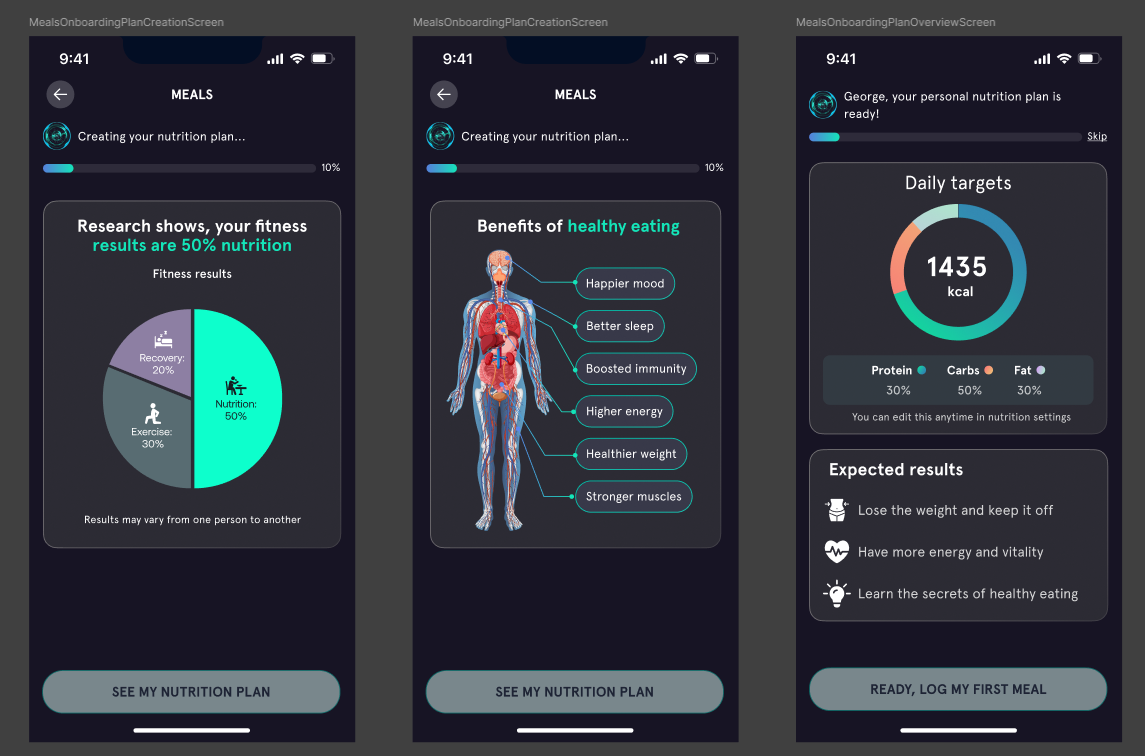
Musemind delivered the Trainmate AI fitness app in 3 months, covering user research, UI design, and development. The build included workout guidance, meal tracking, user flows, feature planning, and a 3D voice assistant named Alice. The team helped turn an early AI fitness concept into a mobile app with workout guidance, meal tracking, user flows, feature planning, and a 3D voice assistant named Alice.
Musemind redesigned Daxtra, an AI-powered recruiting platform, after running competitor research and a UX evaluation. The team restructured navigation, information hierarchy, and data density so recruiters could read machine-generated candidate matches without reverse-engineering the ranking logic. That makes Musemind relevant for AI SaaS design, AI dashboard UX, and machine learning products where users need to understand complex data fast.
Client review
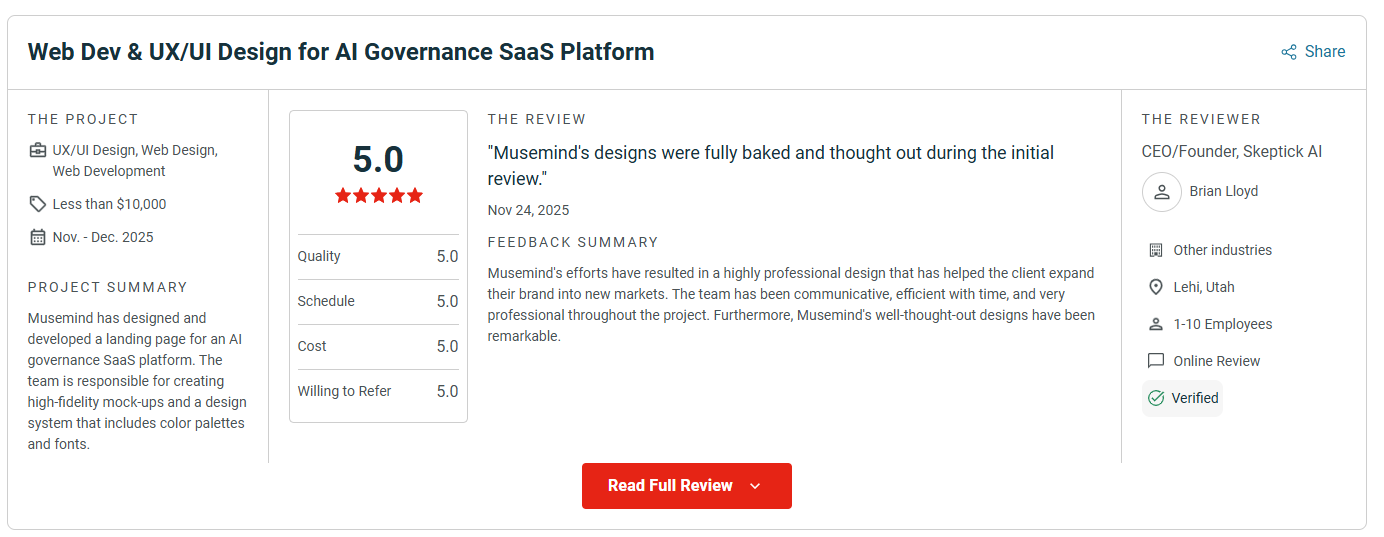
A verified Clutch review from Brian Lloyd, CEO and Founder of Skeptick AI, shows Musemind’s fit for AI product teams. The project was for an AI governance SaaS platform and covered UX/UI design, web design, and web development. The budget was less than $10,000, with the work completed between November and December 2025.
The client gave Musemind a 5.0 rating for quality, schedule, cost, and willingness to refer. He said, “Musemind’s designs were fully baked and thought out during the initial review.” The review also mentions that Musemind created high-fidelity mockups and a design system with color palettes and fonts. The final design helped Skeptick AI present its brand more professionally and expand into new markets.
Hire Musemind if you are an enterprise team building an AI product with complex workflows, dashboards, or multiple user roles. The agency can support UX research, product structure, UI design, design systems, prototypes, and developer handoff. Musemind is a good fit for AI SaaS platforms, internal AI tools, fintech products, healthcare software, and data-heavy B2B systems where users need clear, trustworthy interfaces.
Quick facts
Clay is a UX/UI and branding agency headquartered in San Francisco. Clay's website reports 78 global team members and 529 completed projects, and Clutch lists a 2009 founding at a $150 to $199 hourly rate. Clay has designed for Facebook, Google, Slack, Coinbase, Stripe, and Coca-Cola.
For AI products, Clay is strongest when the interface needs to feel premium and trustworthy. Its portfolio includes Eden, an AI-powered real estate platform, and Streetbeat, an AI-powered investment platform. Clutch also has a 5.0 review for an AI-powered web app MVP where Clay handled wireframes, visual mockups, animations, and a scalable design framework.
Quick facts
MetaLab has designed AI products for Suno, Modular, Otter, Together.ai, and Bardeen. MetaLab's AI page reports that the Modular engagement covered brand and product design for an AI developer platform valued at $600 million. Clutch lists MetaLab's service mix as 40% product design, 25% UX/UI design, 25% custom software development, and 10% branding.
That split means MetaLab can carry an AI product past the interface layer into shipped software, which matters when the client has no in-house engineering team. The same page also mentions enterprise AI services, UX/UI design, engineering, and UX research.
Quick facts
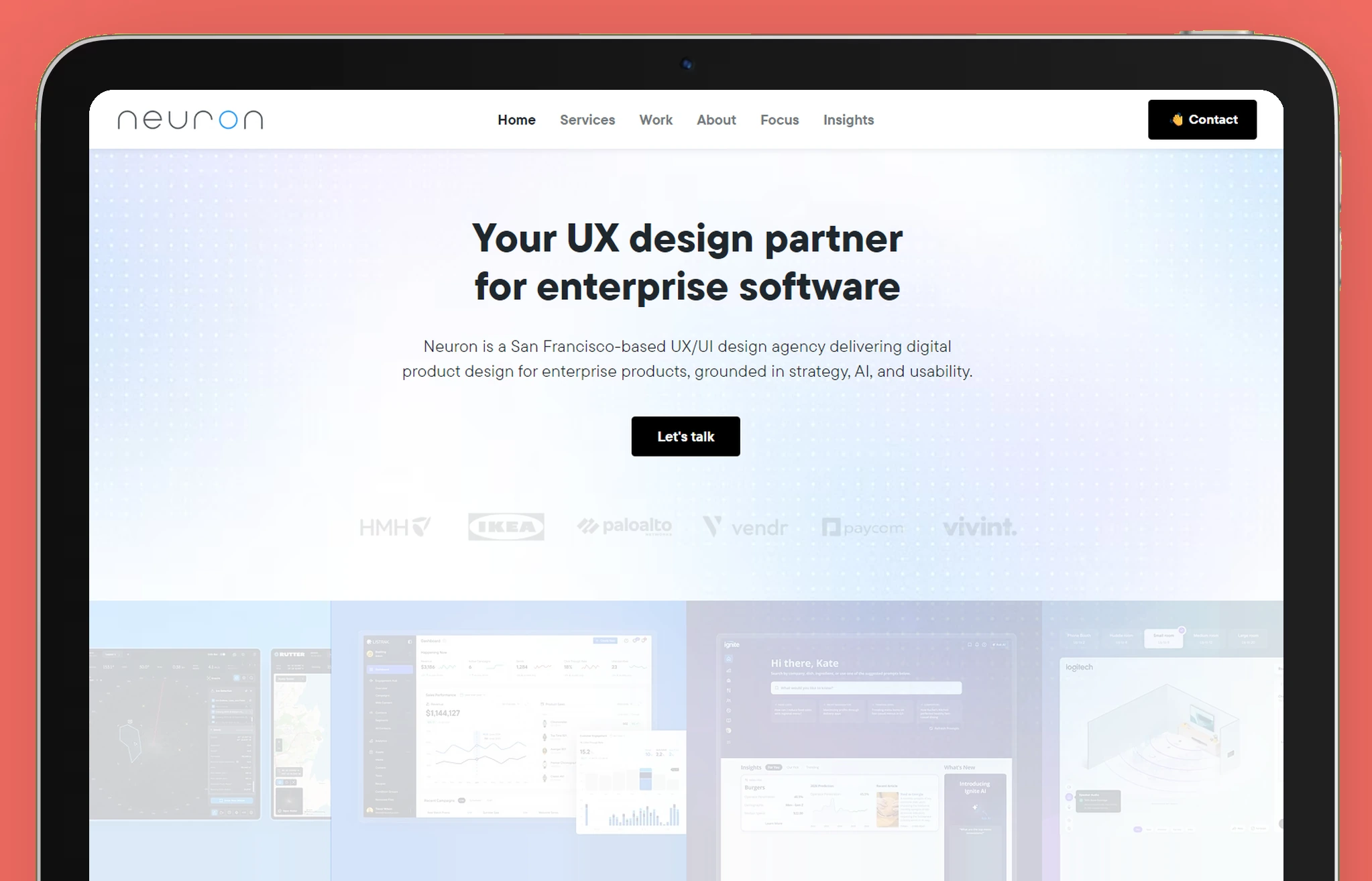
Neuron is a UX/UI design agency headquartered in San Francisco with additional offices in Los Angeles, New York, and Boston. Neuron designs enterprise software where workflow structure and measurable business value outrank visual polish, and Clutch lists Neuron at 5.0 across 52 reviews at a $150 to $199 hourly rate.
For AI products, Neuron is a good fit when the product includes dashboards, automation, AI support agents, data-heavy workflows, or enterprise user roles. Its website says the team designs AI products and helps embed intelligence into legacy platforms. A strong case study is WorkStep, where Neuron redesigned a workforce management product that used AI to flag employee comments related to safety, harassment, discrimination, and other issues. The redesign helped the client scale nearly 400% in one year.
Quick facts
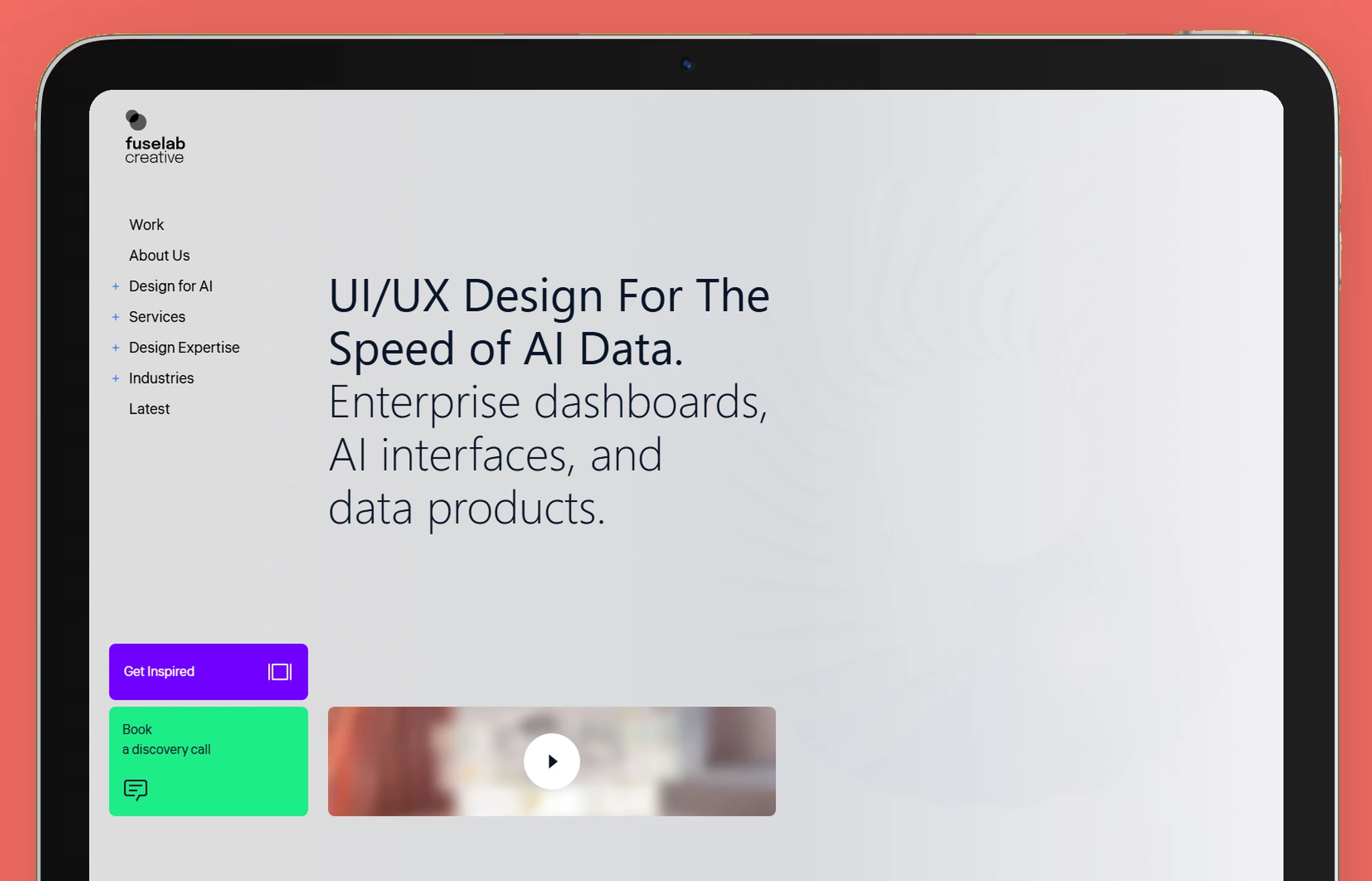
Fuselab Creative is a strong fit for enterprise teams that need AI UX design around complex data. The agency focuses on AI interfaces, enterprise dashboards, healthcare software, finance platforms, and government products. Its own site says the team has built 56 prototypes this year and 27+ design systems to date.
The agency is especially useful when an AI product needs clear data presentation. Fuselab works at the intersection of AI, UX, and data visualization. Fuselab Creative holds GSA MAS contract 47QTCA22D00CV, which lets federal and state agencies engage the studio without a separate vendor-qualification process. Fuselab Creative's government work includes systems for NASA and the National Institutes of Health, built to Section 508 accessibility standards.
Quick facts
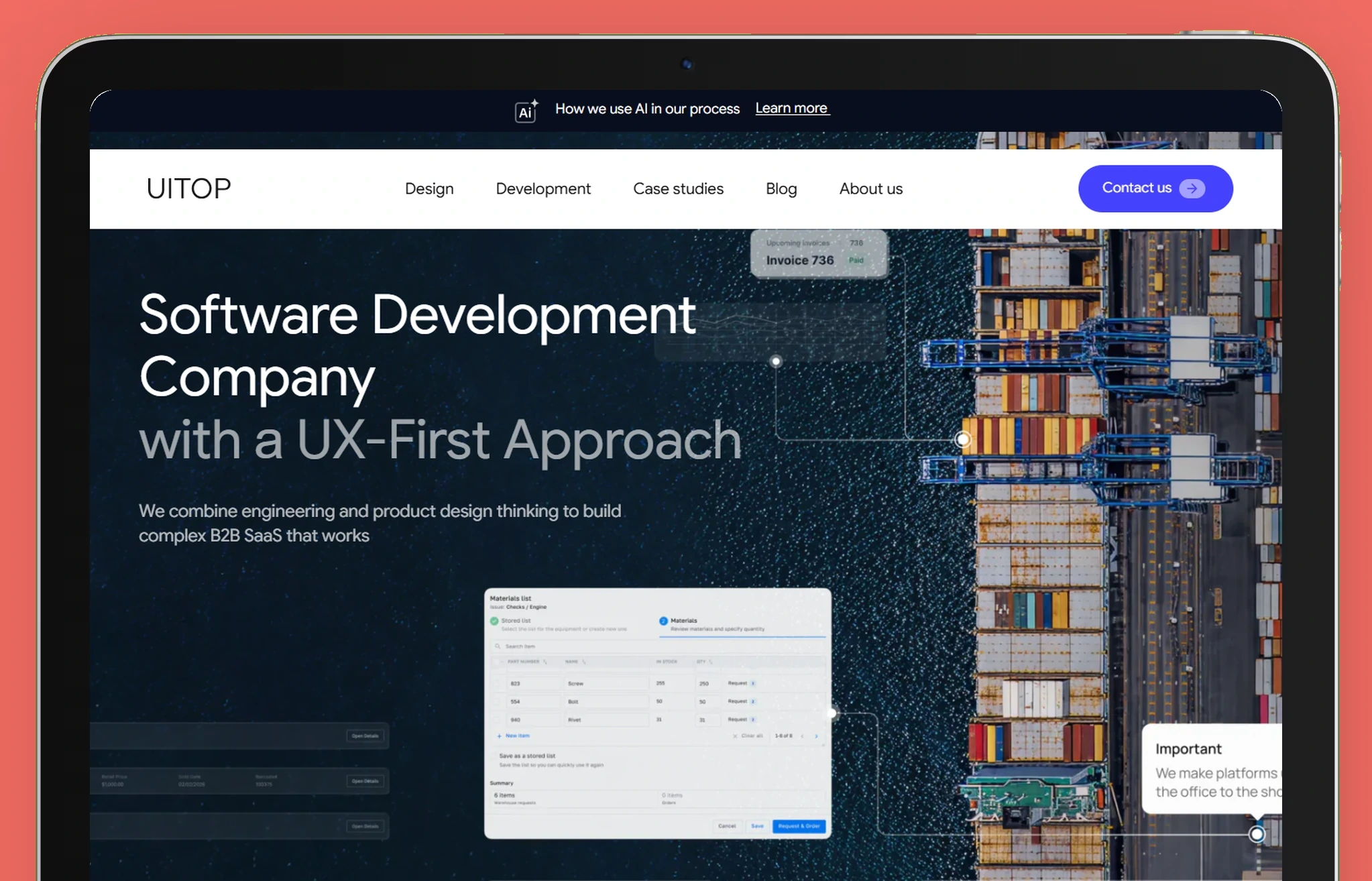
UITOP is a product design and software development agency focused on B2B SaaS, ERP, CRM, and business software. Its own website says the team improves usability, modernizes legacy systems, and builds scalable products that are easier to use and grow.
UITOP publishes a dedicated AI product UX page arguing that AI services need clear navigation, contextual insights, confidence scores, and feedback mechanisms. UITOP is headquartered in Kyiv, Ukraine, with a New York office, and Clutch lists a $25 to $49 hourly rate, which is the lowest band in this list. That makes it relevant for enterprise AI tools where users need to understand AI outputs before taking action.
Quick facts
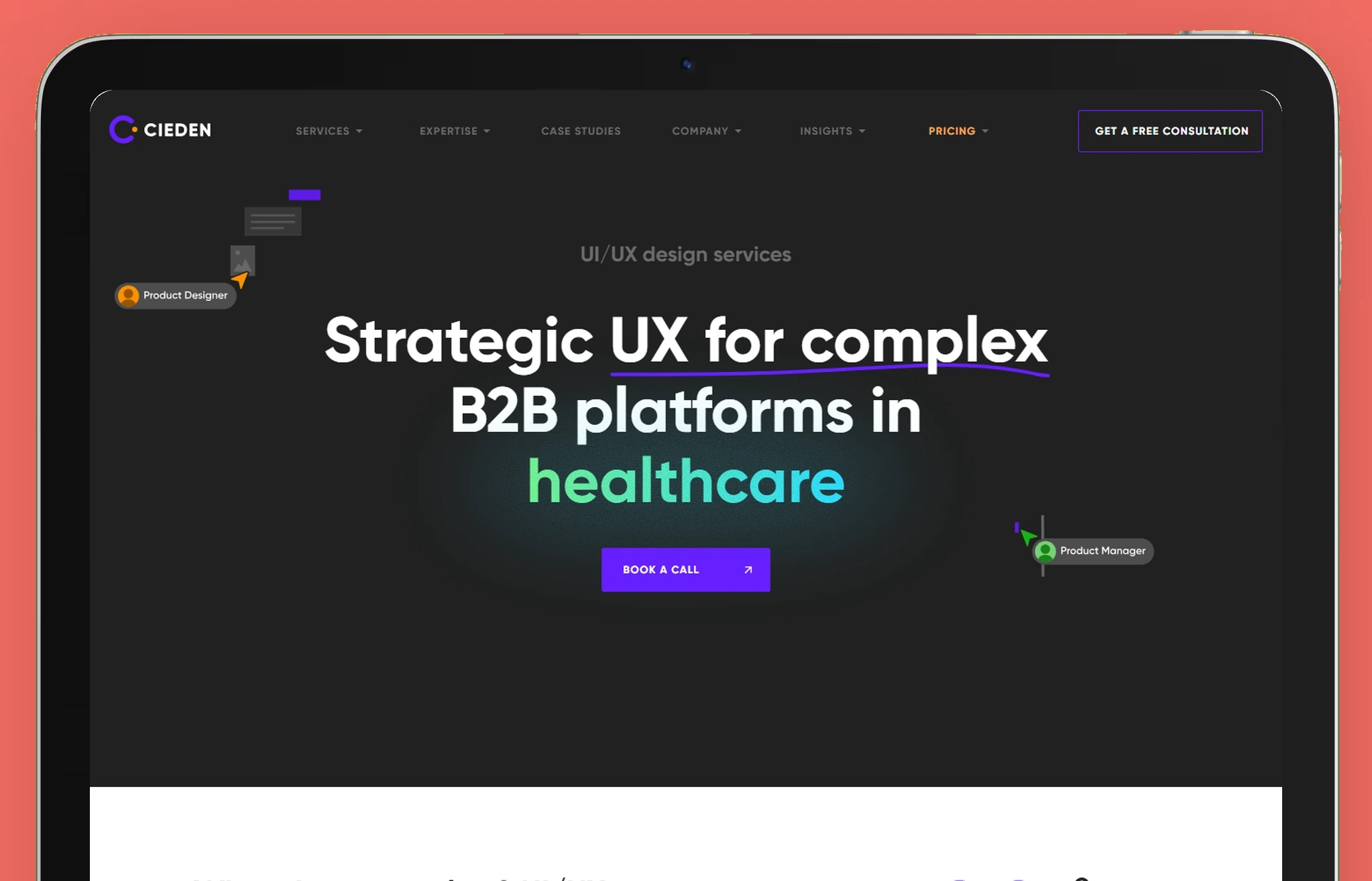
Cieden is a UX/UI design agency for complex B2B and AI products. Clutch says the agency has completed 200+ projects and works with industries like AI, healthcare, fintech, edtech, real estate, and enterprise software. Its client mix also leans serious, with 35% enterprise clients and 40% midmarket clients listed on Clutch.
Cieden fits AI products with dense workflows, technical users, and adoption problems. Cieden's website reports 200 projects focused on complex B2B software, and Clutch lists Cieden at 4.9 across 46 reviews. Cieden operates from Lviv, Ukraine as a 42-person distributed team across seven countries.
Quick facts
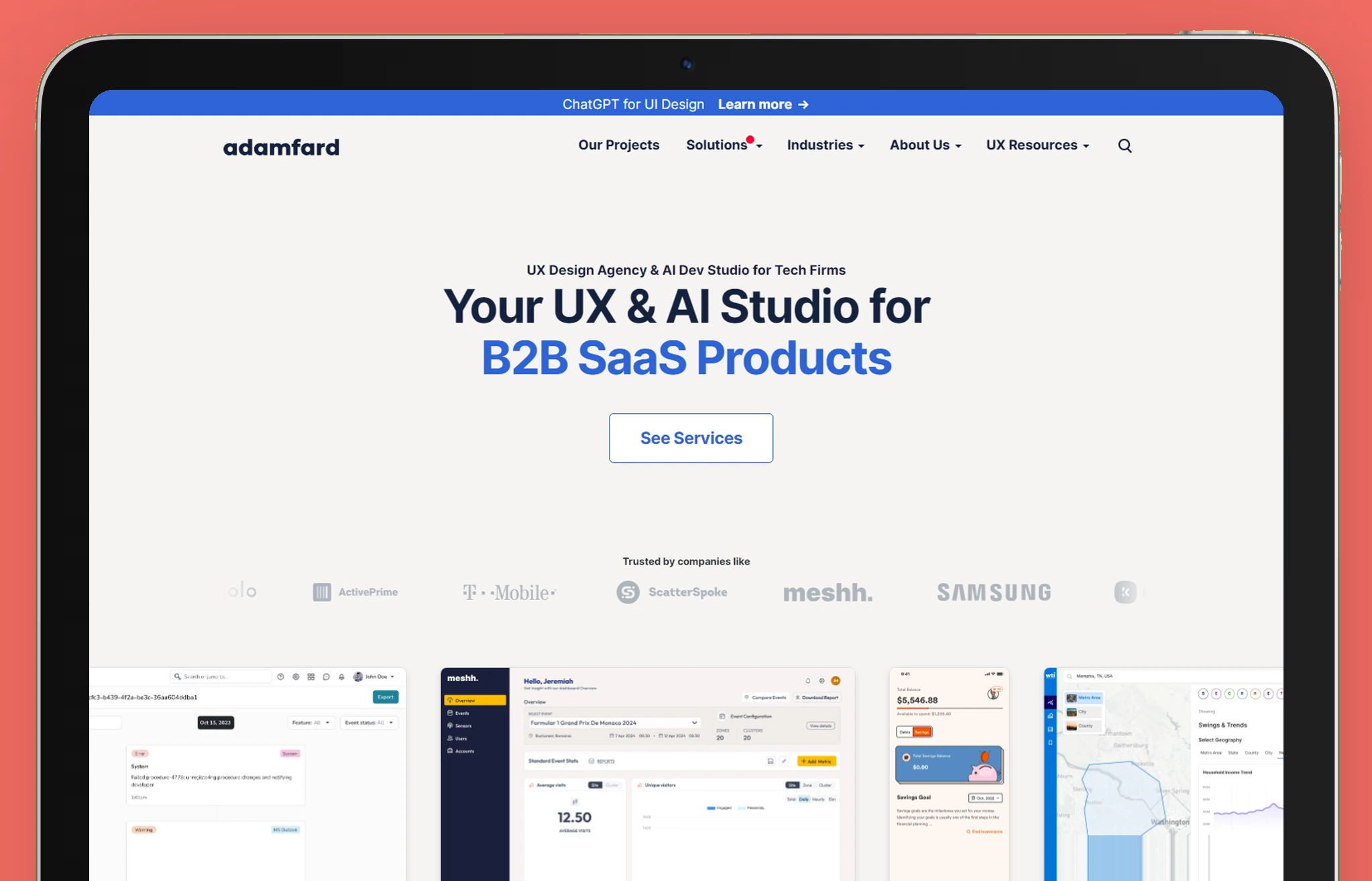
Adam Fard UX Studio reports AI product work on a price analytics SaaS platform and an AI sales intelligence tool. Clutch lists Adam Fard UX Studio as 100% UX/UI design, concentrated in UX strategy, usability testing, and user research, which makes the studio a fit for teams fixing usability before an AI product scales.
Adam Fard is a good fit for enterprise teams that need to increase design output without replacing their internal workflow. The agency says enterprise clients use its team to multiply design shipping capacity and integrate into existing design processes.
Quick facts
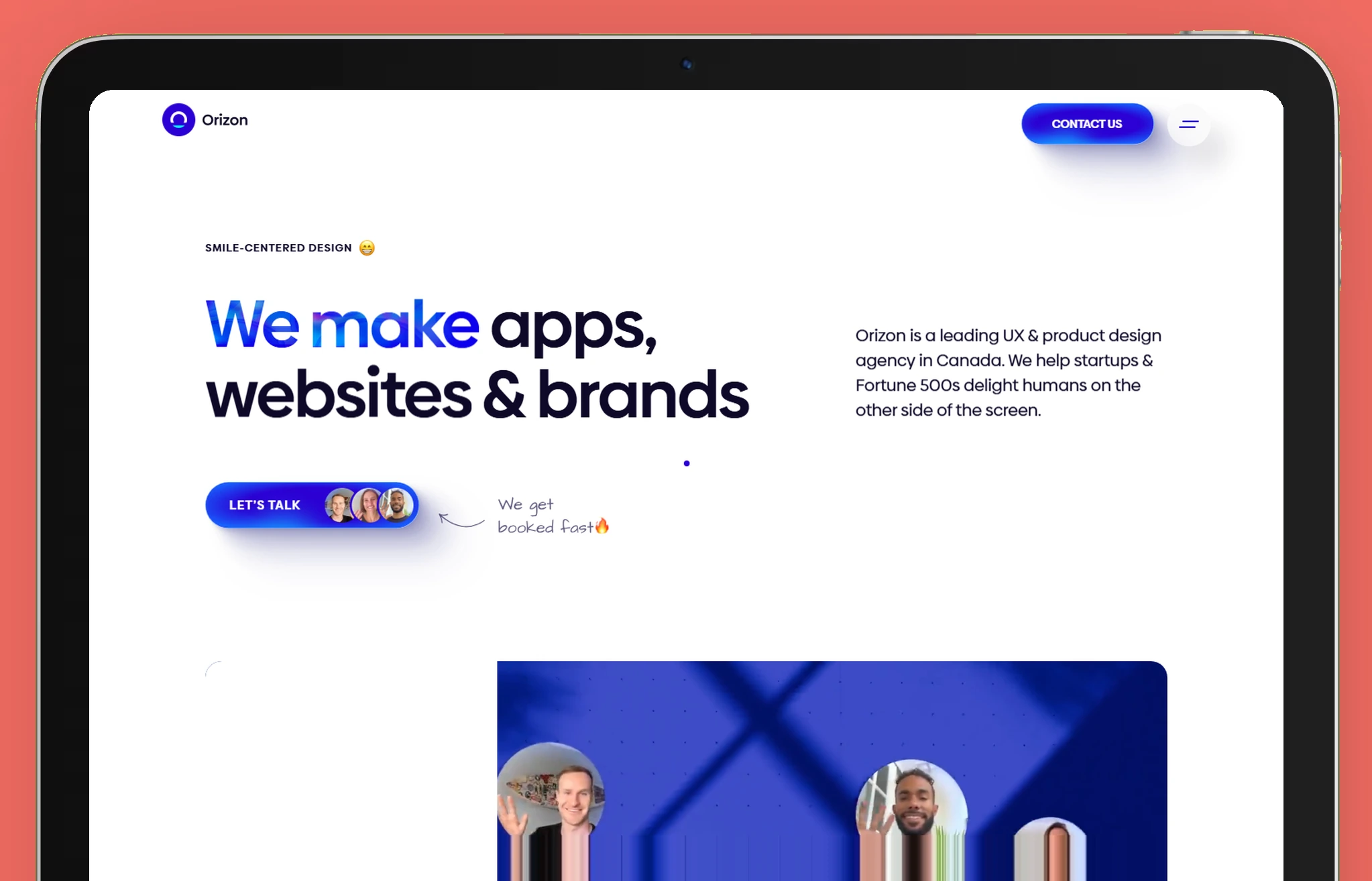
Orizon is a Canadian product design agency for teams that want polished interfaces with strong visual direction. Its website says the agency is trusted by 150+ clients and offers design for AI, LLMs, and NLP. Its portfolio includes AI real estate, AI data platform, AI-powered dental, and wearable AI examples. One project mentions an $18.5M Series A AI data platform for wood sourcing insights. Another highlights 98% customer satisfaction for an AI-powered dental platform.
Clutch lists Orizon at 5.0 with a $25,000 minimum project size and a $100 to $149 hourly rate, retrieved August 2026. That floor rules Orizon out for low-budget AI experiments and rules it in for funded product launches where visual craft is a competitive requirement.
Quick facts
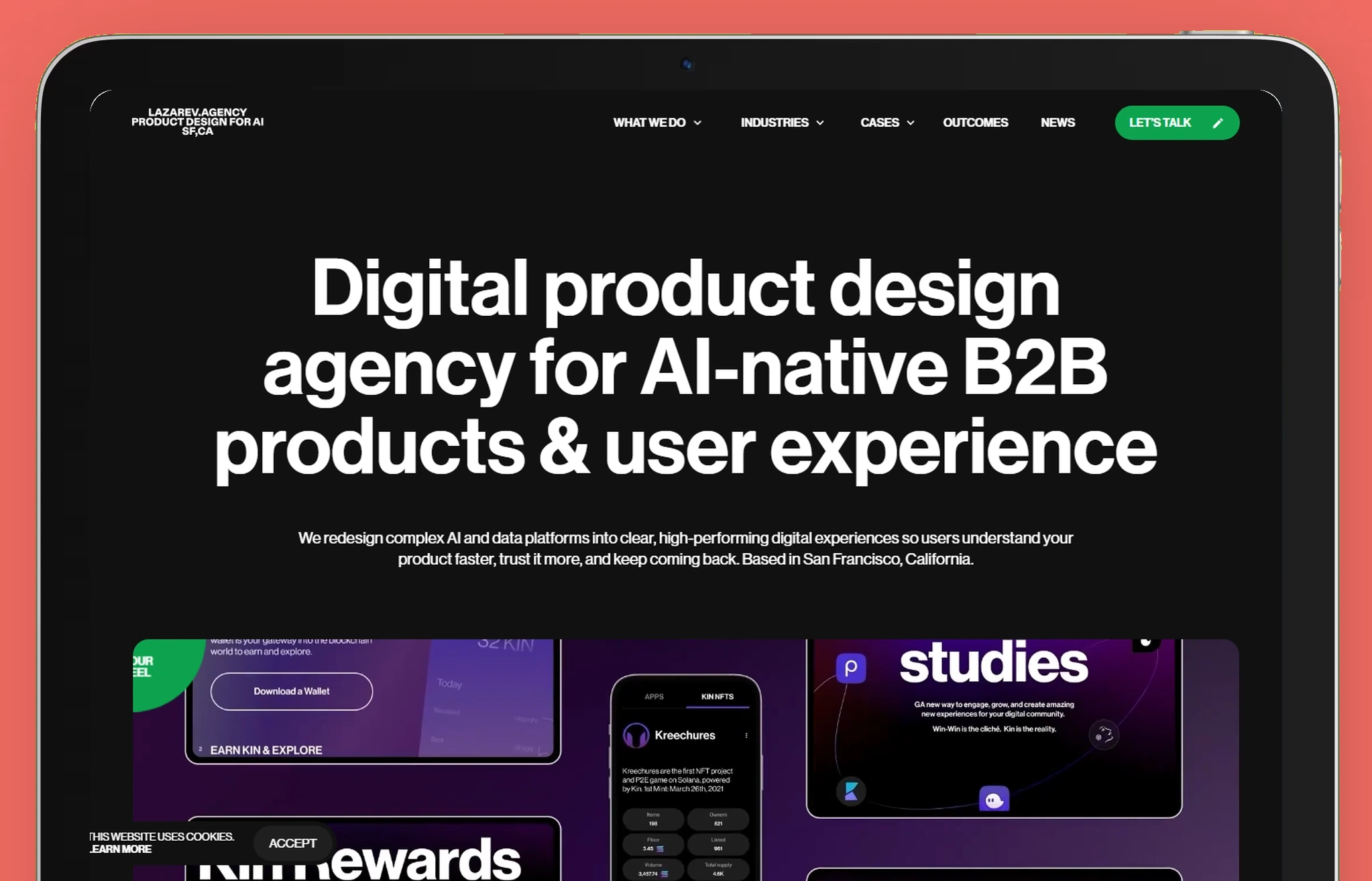
Lazarev agency is a strong option for enterprise teams that need AI product UX with a bold visual layer. The agency focuses on complex AI, data, and B2B platforms. Its website says the team has shipped 600+ products and helped clients secure $500M+ in funding.
The agency reports more than 30 AI products in production since 2017 and states that its clients have raised more than $500 million in funding. Lazarev.agency's AI service page covers AI and data product redesign, AI product launches, AI UX patterns for existing products, and investor demo work.
Quick facts
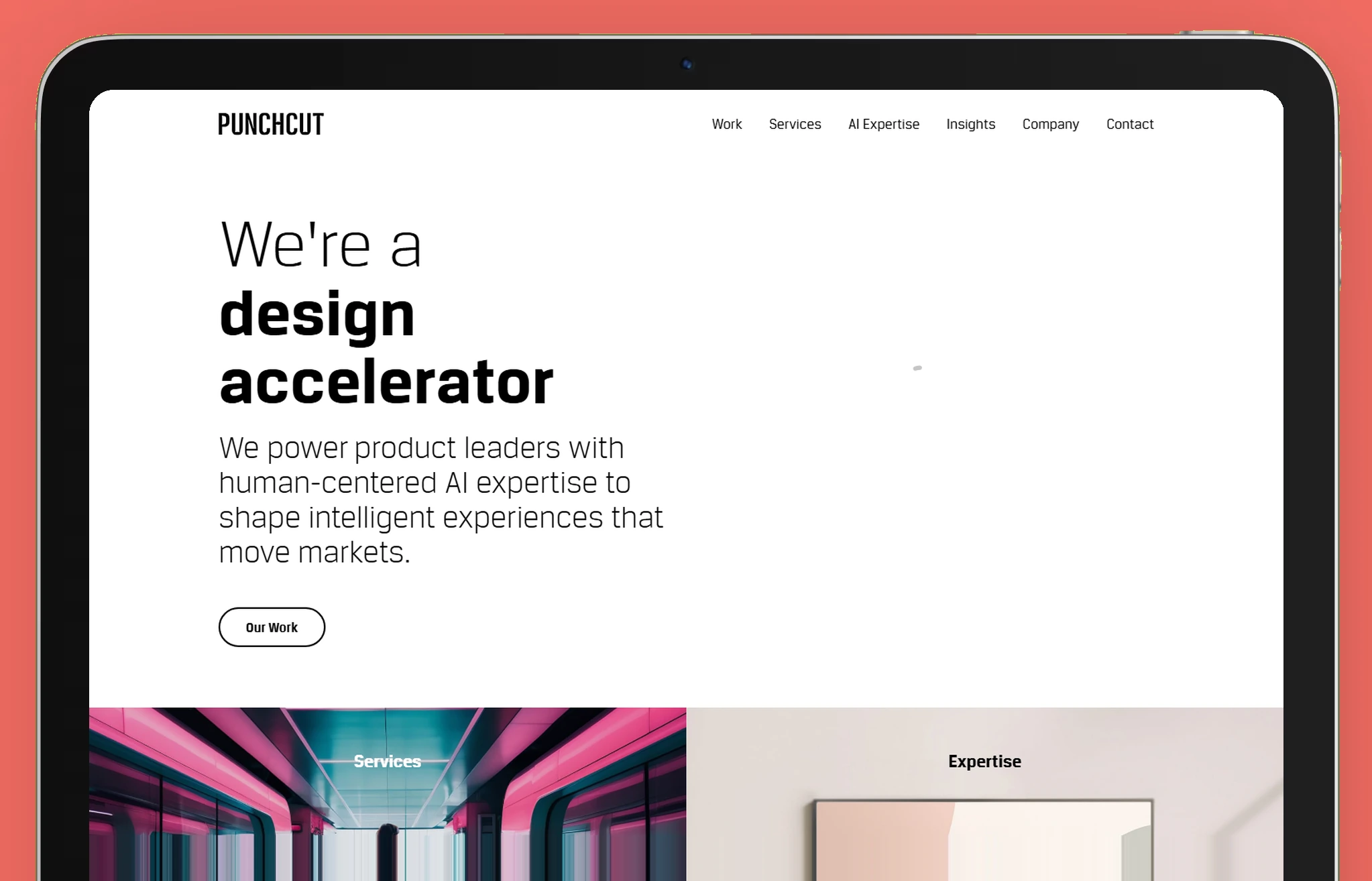
Punchcut is a human-centered AI design agency for enterprise teams working on future-facing products. The agency is not limited to standard app or website design. Its work covers AI agents, autonomous systems, immersive products, enterprise tools, and connected experiences. They have almost 25 years of product design experience and has researched 1,000+ technology consumers to understand AI adoption barriers.
Punchcut worked with Google on Gemini-related AI features, with Amazon on a unified design system for SageMaker, and with Salesforce on generative AI design initiatives for Einstein. That record makes Punchcut a fit for enterprise AI strategy and interface work before production design begins.
Geography drives most of the spread: the same scope costs roughly three times more from a San Francisco studio than from a Kyiv studio. Scope drives the rest. A single AI feature flow, a full AI SaaS product, and an enterprise platform with role-based access and audit trails are three different budgets, and an agency that quotes all three from the same rate card has not read your brief.
Choose an AI based UI UX design agency on six checks: shipped AI product examples, enterprise workflow experience, a stated approach to AI trust and explainability, a process that starts before visual design, a match to your product stage, and a written scope of what the price covers. AI products carry probabilistic outputs, data-dense screens, and automation flows, so the agency needs to understand model behavior alongside interface craft.
Here are the points to check before hiring one.
Do not only check if the agency has used the word “AI” on its website. Look for real AI UX design examples. These could be AI SaaS platforms, AI dashboards, LLM products, conversational AI tools, AI mobile apps, or machine learning products. If their portfolio only shows simple landing pages, they may not be the right fit for a complex AI product.
For enterprise clients, design quality is not enough. The agency should know how to work with complex workflows, multiple user roles, internal teams, security concerns, and long approval cycles.
If you are building an enterprise AI product, check whether the agency has worked with B2B SaaS, fintech, healthcare, data platforms, HR tech, or internal business tools. These products usually need stronger UX architecture than a simple consumer app.
Ask an AI UX design agency to show how it handles three trust problems: how the interface signals model confidence, how it surfaces the source behind a generated output, and how a user corrects or overrides a wrong answer. An agency that cannot show a screen for each of the three has not shipped a production AI product.
Before you hire an AI UX design agency, ask these questions:
Good UI is important, but AI product usability starts earlier. Before choosing an AI interface design agency, ask about their process. They should be able to support research, user journey mapping, information architecture, wireframes, prototypes, usability testing, design systems, and developer handoff. For AI products, they should also consider model limitations, hallucination risks, prompt flows, empty states, feedback collection, and user control.
Not every agency fits every stage.
For an early AI startup, choose a UI UX agency for AI startups that can help with MVP design, product positioning, prototype testing, and fast iteration. For a funded SaaS company, choose an AI SaaS design agency with dashboard, onboarding, and design system experience. For an enterprise team, choose an agency that can work with complex stakeholders and product governance.
The right agency is not always the biggest one. It is the one that matches your product risk, timeline, budget, and internal team structure.
Before hiring, ask what is included in the price. Check whether the quote covers UX research, UI design, prototyping, usability testing, design system work, developer handoff, and post-launch support. This helps you compare AI UI UX design pricing more accurately.
Normal UX design focuses on clear flows and easy product use. AI UX design has extra challenges. The product may give uncertain answers. The system may generate wrong outputs. Users may need to review, edit, approve, or reject AI suggestions. That is why AI UX needs trust signals, feedback loops, explainability, human control, confidence states, and clear error handling.
A simple AI app may need core flows, onboarding, prompt screens, output screens, and basic settings. An enterprise AI app may need role-based access, dashboards, data visualization, human review steps, audit trails, and a design system. Dribbble lists project-based UI/UX pricing at $15,000–$150,000 and enterprise platform work at $150,000–$500,000+.
A larger AI SaaS product or enterprise platform can take several months. The timeline depends on research depth, screen count, user testing, stakeholder review, design system work, and technical handoff. AI products often take longer than simple apps because designers need to plan edge cases, AI errors, user feedback, and trust patterns.
Hire an AI-specific design agency if your product depends on AI outputs, prompts, automation, recommendations, agents, or machine learning workflows. A general UI agency may be enough for a landing page. But for AI product usability design, you need a team that understands hallucination risks, explainability UX design, AI trust UX design, feedback loops, and human-in-the-loop flows.
Yes. A UX agency can design LLM products if it understands prompt flows, generated outputs, source references, user corrections, editable responses, confidence signals, and fallback states. For LLM products, the interface should not only look clean. It should help users understand what the model produced and what action they should take next.
Compare agencies by AI portfolio, enterprise experience, process, pricing, communication, and timezone fit. Location also affects cost. Clutch lists average UX hourly rates at $100–$149 in the USA, $50–$99 in the UK, $100–$149 in Canada, and $25–$49 in Ukraine and India. Do not choose only by hourly rate. For enterprise AI products, process quality and risk handling matter more than a cheaper quote.
A complete AI product handoff includes annotated Figma files, a design system with components and tokens, prototypes for the primary flows, and specifications for states a deterministic product never needs: loading and streaming states, low-confidence output, model failure, empty results, user correction, and human approval steps. Ask for the error-state inventory before signing. An agency that has shipped production AI will have one ready.
AI products need interfaces that users can understand, trust, and control. So the right AI UI UX design agency should have real AI product experience, enterprise workflow knowledge, clear process, and strong design execution.
Choose the agency according to the product risk. Fuselab Creative has unusually strong evidence for federal and regulated interfaces, MetaLab combines AI product design with engineering, Punchcut emphasizes human-centered AI strategy and research, and Lazarev.agency shows extensive AI-native startup work. Musemind is positioned for enterprises that want AI product UX research, interface design, design systems, and handoff support from one design partner.




A digital transformation agency bringing strategy, design, and development together to build useful digital products for ambitious businesses.