An AI web development Company builds websites and web applications that include AI features such as chatbots, AI search, recommendation engines, personalization logic, automation, and smart dashboards. These companies combine standard web work, including UX design, frontend build, and CMS setup, with API integration, data handling, and testing of the AI layer. Stanford HAI reports that 78% of organizations used AI in 2024, up from 55% in 2023. Statista also projects the global AI market will reach $617.62 billion in 2026.
As AI becomes part of business websites, more companies are hiring agencies to build secure, user-friendly and scalable AI-powered experiences. This guide compares the best AI web development agencies by service depth, AI capability, pricing clues, client proof and project fit.
The table looks at AI fit, web development strength, pricing clues and public review signals. It should help you shortlist the best AI web development agencies based on project type instead of only brand name.
Here is a fast AI web development agencies comparison for buyers who want to compare service depth before reading full reviews.
Below is a closer look at each Company from the list. The goal is to show what each company is actually good at, where it fits best and what buyers should consider before hiring. Here are the 9 best ai web development agencies:
Quick facts
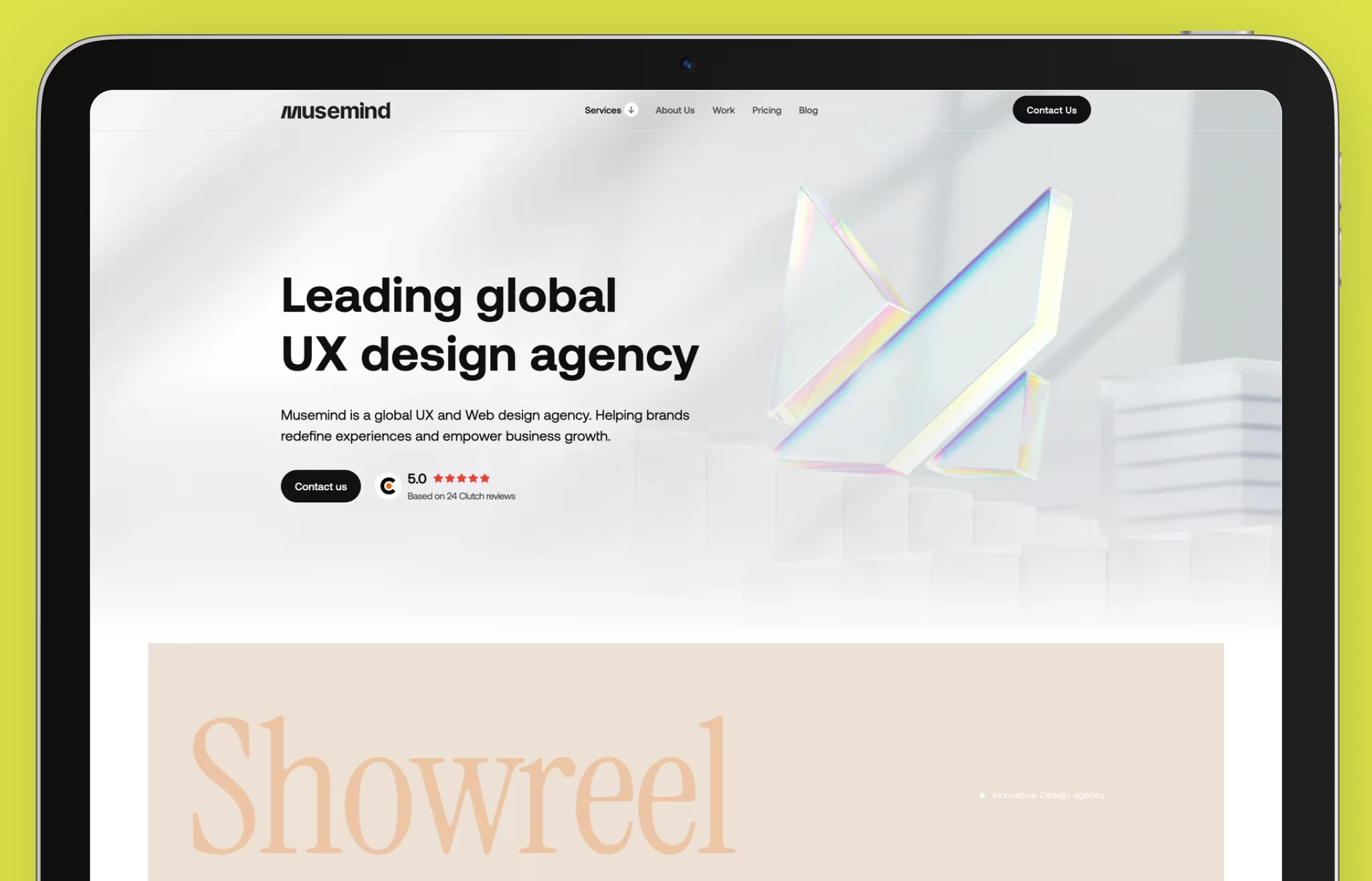
Musemind is the most design-led option in this list of AI web development agencies. This makes Musemind a strong choice for SaaS teams, fintech brands and startups that need more than an AI add-on. A chatbot, recommendation flow or AI-powered dashboard still needs clear navigation and strong interface logic. Musemind’s own web design service covers website strategy, redesign, information architecture, Webflow development, WordPress development and maintenance support.
The clearest AI example is Trainmate AI. It is an AI-integrated fitness app. Musemind worked on user research, UI design and development for the product. The case study also shows that the client needed help turning an early AI app idea into a usable product experience.
Client’s Review
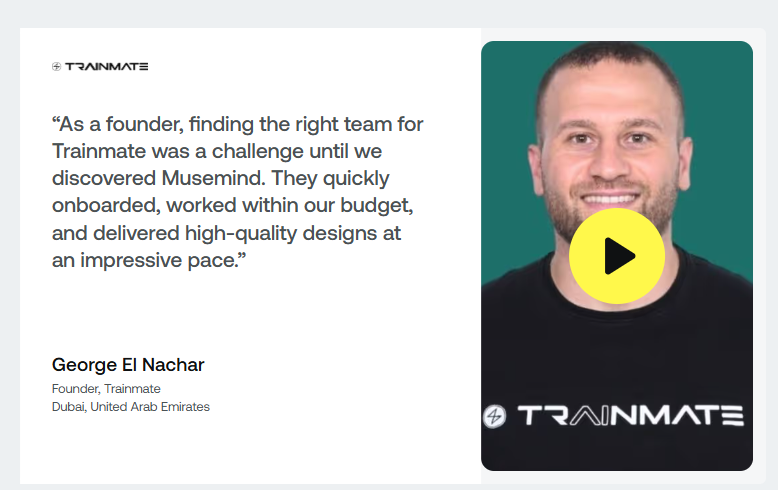
Trainmate’s founder George El Nachar said Musemind onboarded quickly, worked within budget and delivered high-quality designs at an impressive pace. This shows Musemind can support AI product teams that need fast execution without losing design quality.
Musemind combines UX design, AI product thinking, and web development to create usable, scalable AI-powered websites for businesses and brands
Musemind is not primarily focused on deep AI model engineering. Their strength is more on the design, UX, and frontend experience side rather than building or training complex AI systems from the ground up.
Quick Facts
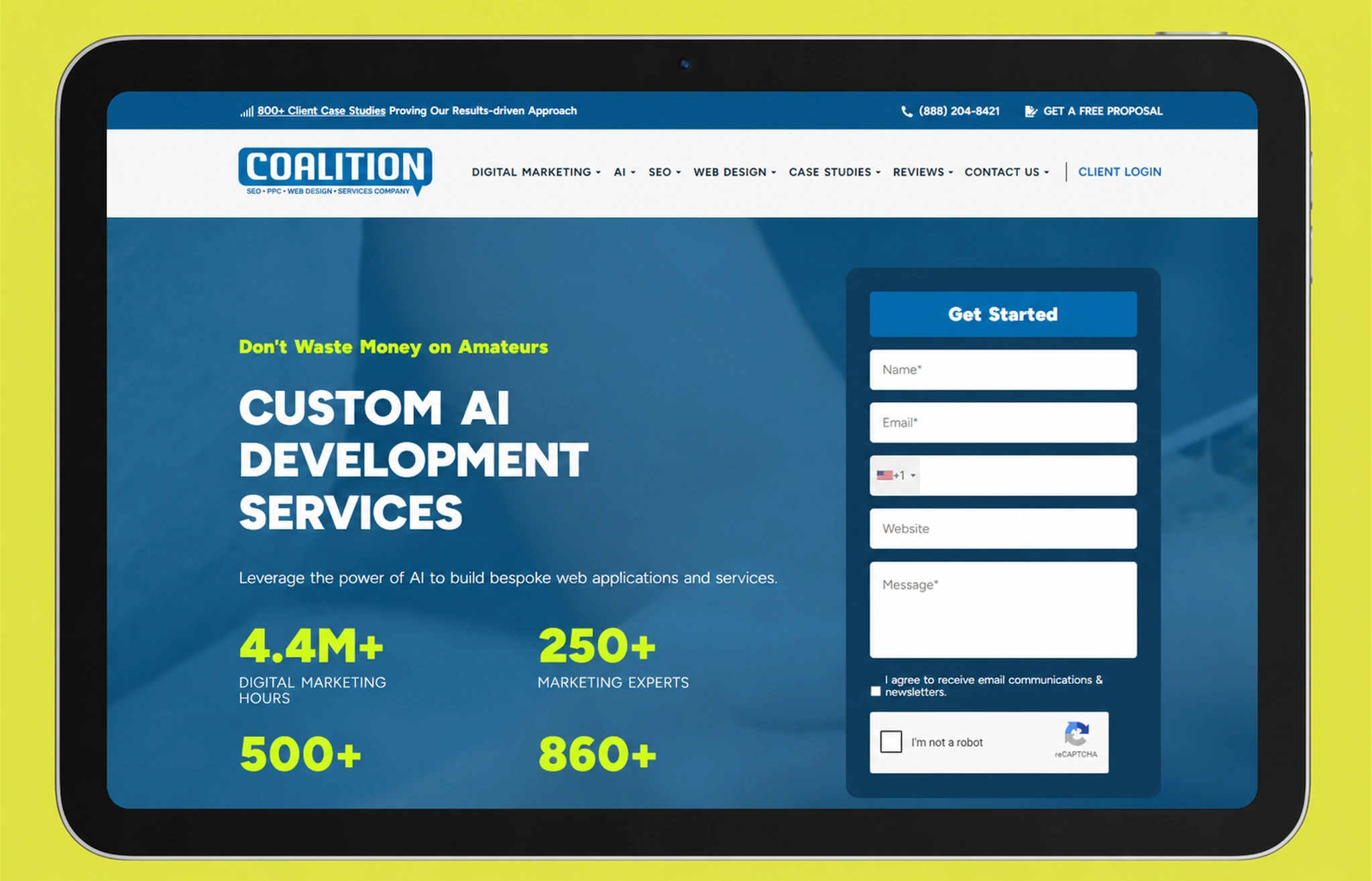
Coalition Technologies is a better fit for companies that see the website as a growth channel, not only a design project. Its web work connects strategy, UX, custom development, SEO, CRO and digital marketing. That helps ecommerce brands and service businesses build pages that can rank, convert and keep improving after launch. The AI angle is mostly practical.
Coalition has a dedicated AI development page and says it has used AI and machine learning for more than a decade to create custom solutions. Its AI SEO and GEO work also makes the company useful for brands that want visibility inside AI search results. So, this is more of a performance-led AI web development agency than a boutique product studio.
Quick Facts
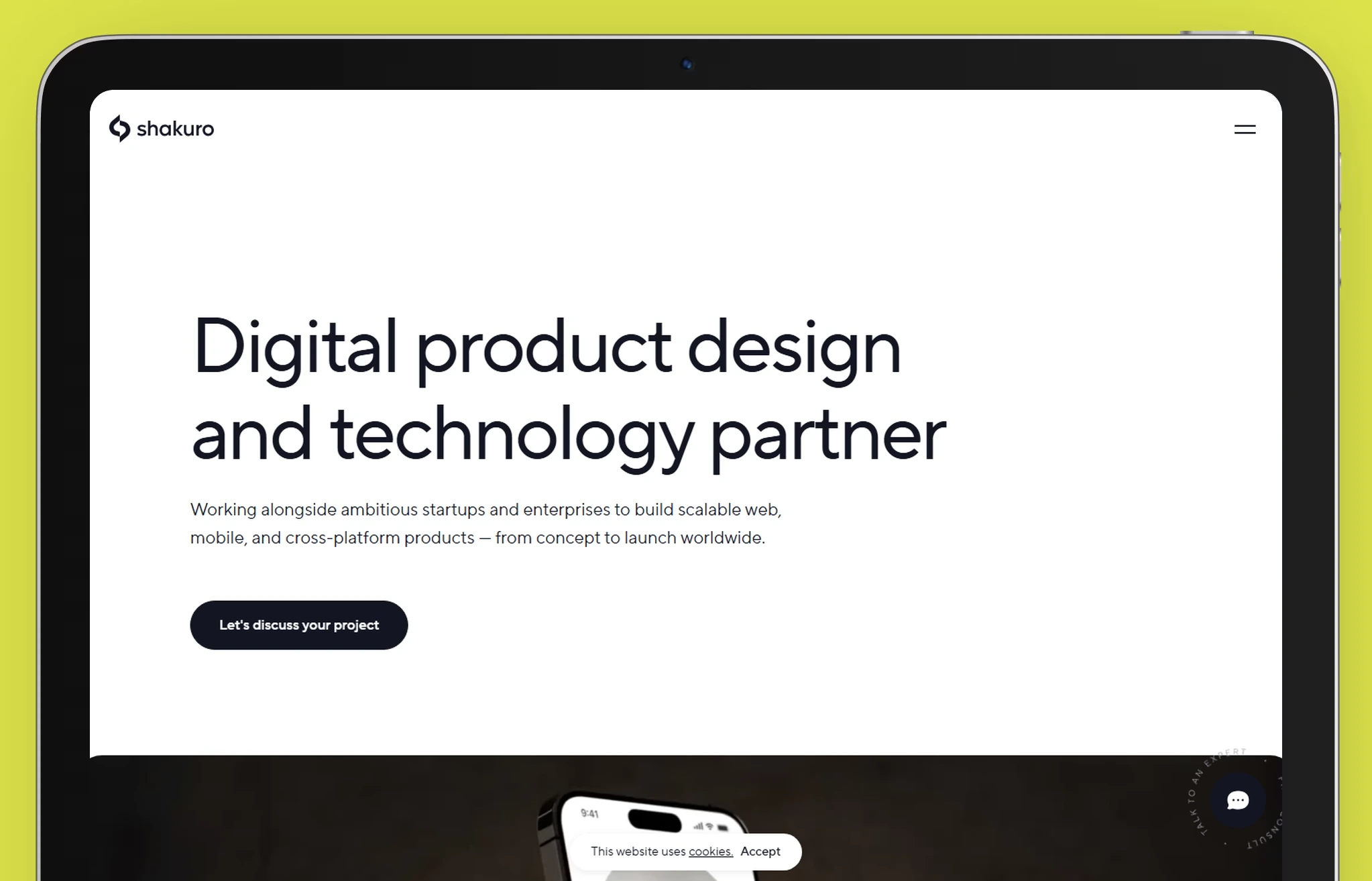
Shakuro is a good choice for companies that need design and engineering in the same team. Its official pages cover AI web development, custom web development, UI/UX, mobile apps, branding and support after launch. The agency is especially useful for web apps where users need to manage data, content, payments or personal workflows. Its portfolio gives useful proof through Proko and CG Master Academy in eLearning, SELECT in membership experiences and ZUUS.AI in automated portfolio management. Shakuro feels more product-focused than marketing-focused. That matters when an AI website feature has to work inside a larger interface, not just sit as a small chatbot on a landing page.
Quick Facts
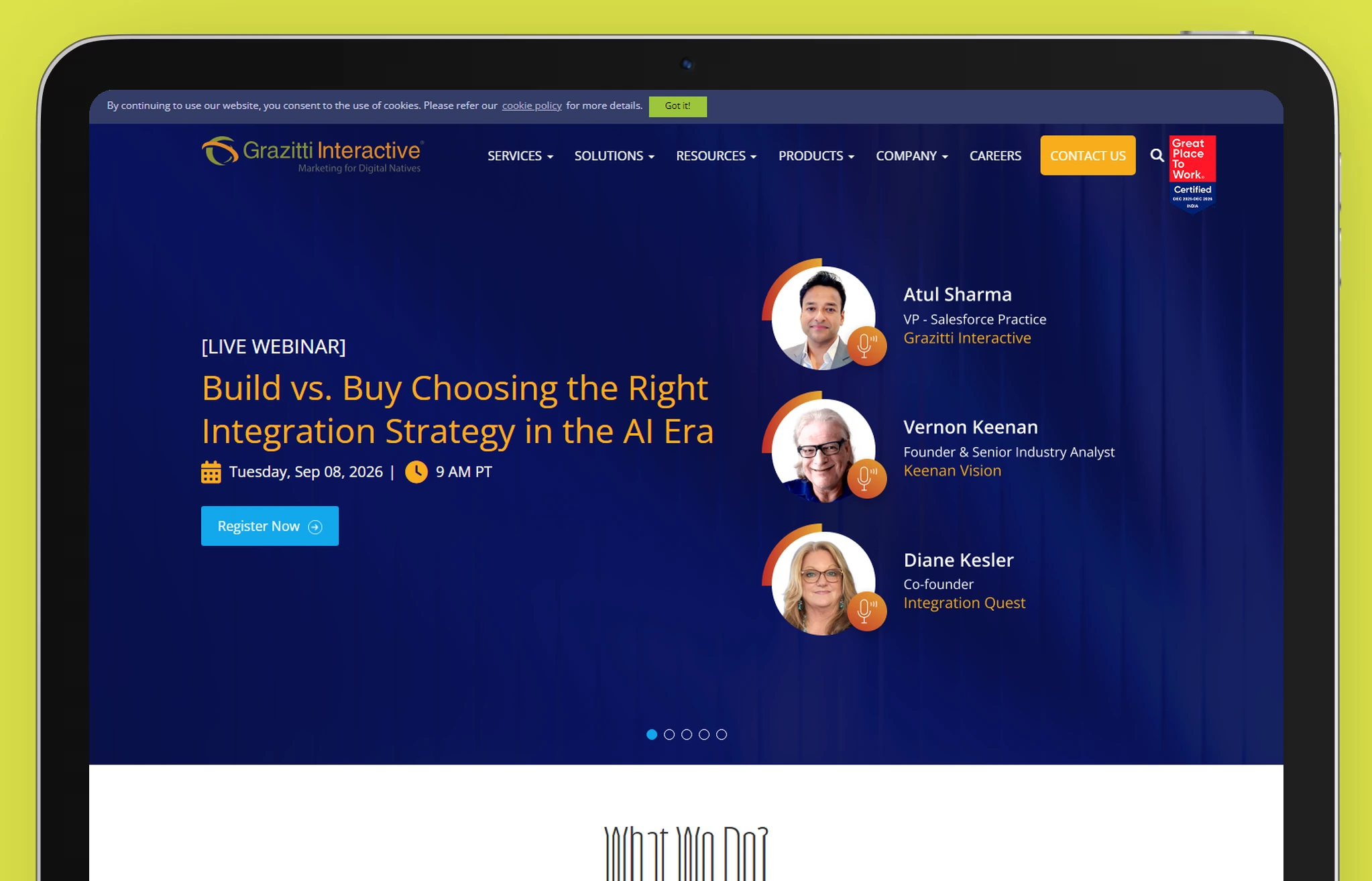
Grazitti Interactive is built for companies that need web development around larger business systems. Its work covers AI, CRM, marketing automation, customer communities, analytics and custom web development. That makes it useful for enterprise teams where the website has to connect with Salesforce, Marketo, HubSpot or support platforms. Grazitti also has a dedicated AI for web development service. The focus is not only design. It leans toward automation, personalization, engagement and operational efficiency. Their client list includes names like Netgear, Fortinet, ACI Worldwide and Shopify. A useful observation is that Grazitti suits complex digital ecosystems better than simple brand websites.
Quick Facts
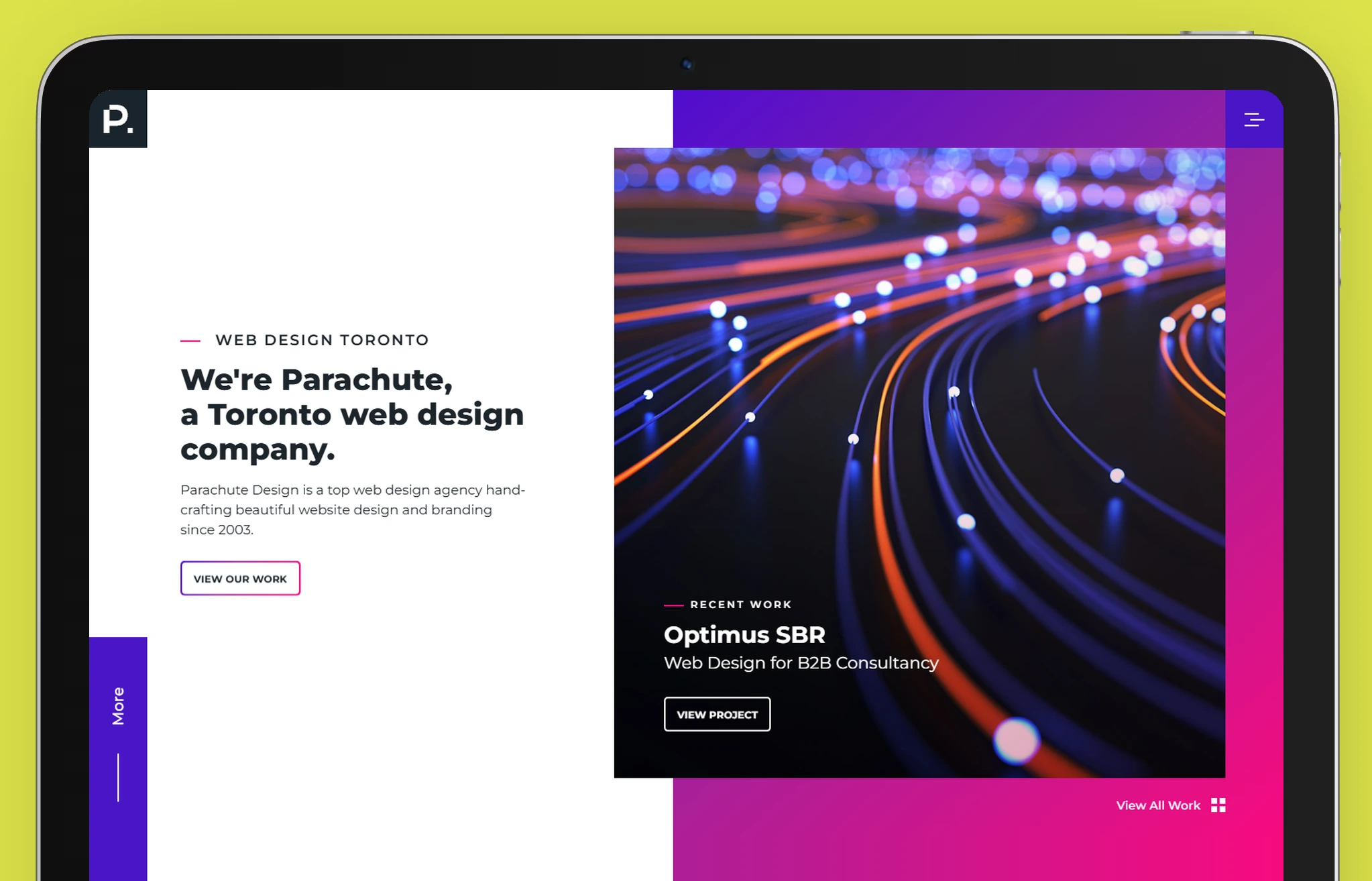
Parachute Design is strongest when an AI company needs a polished web presence rather than a heavy AI engineering team. The agency works like a boutique WordPress studio with deep brand and UX support. Its portfolio includes Wysdom AI, which gives this listing a direct AI-company connection. The work also shows custom WordPress development, HubSpot integration, database integration, SEO and accessibility-focused government projects. That mix makes Parachute useful for AI startups, SaaS firms and professional service brands that need credibility first. The site will not feel generic. It will likely feel carefully shaped around brand trust, content structure and long-term website ownership.
Quick Facts
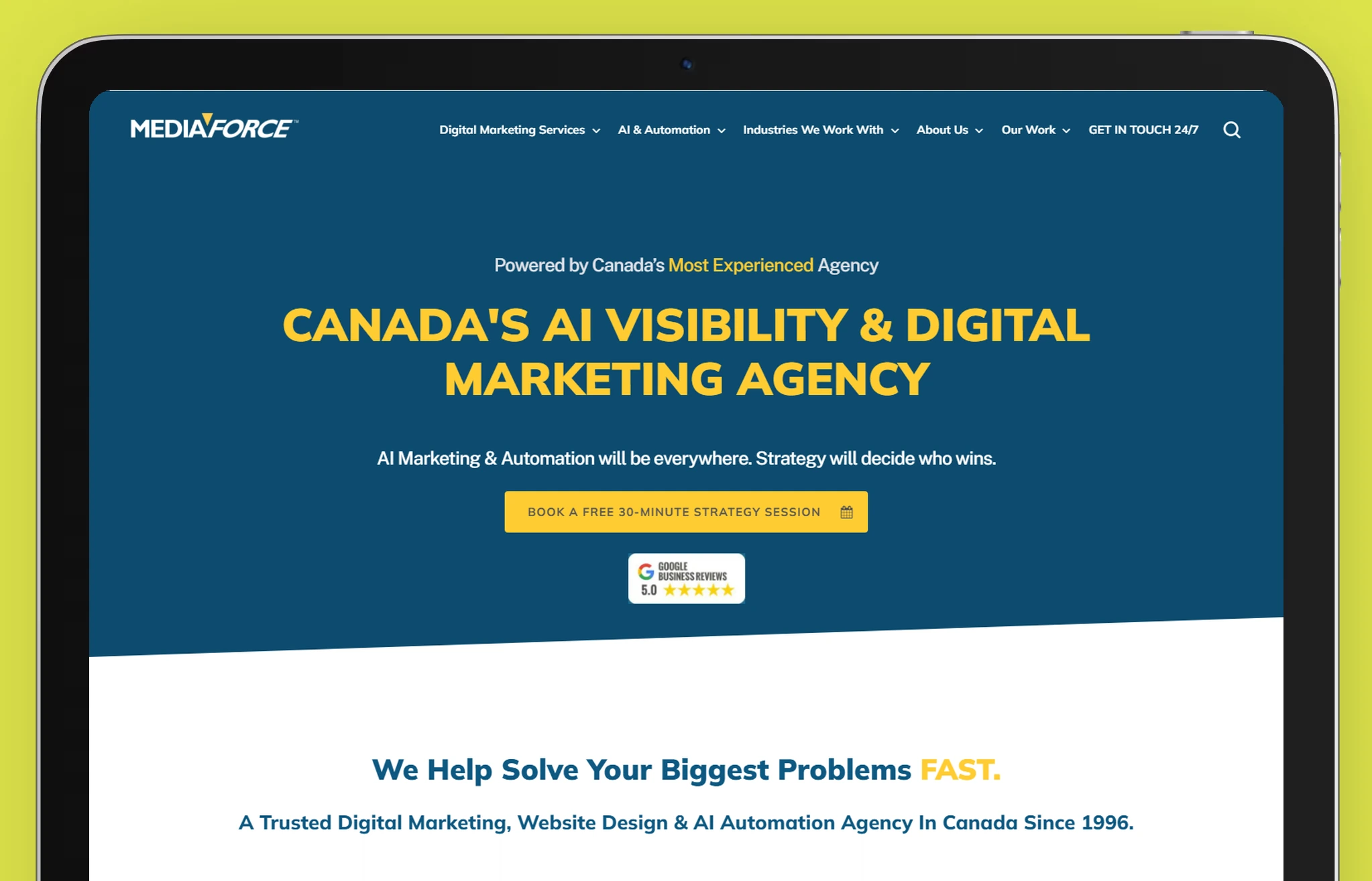
Mediaforce is a practical pick for small and mid-sized businesses that need web design with marketing behind it. The agency positions itself around AI visibility, website design, SEO, paid ads, conversion optimization and automation. That gives it a different place in this list. It is not trying to be a deep AI product engineering shop. It helps businesses get found across Google, social platforms and AI-powered discovery channels. Its client portfolio includes healthcare, legal, construction, finance, education and local service brands. The strongest use case is a website that needs leads after launch. Mediaforce is better for growth systems than complex AI web application development or data-heavy SaaS products.
Quick Facts
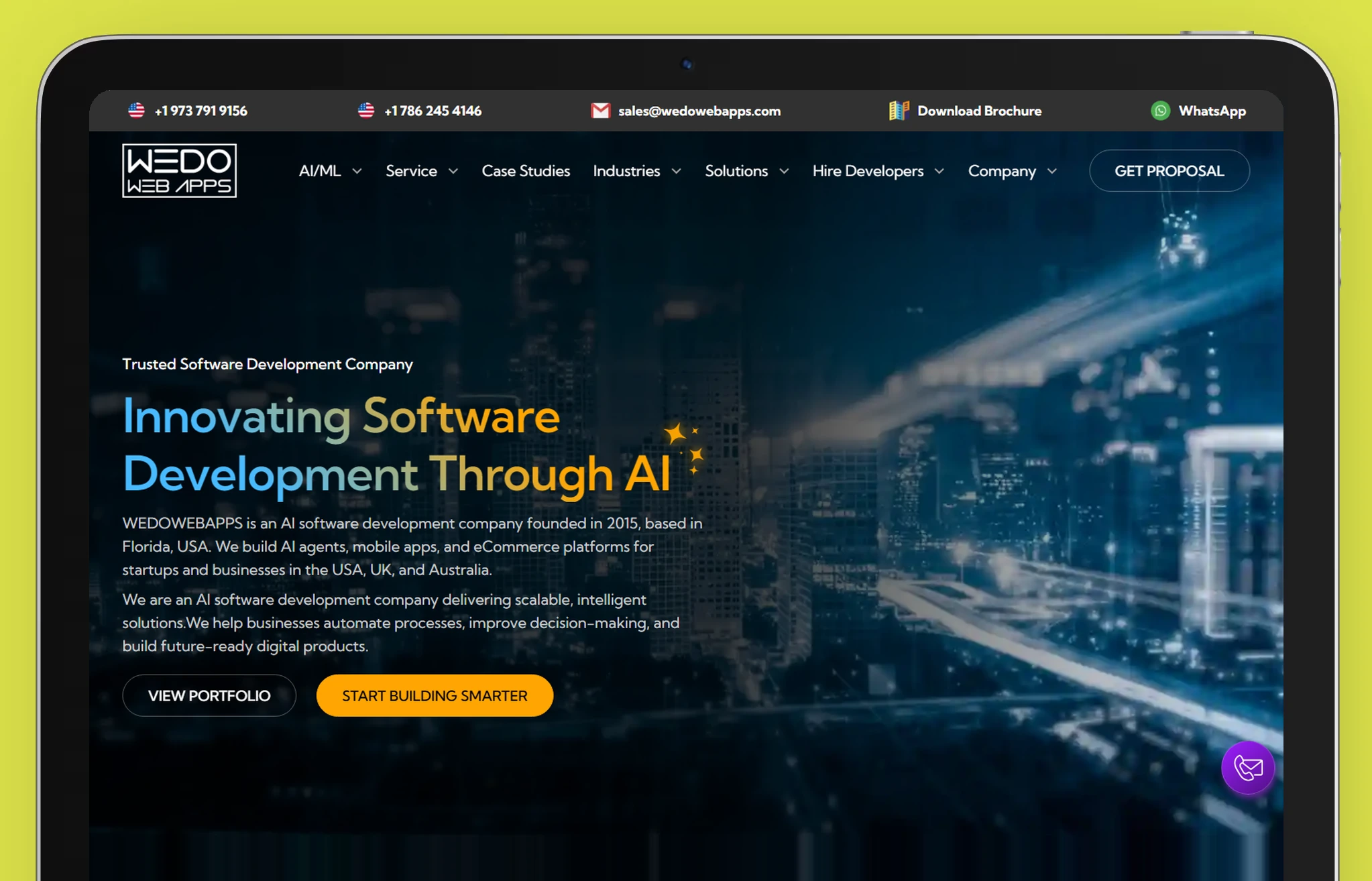
WeDoWebApps is useful when an AI website brief moves beyond landing pages and becomes software. The agency works across AI development, web app development, frontend, backend, ecommerce and mobile apps. Its official pages mention GenAI, LLM engineering, machine learning, AI integration and AI-first web applications. That makes the team suitable for startups or small businesses that need product features rather than only a polished marketing site. Their portfolio also shows web and mobile work across booking, ecommerce and custom application projects. A good observation is that WeDoWebApps feels more execution-heavy than brand-heavy. It can help build the system, but the buyer should bring a clear product direction.
Quick Facts
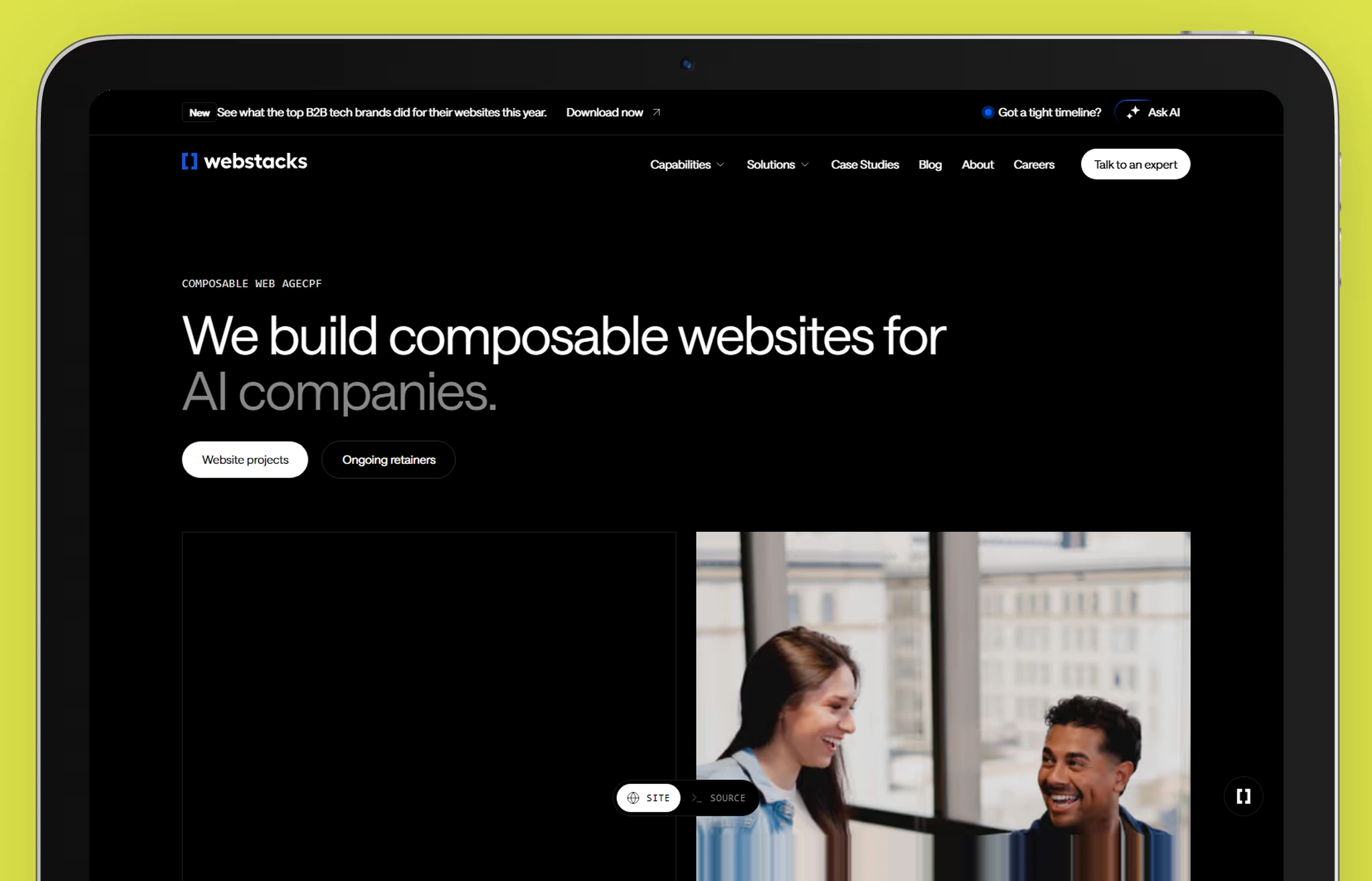
Webstacks is built for B2B companies that treat the website like a product. The agency works with SaaS and technology brands that need scalable CMS architecture, modular design systems and faster marketing execution. Its AI angle is also more mature than a basic AI chatbot service. Webstacks talks about AI for web operations, AI-ready composable architecture and AI-supported design and development workflows. The Fireworks AI case study is a useful proof point because Webstacks helped replatform and redesign the site with a modular design system. This makes the agency a good choice for growth-stage teams that need speed, structure and enterprise-grade website ownership.
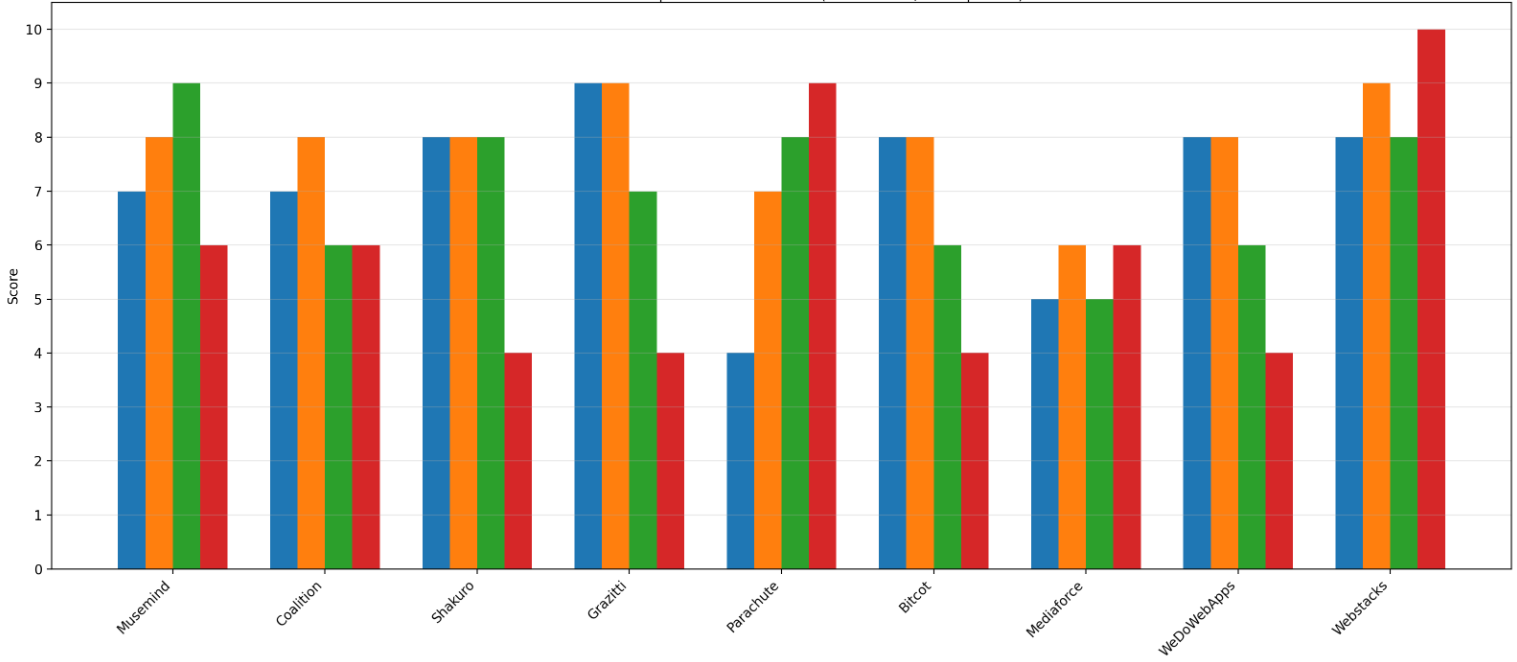
This chart gives a quick view of where each agency stands. The scores look at how well they support AI features, web development, product experience and budget fit.
The right AI web development agency should understand both the website experience and the AI feature behind it. So the decision should be based on proof, process, security and project fit instead of only agency size or pricing.
Before comparing agencies, decide what AI should do on your website. A chatbot, product recommendation system, AI search, automation flow and custom AI web app are different projects. If the use case is clear, the agency can give a more realistic scope, timeline and cost.
Do not only look at beautiful landing pages. Check whether the agency has built AI features, SaaS websites, dashboards, ecommerce systems, customer portals or data-driven web apps. Also look at the role they played. Some agencies only designed the interface. Others handled UX, development, integration and launch.
Ask what AI tools or models they use. Ask how they handle data privacy, AI-generated code quality, testing, third-party APIs and post-launch updates. Also ask who will work on your project. A strong agency should explain the process clearly without hiding behind technical words.
A startup MVP may need speed and product clarity. An enterprise website may need security, CRM integration and scalable architecture. An ecommerce brand may need AI personalization with SEO and conversion support. The best agency is the one that fits your exact project, not the one with the biggest name.
Do not choose an agency only because it says “AI” on the service page. Also avoid judging only by low pricing, trendy tools, big client logos or a perfect-looking homepage. These things can help, but they do not prove the agency can build a secure, useful and scalable AI website.
AI web development agency cost is not fixed. It depends on the AI feature, website type, UX scope and backend complexity. A simple chatbot integration will cost much less than a custom AI web app with accounts, dashboards and automation logic.
Many AI web development companies charge by the hour when the scope is flexible. This works better for discovery, MVPs, ongoing development or projects where features may change.
Lower-cost range
Mid-range
Premium range
Fixed pricing works better when the scope is already clear. This is common for website redesigns, AI feature integration or product MVPs with defined deliverables.
The price goes up when the project needs more custom logic or more risk control. AI projects also need extra care around data and security.
Main cost drivers
A lower hourly rate does not always mean a cheaper final project. Ask what is included before you compare agencies.
Ask the agency
An AI web development company builds websites and web applications that include AI features such as chatbots, AI search, recommendation engines, personalization logic, and automated workflows. These firms combine standard web work, including UX design, frontend build, and CMS setup, with API integration and data handling. Most also handle testing, security review, and post-launch maintenance for the AI layer.
A traditional web agency delivers design, content, CMS setup, and standard development. An AI web development agency does that work and also scopes AI features, connects language model or recommendation APIs, plans data flow, and handles prompt logic, latency, and fallback states. The second group also carries responsibility for AI output quality, data privacy, and access control.
Rates across this list run from $25 per hour to $300 per hour, and minimum project sizes run from $1,000 to $10,000. A single chatbot or API integration sits at the low end. A full AI-powered business website with UX planning, custom development, and testing usually starts around $10,000. Custom AI web applications with accounts, dashboards, and admin panels cost more.
A freelancer works for a contained task such as a chatbot install or a single API integration. An agency makes sense when the project needs UX research, interface design, backend development, AI integration, QA, and post-launch support at the same time. Agencies also carry contract, security, and continuity protections that a single contractor cannot offer.
AI website builders handle simple marketing sites, landing pages, and basic content structures well. They fall short when a project needs custom workflows, secure user accounts, ecommerce logic, role-based permissions, personalization tied to first-party data, or SaaS product features. Builders also limit how much control you keep over performance, schema, and integration with existing systems.
Musemind, Shakuro, and WeDoWebApps fit startup budgets and timelines best among the companies reviewed here. Musemind suits teams that need UX clarity and a launch-ready website. Shakuro suits teams building a custom web app with data or payment workflows. WeDoWebApps suits teams that need backend and AI engineering under one contract.
Ask for a named project where the company shipped an AI feature to production, not a concept or a pitch deck. Request the specific role the team played, whether design only or design plus engineering. Ask which models or APIs they used, how they handled data privacy, and what the system did when the AI returned a wrong answer. High. Each answer runs 55 to 65 words and stands alone without the surrounding page. The three new questions (what is an AI web development company, cost, enterprise fit, verification) cover query intents the article currently misses entirely. Pairs with the FAQPage schema
The right AI web development agency depends on your project goal. Musemind is a strong fit for AI-aware website design, SaaS UX and product clarity. Webstacks and Grazitti suit larger systems.
Shakuro, Bitcot and WeDoWebApps work well for custom AI web apps. Before choosing, check proof, security process and post-launch support. A good agency should make your website smarter, not harder to use.




A digital transformation agency bringing strategy, design, and development together to build useful digital products for ambitious businesses.